Featured

Announcing the RPTF Copyright Series Webinars

The RPTF Preservation Division, in partnership with the National Recording Preservation Foundation and alongside the RPTF Education Division, are hosting a series of virtual events.

March 15, 2024: Copyright Townhall

Past Webinars

In 2022, leading up to the Radio Preservation Task Force Conference, the RPTF’s Education Division, in partnership with the Preservation Division, invited three lawyers to discuss copyright as it pertains to audio-visual materials, specifically audio/radio collections over the course of three sessions.

We are excited to announce the publication of these fully transcribed webinars and invite you to watch if you were unable to attend or re-watch.

Audio Preservation Grants Webinar

Audio preservation projects often require additional investments when organizations undertake them, particularly due to the many specialized technical, equipment, and storage needs. Likewise, many collections face diminishing budgets, and external funding is often required to support special projects. In this situation, many collections managers are interested in pursuing external grants, but archivists, librarians, researchers, and collections managers often have little, if any, training and education on successfully applying for grants.

This webinar offered insights on current organizational grant opportunities that can be opportunities to support or plan audio preservation projects. Representatives of current funders – including the Council for Library and Information Resources, Institute for Museum and Library Services, National Endowment for the Humanities, and the National Recording Preservation Foundation – provided overviews of their grant offerings relevant to audio preservation, examples of projects that may be eligible for funding, and tips on writing and planning applications. Funder representatives will include Erin Barsan (IMLS), Sharon Burney (CLIR), and Joshua Sternfeld (NEH). Jesse Johnston (University of Michigan School of Information and National Recording Preservation Foundation) and Allison Schein (Radio Preservation Task Force), successful grant writers themselves, moderated the discussion. 

This webinar was conducted on April 5th at 11 AM CST and does not include the Q and A portion and was done in collaboration with the National Recording Preservation Foundation. Slides from two of the presenters can be found below the video.

[hyperaudio src=”https://videos.files.wordpress.com/st4b2YrR/video1653687416.mp4″%5D

Jesse Johnston: Hi again, everyone. I know a few more folks have joined us from the waiting room and we’re just gonna get started in about 30 seconds. Uh And uh welcome to everybody. Ok. So I think we’re about ready to go. Um Allison, are we good to go with the recording and all of that?

Allison Schein: We are.

Jesse Johnston: Ok, great. Ok. Well, um I will start off and then um we’ll introduce our co-host and our presenters. Um First of all, uh welcome. And um we’re really happy to see um a very um healthy interest in this webinar. Um There’s over 100 people on the waiting list and it looks like we have at least over 50 who are here. So, um it’s really great to see you all. Um My name is Jesse Johnston and I’m representing the National Recording Preservation Foundation, um which is a nonprofit uh that works to promote and preserve audio collections. Um And I’m also representing the University of Michigan School of Information, which is um my day job where I’m a clinical assistant professor in the School of Information. So I’ll be co-hosting the webinar today. And um since we set up the Zoom through the University of Michigan Zoom instance. Um I will also be trying to handle as many technical issues that may come up as well.

Allison Schein: And I’m Allison Schein representing the Radio Preservation Task Force. Uh I am another co-host with the webinar along with Jesse. And we’d like to welcome you to this uh webinar “Audio Projects and Ways to Fund Them,” a topic that we feel is very important and very near and dear to all of our hearts.

Jesse Johnston: Definitely. Um So just a few logistical things as we get going. Um So please feel free to use the um video if you are comfortable sharing your screen or uh video camera. Um But do keep in mind that we are going to be recording the first um part and there is a chance that Zoom will capture any video streams that are part of the Zoom. Um Also please stay on mute uh during the presentations. Um There will be a chance for Q and A later and um you’re welcome to unmute or to post questions. Um If you do have any technical difficulties, please send me, send me a direct message or Allison, a direct message in the chat or um our emails are also here on the slide and um I’ll share that to chat as well. Um We do have some structured presentations that we’ll start off with. So if you have a question that you’d like to share, please use the Q and A feature that should be um available to you. So if you put a question there, while people are speaking, we can save it for the end um or you can save it and unmute later. Um And finally, uh as I said before, we’re, we are recording the first part of the session um with permission from the presenters. So please note that any video or audio that is shared during the recording may be recorded. Um OK, so um all of that out of the way.

Jesse Johnston: I again, I’m really happy to welcome you all. Um And I’m very happy we’ll introduce shortly our speakers um Erin Barson from IMLS Sharon Burney from CLIR, and Josh Sternfeld from NEH. um Just as a little bit of background. This webinar is the first one that the NRPF hosting uh and co-hosting with the Radio Preservation Task Force. So it is real, a real privilege to welcome you all. And um we really appreciate our guests sharing their time and uh insights uh with all of us.

Allison Schein: And for those of you not familiar with the Radio Preservation Task Force, the RPTF seeks seeks to support collaboration between faculty researchers and archivists towards the preservation of radio history. Develop an online resource of radio collections, identify and save endangered collections. Just to mention a few of our goals. We are born out of the Library of Congress’s National Recording Preservation Plan, and this webinar is co-sponsored by the Education Division.

Jesse Johnston: And, um, I’ll tell you a little bit about the NRPF. Uh So some of you may be familiar with the NRPF. It’s the National Recording Preservation Foundation, but we’ve been relatively quiet for the past few years. Um However, as of January of this year, the librarian of Congress appointed a new slate of directors for the foundation. Um, and we’re working to revise and make the foundation a little more active again. Um We are still pursuing the same mission which is to promote and preserve the preservation of significant at risk historical sound recordings of all types and genres. Um I was appointed as executive director in January and um we have a board of seven other directors um who are sort of in charge of the foundation and it’s our priority uh alongside uh kind of reviving the foundation um for it to act as a community catalyst. Um And we hope that we can do that in concert with groups like the RPTF and offer some useful capacity-building opportunities to the audio community around things like grant application and grant support, um which is what brings us together today. Um I will say as a caveat NRPF is not currently offering any active grant programs, but we may have some announcements uh later in the year. So please stay tuned to our website. I’ll share that in a follow up email. Um But for now, we want to move on to our formal program.

Allison Schein: Yes, so great. Thank you. And we’re so excited that the uh NRPF has come back to life. We’re excited to see what they do in the future. All right, we have three speakers who will each speak for about 10 minutes. Then there will be time for moderated questions and last a chance to move out into breakout groups, if you have questions for a specific funder. First, we’ll hear from Erin from the Institute of Museum and Library Services. Um Erin, please take it away.

Erin Barsan: Absolutely. Hi. Thank you so much for having me. Um My name is Erin Barsan. I am a senior program officer at the Institute of Museum and Library Services. I am going to quickly share my screen. Um There we go. All right. Wonderful. Um So as I said, I’m a senior program officer at the Institute of Museum and Library Services, also known as IMLS. Um And I my portfolio deals mainly with archives and special collections as well as digital stewardship. So, um audio preservation is very much in my wheelhouse here. Um And so I’m quickly just going to give any of you who maybe are not familiar just a quick intro to IMLS. Uh then the funding opportunities we have for libraries and archives. Um And then if I have time, I even have a few practical, quick tips for applying um which I could also save ’til the end if need be and then I’ll end my section with how to get in touch with us. Um And I’m also happy to provide a copy of the slides after the meeting for anyone if you’re interested. I’m happy to send it along to the hosts. Um I will also just note that I’m uh at a conference currently, so I’m working off two computers.

Erin Barsan: So if it looks like I’m jumping from screen to screen, it’s because I am. Uh ok. So, uh so the Institute of Museum and Library Services or IMLS is an independent grant-making agency and the primary source of federal support for the nation’s libraries and museums. Uh IMLS helps ensure that all Americans have access to museum and library services across the country and in every geographic corner. uh As a federal agency that administers discretionary programs, uh IMLS is funded through the annual federal appropriations process. Uh You can see here from, uh this is the most recent information on our website. Um But the majority of funds for our agency are distributed directly to um state library administrative agencies under the grants to states program that’s on, on the screen, on the far left. Those funds are then redistributed by the policies and procedures of each state. Um So if you work in a public library or any library, you’re interested in learning more about the way your state delivers these funds. Um Please take a look at our website under the grants to state section. Um And then, and there you can find the five-year plan of your state library. Um Every state administers their funds differently. Some use those funds for re-granting. Um So you can see these five-year plans and kind of get a sense of whether you might want to contact your state library to learn more about potential funding opportunities for your institution um via those state library funds. Um And then second, from the left on the screen are the grants programs administered by the Office of Library Services, which is where I uh sit. Um And these represent really the majority of what I’m going to be covering here today.

Erin Barsan: Uh So let’s go over the most relevant funding opportunities specifically to the Radio Preservation and National uh Preservation Recording Foundation. I probably got that wrong, but let’s go to the most relevant funding opportunities for your communities um which are the two main discretionary programs that we have here for libraries and archives. Uh So the first is the National Leadership Grants for Libraries program, um which we refer to as NLG for short. Um And so this grant program really supports projects that address significant challenges and opportunities facing the library and archives fields and that have the potential to advance library and archives practice. Uh The second of the two programs I’m covering today would be the Laura Bush 21st Century Librarian program, which we call LB21. Um And this one is less about collections. It’s really uh supporting projects that help support education, training and retention of a diverse workforce. Um So, this can include introducing potential members of the field from as early as say middle school or through high school through undergrad graduate students in library and information science programs, early career faculty all the way through supporting the ongoing training and retention of faculty and prac practitioners in the field. Um So grants in this area would be, it would be less about maybe preserving collections and more about professional development for staff or inspiring more people to take an interest in audio preservation while they’re at library school or, or things like that. Um In fact, my first salary position in the field was actually through an LB21 funded program called the National Digital Stewardship Residency. So I’m forever grateful to uh the LB21 program.

Erin Barsan: So no matter which of the two library programs you might be interested in Um there are some key things to keep in mind when developing a proposal. Um so successful NLG and LB21 projects both address key needs, high-priority gaps, and challenges that face libraries or archives. Um They’re timely and address a critical emergent issue facing libraries and archives. They involve key stakeholders and partners that are would be necessary to ensure that it can succeed and have far-reaching impact from a variety of domains and sectors, and they articulate a thorough understanding of current theory and practice.

Erin Barsan: Just to give you a better sense of the scale, here are the minimum and maximum dollar amounts uh you may request in both programs currently. Um And these are based on the funding category. So there is as you can see some flexibility within the funding levels. Um But we always say, keep in mind that we have limited funding for both of our programs and they’re highly competitive. Um So we fund very, very few million-dollar projects. I think I only know of one in the past couple of years. Um So there really is a value proposition that comes into play. The higher amount that you’re asking for, the more compelling your case must be for how your work will impact the entire field and really represent a significant return on investment. Um And the the notices of funding opportunity or no NOFOS also spell out these funding caps, along with any cost share requirements.

Erin Barsan: Um So the NLG and LB21 programs have four funding categories to choose from as you saw. Um So planning grants are for preliminary project activities. So many people think about these as planning for say, a larger grant. Um but that’s not actually a requirement. Um Planning activities can include conducting preliminary research, conducting an environmental scan, rapidly prototyping a new program or service or working on creating partnerships to support larger future activities. Forum grants are for convening experts and stakeholders around an issue of national significance. Um This could be to support one large meeting or several meetings focused on a particular area to establish a shared agenda or framework. Uh Implementation grants and Applied Research grants support project implementation or development activities, as well as investigating key research questions in library and archives practice. Um And then one that’s not listed here, it’s it falls under the umbrella of Applied Research is the Early Career Research Development grants that we offer only in the LB21 program. So if your institution has a School of Library and Information Science, um this grant specifically supports the research of tenure track faculty in those programs.

Erin Barsan: Just quick note about cost share. It’s not considered in the review of applications, but it is an eligibility criterion. Um So generally a 1 to 1 cost share is required for both programs. With a few exceptions. Applicants in the Applied Research funding category and those requesting under $250,000. So $249,999 or less um are exempt from this requirement. Uh Additionally, LB21 applicants are not required to cost share funds budgeted for what is what we call student support um which you can read more about in our notices of funding opportunity, what the definition of that means. Um And then one last thing to note would be um Remember that if a cost is unallowable for IMLS funds, it’s also unallowable for cost share. Um Meaning for instance, our, um, appropriations prohibit our funds going to construction. So if you wanted to, you know, cost share, some construction funds that actually wouldn’t be allowed.

Erin Barsan: Um So these are some important dates that you need to be aware of during the application cycle. As you can see, these are from fiscal year 23. Um uh But you know, we anticipate the timing is pretty similar the past few years, and we anticipate it to be relatively similar this coming year, fiscal year 25. Um So the first thing I’d like to highlight is the optional draft deadline. Um I highly encourage applicants to take advantage of that. Um It’s not something that is super well published on our website. Um So in order to know, really keep an eye on the notice of funding opportunity and contact any of the program officers at IMLS, and they can let you know when that draft deadline is. Um Then you may also notice that currently our grant cycle is two phases. So, first applicants submit preliminary two-page narrative proposals in the fall and then those go through peer review, and then some of those preliminary proposals, roughly about half um are then invited to submit full 10-page narrative proposals the following spring. Um So for instance, we are currently in fiscal year 24 and we just got in the 10-page proposals for all the invited um applicants uh just a couple of weeks ago. Um And whenever you’re thinking about applying, you definitely want to read through the notice of funding opportunity um for that program to carefully ensure that you’re meeting eligibility criteria and have fulfilled all those application requirements. Speaking of which, um so speaking of the notice of funding opportunities or NOFOS for short, uh our next funding cycle which will be fiscal year 25, Uh the NOFOS will be out this summer in early July. Um And the best way to be notified the minute that they’re public is to subscribe to our newsletter, which you can uh do via the URL here on the screen. Um I’m making a point of mentioning this now because although the NOFOS are still in development, you can expect some bigger changes this year related to both equity and access. Um This includes taking an approach that could create more opportunities for different scales of projects rather than just large scale projects which are often kind of associated with NLG. I mean, we’re really, really excited about these changes, and that’s all I’m allowed to say currently. Um And then the other piece is that we’re really trying to simplify the application process and guidance overall. So um there are some other changes uh just in terms of what’s required and things. So really, I encourage everyone, even if you’ve applied to IMLS in the past few years to definitely take a look over those new NOFOS closely once they become public. Um And again, the best way to know when they become public is by signing up for a newsletter.

Erin Barsan: So let’s see. I think I’m running out of time. So I’m just gonna quickly mention a couple of things. Um The first is one of the best ways to get a sense of the kind of proposals we’re getting in is to peer review. We are always looking for peer reviewers. Um The success of our grant programs really depend on the quality of the peer review process. Um In each year, hundreds of experts throughout the nation serve as peer reviewers. Um We’re about to be looking for peer reviewers for this round this uh spring. So if you’re interested, definitely go to the website, there’s um two categories, one for museums, one for libraries. So um definitely uh on the library side, we’re looking for museums right now. So it would be if you’re interested in potentially submitting a project next year, this would be a great opportunity to kind of get a sense of what the reviewers are looking for and the kinds of the scale of projects that we’re getting in. Um We also have on our website, a search awarded grants page. Um And this is another great place to find out more information on our grant programs. Um And you can kind of explore the archive of grants that we have awarded in past years. Um So you can do it using a variety of criteria like grant program, name, institution, name, keyword. I will warn you, it’s not the greatest search functionality at the moment, we’re working on it. Um But um you can search that and get um, and then you will be able to pull up a brief description of the project. And, in with most of the projects we’ve avoided since about 2019, you’ll actually be able to find links to the actual PDFs of both the preliminary and full proposal narratives um, which can be extremely helpful as you’re putting ideas together for your own project. Um And the other links up here on the screen would be just our website and then where you can go to find the notices of funding opportunity. Um So I will also quickly just skip through these application tips, happy to talk more about them during the Q and A.

Erin Barsan: Um But I’ll wrap up by just mentioning. Um I think I’ve already said it a few times, but program staff are available to assist with any questions you have about the proposal process um to discuss your project ideas with you even to look over as I mentioned the draft of your proposal. Um Here are some topical areas reflected in each program, officer’s expertise, and funding portfolio. Most of you would likely fall into my portfolio. So please do email me. Um And it’s not a comprehensive list here. So, if you have a project that you feel like maybe falls between two categories, certainly reach out to anyone on this list. We’re a very close tight-knit team. So we’d be happy to make sure you’re, you’re speaking with the person who has the best expertise to evaluate your project idea. Um So with that, I will say thank you for having me. Um look, looking forward to the Q and A and looking forward to hopefully hearing from some of you soon.

Allison Schein: Great. Thank you so much, Erin. That was very, very helpful. Next up, we have Sharon from the Council of Library and Information Resources. Sharon. Please join us.

Sharon Burney: Thank you. Let me share my screen. Mm There you go. Ok, so um good afternoon. My name is Sharon Burney, and I’m a program officer for the Council on Library Information Resources uh we fondly refer to as CLIR. uh Our work is accomplished by a relatively small team of geographically distributed individuals across uh the United States, but the greatest concentration living in the DC area. The grants team is made up of me, Alyson Pope, Jada Wright-Greene, Jane Larson, and supervised by Louisa Kwasigroch. Um Together we administer our two active re-granting programs from application to final report. Um We have two re-granting programs uh that I’m going to refer to today, and they are generously supported by funds from the Mellon Foundation. Our current cycle of uh 11, of Recordings at Risk Grant application is open until April 17th of this year. And we will have another opening for Recordings at Risk. Um On January 15th, 2025. The QR code will take you to our home page for the, the Recordings at Risk. Recordings at Risk was uh created from a recognition that there are unique challenges facing those performing audio and audio-vis visual digitization and description. And one of the first and biggest of these is that much AV content is at high risk of being lost due to physical de degradation and changing environmental conditions. And as the materials disappear, so does cultural history. A second major challenge is that specialized training is often necessary to address description, storage, and maintenance needs for these materials which um you know, and some staff may not possess. Third storage costs post digitization can be prohibitive. Organizations may not have the digit, the existing digital infrastructure to store and maintain the preservation, copies, production copies, and access copies of the materials. And one of the final challenges that we uh recognized was the often tricky intellectual property situations surrounding AV content.

Sharon Burney: So, all of the projects that have been funded through the Recordings at Risk have had to go through some, if not all, of these challenges. And through the program CLIR aims to help organizations identify priorities for digital reformatting, build relationships with partners, raise awareness of best practices, and develop practical strategies for addressing all of them. To date, CLIR has completed ten award cycles for Recordings at Risk. Funding a total of 164 projects involving more than 142 unique institutions and awarding over $5.1 million dollars. Recording at Risk projects are one year and the awards range from $10,000 to $50,000.

Sharon Burney: So, in light of the challenges that are unique to AV collections, Recording at Risk program was developed with 4, 4 primary um assessment criterias. Impact. So, urgency, potential for preservation, and approach to a access. The impact we’re um doing a criteria on the potential scholarly and public impact of the project. The urgency would address the urgency of undertaking the reformatting to avoid risk of loss, the potential for preservation. We wanna understand the viability of the work plan and deliverables for preserving the content over time. An approach to access, the approach to legal and ethical concerns affecting access. And these are different from our sibling re-granting program, Hidden Collections, as the emphasis for Recordings at Risk is grounded in the need for preservation through digitization and the recognition that materials will have varying levels of appropriate access, giving legal and ethical concerns. Recording at Risk uh awards are smaller with shorter timelines, and they have a very narrow focus on the activities directly related to the digitization work.

Sharon Burney: So, we typically get quite a few of the same questions about whether your projects are eligible. So we created a flow chart of our most frequently asked questions to determine if your proposed project is a good fit for the Recordings at Risk program. The first one is, is your organization a US nonprofit, academic research, or cultural heritage organization? Both the application and its collections must be located in the United States for an associated entity, i.e. the Commonwealth of Puerto Rico or American Samoa. Grants, however, may be made to government units and their agents, agencies, or instrumentalities provided that cultural heritage is your primary function and grant funds will be used for charitable purposes within the scope of the Recordings at Risk program. Indian tribes, Alaskan native villages, regional corporations, and village corporations are eligible to apply for funding. So, generally speaking, to be eligible for this program, you must be recognized by the IRS Service as a tax-exempt under one of the following: 501C3, IRS code section 115, or IRS code section 170C1. Grants that may be made to their uh government units and their agencies um not organized under the 501C3 provided that the collecting and disseminating um scholarly and cultural resources are among the primary functions of the unit and grant funds will be used for the charitable charitable purposes.

Sharon Burney: Second question, we get a lot is, is your um is your collection located in the US or an associated entity? So both the applicant organization and its collections must be located within the United States or an associated entity. And the third question we get a lot is, is your collection owned and held by your organization? So, the materials nominated for digitization must be owned and held by the eligible organization and cannot come from an individual’s personal collection or one held by a for-profit organization. The la- and, and attached to that is always questions about eligible formats. So, basically the recordings at risk is for non-born digital formats. So that could be quite a few things: open reel-to-reel audio tape, compact cassettes, vinyl lacquer disc, wax cylinder, wire recordings, micro cassettes, DATs, compact disc, mini disk, VHS, U-matic eight millimeter, Betamax, Betacam, Digital 8, DV, mini DV, and film. Eight millimeters 16,35 or Super 8. The list goes on and on as long as it’s not born digital.

Sharon Burney: OK. I’m gonna finish talking briefly about our Digitizing Hidden Collections, Amplifying Unheard Voices program that launched in 2021. Uh Right now, we’re in the midst of the final application phase of the current cycle, and we don’t have any information to share about additional granting cycles, but typically, calls for new proposals are announced in the fall. So if you sign up for the CLIR grants and programs newsletter for the latest information in updating calls. Um The Amplifying Unheard Voices has a thematic focus, and it aims to fund program uh projects that propose to digitize materials that deepen public understanding of the histories of people of color and other communities and populations whose work, experiences, and perspectives have been insufficiently recognized or unattended in digital collections. These often hidden histories include but are not necessarily limited to those of, Black, Indigenous, Latinx, and other people of color. Women, gay, lesbian, bisexual, transgender, non-binary, and other genderqueer people and communities. Immigrants, displaced populations, blind, deaf, and disabled people and communities. And colonized, disenfranchised, enslaved, and incarcerated people. The Digitize Hidden Collections AV program awards range from #50,000 to thir $300,000 and our 1 to 3-year projects.

Sharon Burney: Unlike the Recordings at Risk, it does uh allow for the digitization of other formats of uh other than audiovisual. The program coheres around five core values. The first one is Public Knowledge. The program fuels the creation and dissemination of digitized special collections and archives as a public good. Broad Representation. The program supports digitization projects that will thoughtfully capture and share the untapped stories of people’s communities and populations who are underrepresented in digital collections in ways that contribute to a more complete understanding of human history. Authentic Partnerships. The program prioritizes projects that foreground meaningful engagement with the underserved communities whose stories the source materials tell, and that build inclusive teams across institutions and geographic boundaries. Third is Sustainable Infrastructures. The program promotes forward-thinking strategies ensuring the long-term availability, discoverability, and interconnectedness of digitized content. And the last uh core value is Community centered actions, access. This program advocates for approaches to access, description, and outreach that make digitized content as widely available and useful as possible within legal and ethical constraints, considering digital inclusion and respect for materials and legal contexts.

Sharon Burney: And I know that was a lot, It was really brief, but I’ll be happy to ask any specific questions that you have for that during the Q and A session. I want to thank you for having me here and here you will see the link to sign up for the um the grants program and newsletter for upcoming calls. And you can always contact us for each program at hiddencollections@clir.org or recordingsatrisk@clir.org. Thank you.

Allison Schein: Thank you so much, Sharon. That’s always so, so great to hear about those uh those digitization initiatives. That is very exciting. Next up, we have Josh from the National Endowment for the Humanities. Did I screw up? No, I didn’t. All right, National Endowment for the Humanities.

Joshua Sternfeld: Just give me a second here. Can you see that?

Allison Schein: with notes?

Jesse Johnston: We’re seeing your notes too.

Joshua Sternfeld: Oh,no. Oh, gosh. All right. Uh Let’s try that. Is that better? Ok. All right. Hello everyone. I’m Josh Sternfeld. I’m a senior program officer um from the National Endowment for the Humanities and our Division of Preservation and Access. Um I of course, want to thank um foremost our um hosts, Allison and Jessie for uh bringing us here together. It’s always great to see colleagues at other um funding agencies. I always learn a lot. Um So, um why don’t we get right into it? Um I would first like to say, of course, that as many of you already know, audiovisual preservation has been a special interest of our division and of uh NEH um overall for well over a decade, uh we firmly believe that the 20th and 21st century uh history of the US and of the world cannot be told fully without considering media collections. And that includes uh public broadcasting, live performances, ethnographic field work. Um The list goes on. So uh NEH’s Division of Preservation and Access is the home for grant programs, supporting audio and radio collections preservation. We consider our work foundational to the work of the humanities uh, including academic and independent scholarship um uh along with educational and public programming. Um and um and uh all of the other kinds of humanities activities that go within those um broad categories.

Joshua Sternfeld: Um So, for that reason, the grant programs offered in our division serve as a broad constituency of eligible 501C3 institutions, including libraries, archives, colleges and universities, arts organizations, historical societies, museums, tribal organizations, HBCU’S, and Community colleges. We offer a suite of programs that together cover the life cycle of audio-visual preservation um, from basic assessments um and infrastructural improvements uh to storage environments to collections processing, cataloging, and digitization. We have programs that support work on improving environmental conditions, enhancing preservation and access of a single collection as well as conducting research and development and training to advance the preservation field. So, I want to jump right in and talk about our grant programs here. If you have an uh if you aren’t affiliated with uh an heritage institution such as an historical society, museum library, or archive, we offer two programs that support improvements to the environmental and storage conditions of your audio collections. Our preservation assistance grants program is tailored specifically for smaller institutions, including community colleges and minority-serving institutions. It offers support for basic services such as hiring a consultant to conduct a preservation assessment of your collection, staff training, or the purch- purchase of preservation supplies.

Joshua Sternfeld: For audiovisual collections a PAG award can be used to obtain better understanding which portions of your collection are most at risk and to rehouse fragile formats. As an example of a recent PAG award um, Experimental Sound Studio, hired a consultant uh to conduct a pre professional assessment of the current condition of the digital and physical holdings within their Creative Audio Archive. And that in assessment resulted in detailed plans for improving physical preservation storage and environmental conditions, standardizing and updating the preservation and processing of digi digital and digitized collections, as well as creating clear systems, procedures, and training guides for processing and managing uh incoming materials at every stage of their life cycle. Our Sustaining Cultural Heritage Collections program complements our pre preservation assistance grants program by supporting a range of sustainable preservation strategies commonly referred to as preventive conservation. There are various levels of funding for this program that, depending on your needs, can uh reevaluate environmental parameters for collections and establish realistic and achievable targets. Uh install storage systems or renovate your HVAC system, fire suppression, and security systems. But the key is uh that you should tailor the scope of your project with an eye toward mitigating deterioration, prolonging the useful life of collections, and strengthening institutional resilience. SCHC projects have three different levels of activities.

Joshua Sternfeld: Uh The example you see here is of a planning project by the University of Alaska Fairbanks to construct a climate-controlled storage vault for their audio-visual materials. Our program, Humanities Collections and Reference Resources is designed to support work on a specific collection across a range of activities. From preliminary arrangement and description processing, cataloging or planning um, or planning to the creation or expansion of complex digital resources. I should note that collections needn’t be held by a single institution. You may consider collaborating with other institutions to develop an aggregate collection around a single humanities subject or topic. For example, the University of Maryland collaborated with the University of Wisconsin Madison to reunite early recordings of the National Association of Early Broadcasters with its paper records.

Joshua Sternfeld: So, for this grant program, we offer two levels of funding. The lower planning level is uh for up to $50,000 and is useful for developing a plan for how to process and reformat a large audiovisual collection or for assessing multiple holdings spread across an institution or campus. Our implementation level um, for up to $350,000, should be reserved for the labor-intensive work. Uh involves with cataloging, digitizing, and reformatting your collection. You do not need to have uh you, you do not need to have received a planning award to apply for an implementation project. However, you should be able to de demonstrate extensive planning in preparation for your work.

Joshua Sternfeld: Our division also offers two programs that together uh strengthen the preservation field by educating and training new or uh mid-career professionals or conducting research and um research to advance preservation methods, standards, workflows, software or equipment. Although these complementary programs target preservation practices, they rely heavily upon interdisciplinary collaboration represented by unique combinations of practitioners, humanities professionals, and scientists. R and D may support activities that range in scope from planning and preliminary work. Um discrete case studies, applied research, or an areas study with national or international impact. An example of a recent uh R and D award for audio preservation comes from the Northeast Document Conservation Center, which is developing open-source software and workflows for the reliable transfer of audio data on DAT tapes into more stable digital preservation storage environments. Our education and training program, meanwhile can support continuing education opportunities. Uh Student and early career programs, uh internships and residencies, curriculum development, and much more. For example, uh WGBH received an award in 2021 to conduct an English and Spanish language Spanish language PBcore webinar series and in-person workshops that targeted archivists and media professionals from small heritage institutions.

Joshua Sternfeld: So, I’d like to provide a, a couple of few um strategies and tips. Um And, of course, we can go over this much more um in the Q and A section. For nearly all of our grant programs, a successful application balances a discussion of the collection’s significance to the work of the humanities with a feasible and well-skilled work plan and methodology quite often that can be represented in the makeup of the project team um representing a range of interdisciplinary expertise, the participation of humanity professionals, including historians, media scholars, curators, and documentarians and strengthen a project. And many of our programs offer multiple levels of funding. We often receive questions about uh whether to apply at a planning or implementation level. So for an AV preservation project, it often boils down to whether you can adequately describe uh the scope of content on your recordings. A planning project can go a long way toward developing a feasible work plan that strikes the right balance between prioritizing assets that require uh critical treatment while also enhancing your intellectual control. Your project may be stronger. If you consider processing or digitizing documentation associated with your audio collection. We’ve seen several successful projects that include the business records, scripts, programs, correspondence, and other production materials for radio program or broadcast station. Including those materials usually expands the potential humanities use value of the recordings by enabling researchers, students, and educators to contextualize the recordings. Often, we are asked whether it is necessary for a project preserving a local broadcast program to make a case for national significance, and it may depend on the nature of the program. Uh But our best advice would be to consider the localness of coverage actually as a strength. Local programs provide unique cultural, social, and geographic perspectives that may be missing from nationally broadcasted programs. And for radio broadcasting collections may also want to consider addressing how your collection fits within both a media studies context and one of more uh and one or more broader historical contexts. Thinking about your current and potential audience is key here. Uh Will researchers want to study a program for its contribution to radio or broadcasting history, or will they be more interested in the topics and themes the programs covered?

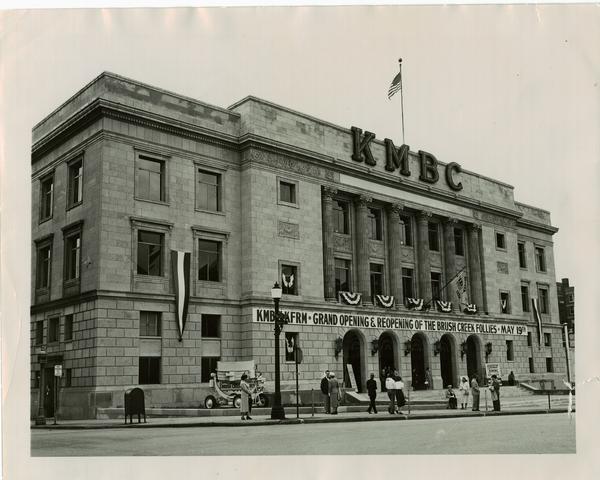
Joshua Sternfeld: And finally, before I wrap up, uh I do want to emphasize that several of our audio preservation awards specifically supported preservation of historic radio programming. Um projects have gone on to preserve the early years of the program, “All Things Considered.” Um uh the University of Missouri’s Marr Sound Archives holdings of transcription discs from the Kansas City Station KNBC. Uh 1500 hours of WNYC’s broadcast from 1938 to 1970. Um at the iconic program, “Music Time in Africa,” uh housed at the University of Michigan and the Radio Haiti Archive held by Duke University. So for all the programs that I’ve covered here, uh our program staff is available to assist you in preparing your application. And for nearly all of them, we will also read draft narratives. On the info- there are uh information pages for each of the grant programs that you may find on our website neh.gov and you will see a deadline for submitting a draft uh to our division. Um But if you have any questions, um uh in the meantime, please please feel free to email me. Um And my email address is there JSternfeld@neh.gov uh or our main preservation inbox, which is preservation@neh.gov. So thank you.

Allison Schein: Thanks, Josh. That was great. Shout out to a previous project, ESS and CAA so I’m really glad you were able to help them out. I’m sure they were very much appreciative. And thank you to Sharon and Erin as well for spending your time with us. And uh now we will open it up for the Q and A.

Jesse Johnston: Yeah, and I would also like to just um amplify that. Thank you to the presenters. It’s uh you know, I know much of this is public information, but I think it’s one of the things I would uh emphasize for everybody here is that it’s really important to kind of hear how the programs talk about this and to understand who’s gonna be receiving your application. I think it really makes it um much easier as a potential or even you know, interested applicant. So, thank you again to the three of you. Um We can allow participants to unmute if you’d like to share questions or comments directly. Um And I would ask if you want to do that, please use the raise hand function so you can click the little reactions box um I’m not sure where that is on the mobile interface, but there should be a raised hand option, and then we will see your request. Um uh The other option is, please type your question into the Q and A box or, if you like into the chat, and um we will be able to see it there, and I will speak at it so we have it on Um so folks who may not have the visual interface can

[/hyperaudio]

Radio Preservation Task Force Copyright Town Hall

Building on the success of our prior conversations, we are excited to continue our Copyright Series with a town hall conversation, with the goal to reach out to those who work with radio collections and may experience times when copyright affects decisions related to preservation and project planning.

This conversation was held on Friday March 15th at 11:00 am CST. The virtual town hall featured four speakers and a Q&A session.

An interactive transcript can be found below the video, followed by presenter bios and links to their initial copyright webinars.

[hyperaudio src=”https://videos.files.wordpress.com/05UeagEM/gmt20240315-160629_recording_avo_1920x1080.mp4″%5D

Maristella Feustle: Thanks. And, and so uh as many of, you know, probably firsthand um copyright and radio collections is a, is a particular can of worms because of the many layers of copyright interests that can be represented in a single program, especially where music is involved, but also news, talk, sports, you know, in sports without the express written consent of the Toledo Mud Hens or whichever other team is involved. Uh Wherever you have copyright, you have the actual risk, the fear of risk based based on available information and limited bandwidth to deal with it all. So the opportunity costs from decisions under these conditions uh affect preservation decisions and it’s often easier to defer decisions or have them get lost in discussions rather than fully opening that can of worms. So in today’s town hall, we’ve assembled copyright experts, three of whom appeared in our prior speaker series on radio and copyright in late 2022 to talk about various angles of the issue. But also to give more time for people working in the field to talk about their own experiences across a wide geographical area.

Maristella Feustle: So we’ll have about half the session dedicated to our panelists and then we’ll open it up for Q and A and discussion. So, uh first, first off, um um if uh if our, our panelists can introduce themselves and today just arbitrarily we’re going in reverse alphabetical order. So I think uh Kevin, that’s uh that puts you first.

Kevin Smith: Sure, thank you. And I’m delighted to join you all. Uh My name is Kevin Smith. I am currently the library director- I should say that Michael and Eugenia Wormser Libra- Director of Libraries at Colby College. The chair was just endowed. So I have to practice uh using my new title. Um I’m a, I’m a lawyer who specialized in copyright throughout my career, but my career has always been in libraries. So um I’ll uh I’ll be focusing my remarks on library preservation uh and the creation of digital collections.

Maristella Feustle: Ok. And Eric.

Eric J. Schwartz: Uh Hi. Hi. And uh thank you uh for inviting me. My name is Eric Schwartz. Um I’ve been a copyright lawyer for 36 years. Um I’m currently in a law firm Mitchell Silberberg. Long, long ago, I worked at the US Copyright office and also long, long ago I started sort of a second career all pro bono doing film and later sound recording preservation work uh helping uh initially to start the National Film Preservation Board in 1988. And I’m still on that. Uh somewhere along the line, I should get a 35-year pin, I suppose, from the library uh and the uh National Film Preservation Foundation in 1997. And uh in the no good deed goes unpunished category in Washington DC. the librarian has also uh asked me to serve on the Recording Preservation Board and just recently the Recording Preservation Foundation. So 4,4 boards dedicated preservation.

Eric J. Schwartz: And I do a lot of advising uh over the years to archives, museums, um and educational institutions.

Maristella Feustle: Thanks. And uh Charles?

Charles Cronin: We’re trying to- am I unmuted now? I think so. Yes. [laughter] OK. My name is Charles Cronin. Um I am a adjunct professor at Claremont Graduate University which does not have a law school. Um And um a visiting scholar at George Washington University. Um My, I, while I am a lawyer, I think it’s been about 30 years since I actually practiced very briefly. Um I’m, I consider myself more of a humanist. I have a PHD in, in historical musicology. Um And I haven’t been uh uh uh seeped in, in library concerns at the moment, but I’m happy to talk about other copyright issues that I’ve been, I’ve been pondering.

Maristella Feustle: Thanks and Brandon.

Brandon Butler: Yeah. So I’m uh Brandon Butler. I’m currently the director of intellectual property and licensing at the University of Virginia Library. Uh I’m also a, a co owner in the little law firm called Yazi Butler P LLC that focuses on advising fair use uh devotees including filmmakers, podcasters, and uh and TV, producers about how fair use can help them. Um And in the, in, you know, my deep history is not, not quite so deep as Eric’s or Evans. I may be the, I’m like the youngster on the line here, which is weird because um anyway, I don’t feel young.

Brandon Butler: Uh I, I, but I’ve been working in libraries for, for a while. I uh I was uh the director of uh public policy initiatives at the Association of Research Libraries. And then uh for a little while I was a clinical law professor at American University.

Maristella Feustle: Thanks. So uh we’ll, we’ll go ahead and get started and I’m gonna mute my mic and uh and uh turn it over to, to Kevin as we go around again and reverse alphabetical order.

Kevin Smith: All right. Thank you. Um As I sort of hinted in my introduction, my remarks are very much focused on libraries. Um and they’re based on the presumption that in a digital age preservation and access really go hand in hand. That is, I’m looking at considerations for digital collections that although created for preservation purposes are also going to be accessible to some group of users. I think that’s a key aspect of why we digitize for preservation.

Kevin Smith: Um So I’m going to focus that way when Maristella asked us for topics, I guess I said the first things that came to mind, one is a strategy that I developed several years ago along with a team that was working on a large scale digital collection that focused on copyright risk management and I appreciated your opening remarks, Maristella about risk. Um My goal here is to give us a way to organize some of our thinking about how we control risk. Uh when we create digital collections for preservation as well as for other uses. The other topic I mentioned is the impact of the Music Modernization Act of 2018 on how we think about collections of sound recordings. I’m pretty sure there is more expertise on this panel than I have about the MMA. But it fits nicely into the strategies that I’m going to outline. So I will simply treat it as a diversion when I get to the relevant points in what is a four-point strategy. And as I say, this strategy is about risk management. I have observed that sometimes in libraries, we think in all or nothing terms about our digitization projects. We can only digitize a collection that’s entirely in the public domain, for example, or we cannot digitize a collection unless we have permission for each and every item in that collection. But copyright seldom works that way, especially when collections contain a diverse array of types of materials and Maristella’s introduction suggested that that’s what we’re talking about in many cases in radio preservation. Our approach needs to be more about considering the risk, both the risk of creating the collection and the risk of not doing so and then finding ways to mitigate that risk. And so in order to think in terms of risk management, I suggest looking at copyright issues for any digitization process from four distinct angles.

Kevin Smith: First, this is my first point of the strategy. First, we should recognize that for most projects that have a preservation aspect to them, some of the materials involved may be in the public domain. As a reminder, materials published before 1964 had to have their copyright renewed after 28 years, a majority of works were not renewed. So even though it may not be possible to know for sure which specific materials in a collection are in the public domain. Recognizing that there are some materials that likely are PD will help us put the risk of a digitization project in a better perspective. Also, the Music Modernization Act has begun to clear up some of the uncertainty around pre-1972 sound recordings. The act brought such sound recordings into federal protection and created a graduated schedule for when sound, certain sound recordings would become public domain. The earliest batch, those sound recordings fixed before in 1923 or earlier are now safely out of protection. And there is a rolling batch of early recordings that will become openly available each year going forward. So that may also factor into our planning and reduce the sense of risk associated with digital collections that include older sound recordings.

Kevin Smith: The second strategic prong that I suggest is to seek permission when it’s possible to identify a rights holder and to focus on those rights holders who hold rights in large batches of the material in question. This is not a suggestion that we get permission for everything because I don’t think that’s possible. But for a large digitization project on the civil rights movement, for example, that I was involved in, there were a lot of newspaper articles. We started by looking at one of the large newspapers for whom we have multiple articles, we want to digitize. The one that rose to the top was the Chicago Defender and we approached them for permission. Uh The advantage of it was not only did we get permission but, we found an ally to help us with the project.

Kevin Smith: So, um again, I’m not advocating that we seek permission for every item, but rather that we look for the large or potentially litigious rights holders in order to reduce the risk. And again, we’re trying to manage risk. Here again, the Music Modernization Act has a role to play by creating a mechanical licensing scheme and a statutory collective rights organization. The MMA has made it possible to license sound recordings for digital audio transmission much more easily. Now, to me, at least the MMA is a difficult piece of legislation to read and interpret. It seems to reflect all the messiness of legislative sausage making and I am hoping there are there is more expertise on this panel. But I say that to emphasize that its provisions may not apply to all of the radio preservation projects that you are involved in. But I do want to flag this blanket license as a potential way to save time and reduce risk for at least some of those projects.

Kevin Smith: The third strategy for risk management is not surprisingly fair use. Now, I think Brandon is going to talk in more detail about fair use and and he is definitely the expert uh as far as I’m concerned, so I won’t do a lot of that here. I just wanna note two things. First, fair use is an aspect of this strategy where it’s possible to exercise some degree of control over the risk. Fair use offers us some levers we can pull um to try and control risk for a particular project. We can take steps for example, to make our collections more obviously transformative by being sure that they are include criticism and comment in the overall collection for some materials. For some materials if we perceive them as a heightened risk, we might also be able to reduce the amount that we use without compromising the overall value of the collection. Again to improve the fair use case and reduce the risk. The other point I wanna make about fair use is simply that this is the core of our risk management strategy because fair use can apply to an entire collection not just selected elements, not just those that are in the public domain or that are potentially subject to license. Fair use is what’s going to encompass our thinking about the entire collection. Um And fair use is a strategy that is made for- its provision of the law- that is made for digital preservation, for the kinds of activities that libraries especially are involved in. So that’s just to say, please listen closely to what Brandon has to say and I’ll finish up pretty quickly so we can move to the other speakers.

Kevin Smith: Um My last strategy is simply what people generally call a takedown policy, which is to say that we should be prepared to take down materials from a digital collection if we receive an objection from the rights holder, of course, we might need to do that. But I wanna qualify this strategy with a caveat. Whenever possible I suggest that we don’t remove material from an- permanently remove material from an accessible digital collection until you’ve talked to the person who is raising the objection. For one thing, you can politely ascertain if they really do hold the rights on the basis of which they’re objecting to your collection. In my experience it’s surprising how often they cannot provide basic evidence of ownership. But more importantly is that those conversations often lead to better understanding from both sides and sometimes eliminate the need to take material down. I once had a conversation with a woman who was very angry about the fact that a letter she had written years earlier was part of a digital collection, uh this was at Duke University, and I had some responsibility for this digital collection. Two things came out of that conversation. First, I learned that her major objection to the inclusion of this letter was the address that was still visible on the digital version of the letter, which was actually the address of her mother’s house and she did not want that um on the internet. Well, we could easily redact the address from the digital version and we did so while she and I were still talking, but she also learned something that her letter had had a significant impact on the topic at issue and was really a part of the historical record. By the time we hung up, she had withdrawn her objection to the letter being included without the address in our digital collection. And we had become better curators of that collection from what we had learned by talking to her. So I wanna qualify a takedown strategy. It’s really a talk to people strategy. And that’s the final point in my four-point strategy for managing risk when we think about digital collections and especially digital collections that have a very diverse set of materials that are included in them. And that’s my dog.

Maristella Feustle: Thanks Kevin! And we’ll turn it over to Eric.

Eric J. Schwartz: Well, thank you. Um And I, I uh think that Kevin’s strategies, uh four points make total sense to me. Um One, quick caveat, of course, that lawyers also have always have to provide on these sorts of things is that I’m not here representing anyone and the opinions are solely, um, my own. Um, a couple of things I, I was asked, um, I think to take a look at Section 108. But before doing that, a quick structural uh comment for those of you unfamiliar with uh the sectional numbers of copyright law, the way copyright law is structured. Section 106 are the five exclusive rights of copyright owners, uh reproduction, distribution, adaptation, public performance and public display. Section 107 is fair use. And then 108 is the exceptions specific to libraries and archives, public libraries and archives. Uh And then there are other exceptions that run 109- sections 109 through 122. And if you look at the, the way exceptions were written by Congress and some amended over time, um some apply to specific users 108 public libraries and archives, some for specific types of uses, public performances in section 110. So I just, you know, uh uh when I start throwing around these numbers, I just didn’t wanna uh lo lose my audience as I usually do in my law school uh classes. Second point is that I think mostly I was here uh to participate in our so-called lightning round of questions or you may refer to it as the uh stump the copyright lawyer uh segment of our program today. So I’ll be happy to answer any questions you may have. Couple things on 108. When I started looking through some of my notes, at least the ones that are in my electronic system. I found my comments from 2009 the uh Recording Preservation Board, we had a 108 study group. I found my comments from 2013 at Columbia Law School, the uh so called Kernochan Center. And then I thought back to the studies that we used to be required to do at the Copyright Office in the 1980s, the so called 108 Istudies that uh the copyright office wrote and I probably nobody read.

Eric J. Schwartz: Um And, and I just realize how frustrating it is over time to look at a section of the law that could provide, I think a lot more. Yes/no to archives Um and um museums and libraries uh if it were to explicitly include museums which it currently does not. Uh and other educational institutions. Um and the efforts to amend section 108 are just so frustrating that it’s been drawn out for so long. So a couple of things about section 108, you know, how do you navigate a section that is for the most part uh written in the 1970s. Um Well, one was Kevin’s strategy which is by private contract or private agreement. Uh I see uh Emily from the Library of Congress is, is, is uh here and knows well, two agreements that she and I worked on. I for the rights holders, the Sony Music Agreement in 2010, which uh created the so-called National jukebox, um which gave pre-1925 recordings, Victor Records uh uh to the Library of Congress for, well, the the physical materials were already there but rights to use that material. Now, this is before the MMA and as Kevin mentioned, the, the treatment of public domain works, by the way, uh one thing you know, just one point on Kevin’s point about public domain, there are differences between published and unpublished works for duration just we’ll leave it at that. Um And that agreement, the Sony Music Agreement was also with uh UC Santa Barbara too. So uh allowing uh not just the Library of Congress but also UCSB to make uh access and use of the materials.

Eric J. Schwartz: The second Agreement uh that I worked on in 2011. I had to look at my own notes. Uh was the Universal Agreement. 200,000 masters were given to the Library of Congress 1928 to 1948 master recordings. So it’s not inconceivable that you can have agreements. I mean, these were large collections obviously with, with a national institution the Library of Congress. But it doesn’t mean as Kevin suggested that other institutions, smaller institutions can have their own private agreements. Uh and uh that, you know, detail the specific types of uses that institutions can make and that can essentially override section 108. You know, the second way to deal with uh the the the shortcomings of 108, of course, with legislative reform. And as I said, a study group was formed in 2005 by the Library of Congress. A lot of smart ideas, uh you know, and a lot of compromise, that’s what happens when you have groups of rights holders, libraries and archives and other interested parties in a room. And it, it stalled, it stalled in part because uh of um the, you know, some years later, I guess the litigation pertaining to uh Google books and, and a point I’ve raised before, um I don’t think it’s very kind controversial, but I really do think it’s unfortunate that some of the library uh organizations in my, in my term, not theirs were co-opted by a commercial enterprise like Google Uh that said, don’t fix 108 because fair use will, you know, take care of all of your concerns. Well, for all the libraries and archives that I’ve worked with for over 35 years, uh if you involve a lawyer, there’s usually one in the institution that has to deal with everything in the institution, you know, labor issue who slip and fall in the, in the buildings and everything else. And you say, so I think we can do this, but it’s complicated. That’s the point at which the lawyer simply says, no, don’t do it. Uh And that’s what fair use is. It is determined on a case by case basis, fact basis. And I know Brandon will talk about it in more detail, but I really don’t think that fair use is the, the panacea, that institutions think it is. The fact that institutions don’t necessarily get sued means that the rights holders aren’t necessarily enforcing their rights against the institutions. It doesn’t mean necessarily that the uses are fair. And so the third and final way to deal with section 108, of course, is litigation. And as I said, you know, you have cases, the Ha HathiTrust case and Google Books of almost a decade ago. But again, I don’t think it’s that useful to for most archives if a lawyer is involved, I think if section 108 ever were amended and they were clear yes, I can do this. No, I can’t do that. I think a lot of institutional uh archivists would say “Aha, now I know that what I can do and now I know what I shouldn’t do” because I think above all, uh from my experience, the most um law abiding copyright law abiding citizens are um archivists and, and librarians and, and other museum officials, it’s just sort of in their nature. Um So I looked at cases of section 108. The last, I went back the last three years. Um and there’s only four cases, three of them mentioned 108 in a footnote, um which just shows you how significant it is to the courts just very quickly to flash through them.

Eric J. Schwartz: So the book publishers sued the district Attorney uh excuse me, the Attorney general of Maryland in a case called AAP v Frosh in the District Court of Maryland. The decision rendered in February 2022 Maryland enacted a law which would have required publishers to share copies including e copies with libraries. The publishers sued saying that that law was state law was preempted by federal copyright law and they were successful. Um The, you know, the question was, was the state law requiring copyright owners to license works in conflict with the Copyright Act. And the District Court in Maryland said, yes, it is also looking by the way at a third circuit case, uh Orson involving a state law in Pennsylvania that had to do with how films were licensed. The one thing that the court did do sort of throwing a bone to libraries and archives. Uh It, it recognized and I’m reading my notes here, quote, the significance of libraries referring to section 108 and the quote privileged status. So you should all feel privileged of libraries and archives that permits reproduction for preservation purposes.

Eric J. Schwartz: But ultimately, the court said it’s for Congress, not the courts or the state legislature to regulate how libraries and archives can make use of materials and the rights of copyright owners to uh license their reproduction and distribution rights. With the exceptions of fair use and section 108 2nd case. And I’ll only mention uh two because the others are, are, are not all that significant. Um Where is the uh hachette the internet archive case which I’m sure you’re all aware of southern district of New York with a ruling uh in March of last year um for publishers suing the internet archive uh uh a nonprofit digital library infringing uh f for the infringement of books by copying 3.6 million books, scanning print copies and lending them to web users. And the court in the southern district of New York, a significant copyright uh court because it gets so many copyright cases said the uses were not fair use. The library had lawfully obtained the copies, but that didn’t support fair use because they copied entire works and they were competing with publishers uh for the licensing market and ebooks. Interesting.

Eric J. Schwartz: There’s a footnote in that case as well which mentioned section 108, which is the point of my mentioning these cases, not fair use but 108, the publishers had argued that uh that there that the ties between fair use and 108 were significant to the publishers, the court. However, uh in the southern district of New York, disagreeing with the publishers said that sections 107 and and 108 have to be constituted and treated separately. So in other words, if something is not fair use, then you’d look to section 108 or vice versa. The last case I I would mention uh was a photographer suing the University of Houston on a question of sovereign immunity. I know this is a question that uh Maristella asked us to treat in the Q and A. I’ll, I’ll simply say that the defendant, the University of Houston uh said that though they had infringed copyright, their use of the photograph was defensible as a matter of sovereign immunity. Sovereign immunity is a constitutional principle that says states can’t be sued without their consent. Uh It is also treated uh both as a matter of constitutional strength and also uh under the 11th amendment, at least in two specific instances.

Eric J. Schwartz: Um And the court agreed with the University of Houston, it said the single act of infringement is, is a kid to a transitory common law trespass. Um But so, so the bottom line is, it was not a taking uh because the author, photographer retained their right to possess use and dispose of their copyrighted work. Bottom line there is that the photographer could make the university stop its u unauthorized use of the photograph but couldn’t be paid for the unauthorized use. And in a footnote, the, the court simply mentioned section 108 along with all the other exceptions in 108 to 121. So, so that’s, you know, what, what we have on section 108. Last in my last minute, I would just mention the 22 other significant developments that you may want to be aware of. One is a this week development.

Eric J. Schwartz: Uh On March 11th, the European Union Parliament adopted the uh A I Act Artificial Intelligence Act. Uh It is a very pro copyright owner act uh with strong copyright rights protections for the ingestion of copyrighted material into the A I machines. The law is a regulation and not a directive under eu law, which means that once it goes into final force, it has to be adopted by the Eu Council. Uh And then I think there’s a two year um date of enactment. It will be the law of all 27 of the EU countries. And the other significant development. Uh If anyone wants to ask questions about is the, is the adoption of the small claims court which only started its activities in June of 2022. Uh And, and this is an alternative to federal courts for disputes which uh you know, libraries and archives can preemptively opt out of all proceedings if they want to, but they can also decide to bring disputes in the CCB if they choose to.

Eric J. Schwartz: So I’ll end there and, and turn it over, um, to, uh, the next speaker. Thank you.

Maristella Feustle: Thanks and over to Charles.

Charles Cronin: I be. Can you hear me? Yeah, you can hear me now. Got it. Ok. Good. Ok. Um, one thing I, I, uh, want to observe is that it, um, I suspect, um, one common, um, person among the, among the panelists is Pierre Ya.

Charles Cronin: Um, that, uh, I, I was a student of his many years ago and, um, I, I, so he, in fact, he spurred my interest in, in copyright, um, uh, from the get go. Um, in any case, I, I want to talk about uh, something far less, um, um, detailed, um, than uh, section 18. But, um, uh, first mention that my uh involvement with copyright has increasingly, um, been uh uh shifted to, uh, and a slightly uh related area and that is intellectual disputes and, um, international dis disputes involving cultural property. And that’s what I’m focusing on primarily at the moment. But, um, there are two things that I would, uh, I would, uh raise here this morning. Um, yeah, this afternoon for many of you. Um, and one is a project that, um, is now that I, that I’ve developed, that’s now at George Washington University Law School called Music Operating Infringement Resource.

Charles Cronin: Um, and, um, which I can, I can touch on a little later if we have time. Um But uh my current uh work in intellectual and in a copyright, uh it involves a AAA far higher level um uh concern. Um and specifically a, an article I’m thinking of uh of drafting um on literacy, technology and copyrightable expression. Um and the thesis of my article and I’ve been thinking about this for some time. I haven’t put any, put in, put the pencil to paper. Um is that copyright was intended and should, and it and should protect works of literate authors. Um And I’m sure this is uh it could be a somewhat controversial issue but um by literacy, I mean, the capacity of the author to understand and deploy visible symbols with which a work is assembled and recorded.

Charles Cronin: Um And in part, this uh this idea has come about um because of a couple of recent um uh high profile cases that you’re probably all very familiar with. Um one involving Ed Sheeran, the pop musician, um and another involving Pharrell Williams, also a pop musician um in a dispute with the uh uh heirs of the Marvin Gaye uh family. Um And in the, the Ed Sheeran dispute, which was uh um uh decided uh not sure some months ago, maybe a year ago, um Ed Sheeran was uh was, was held or the jury found uh for Ed Sheeran and that there was no uh copying of the protective expression of um um wasn’t actually Marvin Gaye was the, the co co-author of one of his, uh, one of his songs. Um, uh, and then in the Pharrell Williams case, he, uh, Williams was found liable along with Robin Thicke for, uh, infringing the protective expression in Marvin Gaye’s, uh, song that it’s, let’s give it up first. I’m not sure exactly which the song is. I’m not a popular musician and I don’t particularly enjoy pop music. Um, In any case, these are two somewhat conflicting um decisions.

Charles Cronin: They, they amazingly enough, in my opinion, the Ed Sheeran uh dispute, a decision has been appealed um which is, which I think is, is, is quite remarkable. Um And I, I doubt that it will be successful in any case. What, what I I observe from these cases is that none of the participants were in my opinion that they had only limited, if any musical literacy, it was technology that was responsible primarily for the appeal of the works. Um That is the sound engineering. Um The uh the, the, the, the audio uh engineers were in my uh view responsible for the appeal of works and even the creation of the works were probably um uh it’s, it’s the creation uh involved cutting and pasting uh sounds, basically audio, audio clips um using the technology of a recording uh recorded sound. Um The other uh case that uh has prompted uh my consideration of this uh issue of literacy, technology and copy edible expression is the um uh case um Goldsmith versus Warhol Foundation. Um Sure you’re all familiar with this.

Charles Cronin: Um in which, but very briefly, uh Goldsmith uh uh posed uh the pop musician Prince and took a photograph of him and then down the line, this is very, very, a very rough approximation of the facts. But down the line, Andy Warhol uh took that photograph, um doctored it with uh various colors and distortions. Um and uh and sold these, these uh these uh prints, um I guess they’re silk screens. Um And in that case, ultimately, the Supreme Court decided that um Andy Warhol’s uh taking of the or, or a uh adoption of these, of these photos was not uh fair use. And uh the foundation was found liable for infringing the uh photograph of Goldsmith. Um And again, in, in both of these cases, I don’t think either party um was literate in the visual arts. Um It was technology that was ultimately responsible for the marketable work and simply um conveying or, or translating the idea of conception of the, of the, of the, the purported author, whether it’s Warhol or Goldsmith.

Charles Cronin: Um And the, I think the, the um root of this evil if you will of uh of uh protecting works of non literate um authors is the Cerro case in which the um uh the Supreme Court held that uh photographs were uh potentially protect. Um based on the idea that uh, uh, a photographer didn’t simply press a button but actually posed the, the scene that he or she was, was, uh, was capturing, um, whether the dress of the, of the, the, the individuals being photographed or the, the background or the lighting, many other, many other aspects. Um, I think that there was a much stronger case for protecting, uh, uh, uh, photographs at the time of the case, which was 1884. Um Whereas today, it is machines that are, are primarily responsible uh for the, the, the value or the, the uh uh whether it’s aesthetic or, or, or, or financial of a, of a photograph. Um So I uh my, my uh thesis again is that literacy is uh is essential or should be essential for, for corporate protection and less uh less literacy. Um This uh shown in a, in a, in a work or the, the less of less a literacy is responsible, the a literate author is responsible for the, the ultimately marketable or uh appealing um artifact of the less the thinner the, the protection should be. And so literacy and music, for example, would involve um an understanding of notation um of melody, rhythm and harmony, literary works.

Charles Cronin: You obviously have to be able to, to write uh and uh and read uh words and punctuation, the visual arts, for example, um you would have to have a thorough understanding of drawing and perspective um because using visible symbols uh provides the author a distance um to uh have a high level understanding of, of uh of a work so that uh you can create uh far more complex works than you can if you simply use uh paint or sound or um uh or, or, or spoken words. Um And imagine if, uh if uh for instance, Proust had been illiterate, would we have any, um he, we would have nothing, he would, we would never have heard of, heard of Christ. Um In any case, that’s what I’ve been thinking about working on. And I don’t know whether I have uh time to talk about the music copyright infringement resource, but I can place it here in the chat if anyone is interested in taking a look at that and that now and uh I will uh let Maria Marcella take over from here.

Maristella Feustle: Thanks and uh we’ll turn it over to, to Brandon.

Brandon Butler: Excellent. Hello y’all. I am mindful that we have like uh not much time left. So what I’m gonna do, I do have some slides I am going to fly. Um And just, these are mostly like a, a little taste, a little pricey version actually of the talk that probably many of you heard uh that I gave about fair use uh at some length um to this group uh last year. Um If I have a, if I have a thesis, it is uh fair use is amazing.

Brandon Butler: It’s important. Uh it has many, many advantages over, uh, some of the, uh, specific exceptions that you’ve heard about so far and over, you know, uh, attempting to seek permission when it often isn’t necessary or, you know, attempting to determine copyright status of applying rules that are extremely confusing. Um, fair use can be, uh, a way to, um, to answer hard copyright questions. Um, much more simply actually, it has this sort of reputation as being uncertain and complicated. Um But for my money, the fair use calculus is uh a lot cleaner and simpler and faster than a lot of other technical determinations that one can make under the copyright act. So, right, in a nutshell, what is fair use? It’s the, it’s the flexible uh open ended users, right?

Brandon Butler: In the copyright Act that says you can uh use works that are in copyright, any kind of work uh uh in copyright uh without payment or permission under certain circumstances, right? And the judges use these four factors to decide whether your use is fair. Uh We probably all, you’ve probably heard these factors before, even if you haven’t heard them from me. Um You know, what is the purpose of your use, the reason for your use, right. What kind of work are you using? How much are you using? And what is the effect of your use on the market?

Brandon Butler: Those factors are great. They are based on, you know, a century and a half of previous case law that had developed in the courts. Uh Congress said very clearly when they codified fair use in the 76 fact that these factors are only meant to sort of gesture at that history. Right. And that the courts are con are supposed to sort of continue to be flexible, they’re not trying to freeze anything in place. And so courts have continued to sort of apply fair use to new situations that, you know, no one could have anticipated. I think we’re living through one of those situations right now in terms of artificial intelligence.

Brandon Butler: Um And so, but if you really, if you’re, if you try to be like a textualist and, and look at those factors and say, ok, fine, you know, let’s, let’s pretend I landed on earth yesterday from, from another planet. What are the factors mean? They’re not very helpful on their own? You really do have to read cases uh to get a sense of, of how to do fair use. Um But, you know, to my mind, the next most important thing to know about fair use is that the courts have really emphasized a couple of questions as sort of the overarching of uh the questions that drive those four factors. You know, some people don’t like that, some people regret it. Uh But I think it’s just true, we have sort of now uh somewhere between four and seven, you know, longitudinal studies of copyright case law that say this is what judges do in the vast vast majority of fair use uh decision making.

Brandon Butler: They ask under the first factor is your use transformative. Are you doing something new and different with the work that is uh you know, uh creating new information, providing uh providing a new context, serving a different audience and so on. Um Or are you doing kind of the same thing the creator was doing? Right? Um And that question informs the rest of the factor calculus because a lot of what fair use is really about is, you know, are you sort of unfairly intruding on the zone of control that copyright intends to give to the copyright holder or not? And uh if you’re doing something fundamentally new and different, uh then odds are you’re not intruding on that zone of control, you’re engaged in criticism, comment research and so on. That doesn’t uh uh offer a superseding substitute for the copyrighted work in the market. Um And then if you have a good sort of explanation of why your use is for a new and different purpose, then the courts ask whether the amount that you’ve used is appropriate to that purpose. And again, there’s a kind of mythology of fair use that says, you know, well, it’s a kind of thing that you get away with, you know, it’s something that needs to be very small and modest and, and, you know, the less the better um and in some circumstances, all else equal, less is better.

Brandon Butler: But in fact, uh what the law says over and over again and in the case law is the amount that uh the amount that you’re, that you use under fair use, um is an amount appropriate to your lawful, justified, favored purpose. And in some cases, in the entire work has been the appropriate amount. Um So its not the case, that sort of less is always more. There was a case you might have heard of in the last 20 minutes called Warhol V Goldsmith. Um And uh for my money, Warhol, V Goldsmith changed essentially nothing about what I’ve just told you that is the Supreme Court did not change fair use in that case. Um This is the core holding in in Warhol, if an original work and a secondary use share the same or highly similar purposes, right? Not transformative and the secondary use is commercial, then the first fair use factor is gonna weigh against fair use, absent some other justification, right?

Brandon Butler: So this is not a revolution in fair use. Uh case law at all. Warhol sort of doubles down on the transformative framework. Um It’s just that unfortunately, you know, uh Andy Warhol was pretty much engaged in selling images to the exact same people that Lynn Goldsmith was selling images to. Um and he used too much of her image in that context. OK. Um Another interesting thing that I’m probably I just always want to repeat in context like this one is that we have, you know, very good authority in the legislative history that fair use uh is, is very favorable to preservation, you know.

Brandon Butler: And so, um, again, you know, there’s, there’s specific protections for preservation in section 108 and those are fantastic for the reasons Eric described. It’s really nice to know and to have a very clear, you know, sort of yes, no answer uh under section 108. But I don’t know that it gets too much clearer than this in terms of what Congress intended for fair use to do as well. In terms of preservation. I think we can rely on the notion that uh fair use does apply to sort of preservation of material. So they don’t literally disappear right before their copyright terms run out. The really nice thing about fair use again is that it, it cuts a lot of Gordian knots, right? Um So there are a lot of works whose owners have, have fled the scene, you’ll never find them, you’ll never identify them.

Brandon Butler: We, we sometimes call those orphan works. Um And so, you know, a, a situation where seeking permission is, is impossible. Uh fair use uh can apply there and make seeking permission unnecessary. Um in the radio context, you know, one of the things that’s sort of confounding about radio is that you can, you can put all kinds of works on the radio, right? And so it may be that you’ve got sort of, you know, multiple copyright holders, multiple layers of works, you know, do I need to go to the sports league and clear this as well as to the broadcaster and clear this? And do I need to go to the poet who wrote the poem? And then do I need to go to the voice actor who performed it and, you know, who owns any of this stuff anyway?

Brandon Butler: And what were the contracts between these people? Um uh None of that matters if what you’re doing is fair use. Uh You don’t have to fall down those rabbit holes. And again, in terms of certainty, I’ll take the four factor calculus over, you know, uh trying to unearth the agreements that were governing, you know, CBS radio in the seventies any day, right? Um Also, there are very complex provisions in the law, uh which are important and they do what they do, you know, uh uh usefully when they apply, but fair use is always available as a kind of um adjunct to those provisions. And, you know, section 108 makes that very clear in the text of the statute that nothing in section 108 affects the rights uh under fair use. Um You know, uh and the last concept I I wanted to mention is again, the sort of undue diligence, right?

Brandon Butler: If you have, I I’m thinking especially of like collections at scale, you know, you have hundreds or thousands of items. And the question is, can I preserve all of it? Right. Um Libraries including Kevin, you know, Kevin Smith has been part of uh some of the pioneering work on this uh in the research triangle. You know, many studies have been done about how essentially this is impossible like at a collection level to determine who owns what as a pre you know, as, as a, as a, as a prerequisite for, for library uses, um can can really be essentially a project killer. But again, if you can do a kind of collection level, fair use determination, look, we’re just gonna migrate all this stuff into a format that will last more than more than five years because right now it’s stored, you know, on a fragile format, you know, that’s easy. You do that don’t hesitate.

Brandon Butler: There’s no reason to go ask someone’s permission before you do that and you save that media. Uh There are best practices uh in fair use these documents. I promoted them heavily in my last talk and I would just again commend in particular, the software preservation best practices because they are about preservation in particular. And they also highlight that, you know, there’s, there’s a fair use can apply at each step of a kind of preservation workflow, right? From kind of figuring out what is this thing to moving it to a stable format to describing it and, and, you know, cataloging it and so on. So, um so that might be a really good document for folks working with radio materials to look at and to use by analogy. Um And that’s it uh for my little talk and I’d love to hear your questions as long as they’re not about publication because I don’t know. I’m not good at that.

Maristella Feustle: Thanks. Yeah, this has been a really, really informative uh hour of uh a lot of, a lot of good, you know, a lot of good perspectives. Um So I, I do wanna open up the floor initially with the uh with the question, excellent question from Hope o’keefe about, about the publication status of, of broadcasts because uh yeah, those are definitely things that definitely questions that come up when you’re, when you’re planning and especially if you’re seeking external funding and there’s a whole section on, on copyright status, those, those things come up. Uh So, yeah, I’ll open the floor to that and uh others, if you have uh if you have questions, please raise your hand or, or type in the chat,

Eric J. Schwartz: I’ll start off since Brandon declined uh on the issue of publication. At least what, what the law says, it’s a development of case law uh from the frankly, the 1909 act signed by Teddy Roosevelt, uh which says that publication is the offering for sale or lease of copies to the general public. It’s so antiquated, you know, in a digital world. But to give you an example, four decades, one of the major news services in the time when there were only three, so you’ve got a 30% chance of guessing which one used to register its evening news that was viewed by millions of Americans as an unpublished broadcast because to their view and the copyright office accepted that while it was publicly performed and the definition of publication makes clear that a public performance is not a publication because it’s the copies. Now it would apply to digital, right? Or hard copy.

Eric J. Schwartz: In those days, it would have been tape copies. The tape copies were put into a machine and broadcast, but the copies weren’t offered for sale or licensed to their affiliates and it was just publicly performed if you ask the copyright office these days for that definition and, and I hope you’re in the building, uh you’ll get a, you’ll get a, a def uh uh they won’t answer the question on any particular use. I’ll simply say, well, you know, the punting that lawyers always do, which is to say that’s a difficult question. Thank you for asking. Um And, and fact, frankly, that’s one of what I think is one of the real shortcomings of the M MA I had nothing to do with its drafting. But I remember being asked at one point rather than determining the duration of protection of sound recordings. Right by A, as the M MA does, by the date of publication, it should have been by the date of fixation.

Eric J. Schwartz: That’s a lot easier to figure out. When was this recording made? At least it doesn’t have to be a day, month, year, just year. Much easier to figure that out than the date. When first of all, is that recording ever, especially for radio. Is it ever published at all? Um, and, uh even for recordings, I know there are some, you know, some people uh on, on this um program, uh Sam Broski could probably buy for memory, tell us, uh name a recording and give him 12 seconds and it’ll tell you the date it was released. But for the rest of us, human beings, we can’t figure that out. And I think, um by making duration based on that date makes it very hard to, if to figure out how long is, is that recording actually protected even under the M ma

Allison Schein: Brandon? Did you want to respond to that?

Brandon Butler: I just wanted to add, I did, I did, I just wanted to add one thing. I, I, uh sorry for throwing you to the wolves on that Eric. I avoid, I avoided the question for exactly the reasons Eric just described it just, it’s a crummy. It’s, it’s, I mean, it’s hard, it’s, it’s a hard one and he gave the best answer which is, we don’t know. Um, but I did want to say there’s a great, uh an important thing to know, uh to get to my original theme is that whether something is published or not is not a bar on fair use. Um It’s a thing that courts sometimes consider and they consider it, but they consider it on a case by case basis and, you know, uh, are very good friends.

Brandon Butler: The publishers actually lobbied for this change in the law after they lost several cases when uh when unpublished materials were included in, you know, like biographical books. Um and, and they got a, a AAA little sentence added to section 107 that says just because something is unpublished, doesn’t mean, you know, you can’t use fair use uh uh to use it. So, so fair use is available. Just don’t, don’t forget,

Allison Schein: did any of our other panelists want to weigh in before we moved to hope and then Harrison’s questions? No hope you have the floor and then Harrison will get to you next.

Hope: All right, thanks everyone. Um I really appreciate all of the comments you guys gave. Um And I, I’m gonna ask my question and feel free to fully respond. That’s a difficult, difficult question. Thank you for asking. Um Because I have a feeling it’s, it’s a little hyper specific.

Hope: So if it is apologies in advance, um So far, we’ve been talking about the rights to specific audio um and the artists rights within that audio. My question is about one layer above that. So I work at a university where we had a radio station that was the campus radio station here on campus. And we have um we have the doc I work in the university archive. We have the documentation uh for the releases of the individuals that are part of those recordings. Very great. Um The station was subsequently sold to a, a nonprofit outside of the university system.

Hope: Um They didn’t realize that we had the archival recordings dating back to the early sixties. The transfer contract is completely silent as to this topic. And I’m in the position where I don’t know if the rights of the previous broadcasts would automatically transfer over to them as, as part of that. And I, I do realize this is very specific but it’s sort of this upper layer of rights holders and where the copyright flows and again, feel free to say it’s a difficult question and it depends,

Eric J. Schwartz: it’s actually a straightforward question. Section 202. Copyright rights don’t transfer with the transfer of physical material unless the agreement explicitly says so. So if it didn’t say so, copyright rights were retained by the as and, or uh and all the subsequent buyer bought was physical material without copyright rights and they could make use of it if, if you know under fair use or if they were a public library or archive under section 108.

Hope: Ok. Well, that was much more straightforward than I expected. Thank you.

Allison Schein: Here, it lies the only time

Kevin Smith: the answer wasn’t. It’s too complicated. Well done. Hope. Thank

Allison Schein: you so much. You, how exciting for you. Right. But that’s a great answer. Thanks Eric for that as well. Um Harrison asks, preservation, uh, reformatting seems to be protected by belts and suspenders between 108 and fair use.

Allison Schein: Providing online access or determining the type slash degree of permission required by researchers to access. Radio programming is a big sticking point. If a researcher use is protected by fair use, could that be sufficient for an institution to provide a copy instead of requiring affirmative permission?

Brandon Butler: That feels like a me question, ah fine. Um So providing online access is a pretty broad description, right? Um And then uh on the other hand, providing access to an individual researcher who’s made a request is something different, right? Um If a uh if a researcher comes to you asking to sort of listen to or, you know, work with a copy of material, um uh I know I can think of a variety of sort of fair use arguments that might be available. Um It is case by case. And so I, you know, you might have a, a conversation with the researcher or it might be case by case in terms of the collection, like what is in this collection?

Brandon Butler: What are these materials? What are, what were their original purposes, you know, Um but uh certainly, I think uh fair use would be available. Um And, and I’d be fairly optimistic about uh relying on fair use, for example, to, to permit a researcher to get access

Allison Schein: Harrison. Do you want to jump in? I see your hand is raised.

Harrison: Uh Yeah, I will. Um because I guess the reason we think about both kind of together is increasingly is a full disclosure. I’m at the Library of Congress in recorded sound. Um And uh you know, our, our traditional access model is you can come in and listen to functionally anything in the collection, you know, specific restrictions notwithstanding. Um but it’s um almost always the second question or the first question is, well, cool. Can I get a copy or do I really have to book a flight and come all the way to DC?

Harrison: I just want to hear this one thing. Can’t you just send it to me? It’s for research and, you know, we say no. Um but, you know, that’s part of the question is that, that’s the, that’s the question that we, I think a lot of us here. And um you know, that’s the big Gordian knot that if fair use had a way through that, that would be fantastic. Um I don’t expect that that’s the answer, but that’s part of what I was

Eric J. Schwartz: getting at. So I would actually answer it the, the your comment in two parts. First of all, the question of preservation reformatting. I mean 108 has again, the antiquated, you know, damage destroyed. Well as everybody on this zoom knows too late, uh if it’s damaged or destroyed, right. That’s the whole point.

Eric J. Schwartz: Um Brandon mentioned the House report language for those of you who don’t know the House and Senate reports that accompanied the 76 Act are very instructive and, and with the exception of Scalia type judges who think legislative history has no validity, it does give a lot of direction to what did Congress mean when it adopted the law? And that reference to the A F I the follow, I think it’s the sentence following that I don’t have the report in front of me refers to uh wrong 1942 up to 1942 the transfer of nitrate film to safety film, acetate film um of the day is considered fair use. It’s the only reference in the House or Senate reports to making an entire copy of a work as being fair use. That’s not to say that the courts haven’t obviously Google books and other cases have said since then. But it is and even though A F I got the date wrong, it’s 1952 when most of the studios transferred from um nitrate to acetate it at least gives that reference, OK. That’s fair use. And, and 108, all that being said, you’ve got black letter law for transfer and then you’ve got practices and I know I’ve asked this question before of archives for decades.

Eric J. Schwartz: I do not know of institutions that have ever been dinged for doing a preservation transfer uh from a rights holder for material that is somehow in, you know, needs to be transferred from whatever original format to another format is that does, am I saying that it’s legal to do so? No, but in um Kevin’s excellent, you know, four step risk. It’s at least when you do a risk assessment, it’s relatively low, if not, no risk to do that. But as Harrison said, you know, where the rubber meets the road is? Ok. That’s the preservation copying. What about making it available on site? Um Again, I don’t think for something that’s in a collection you’re ever gonna find a rights holder that’s gonna say, you know, you allowed.

Eric J. Schwartz: So and so to put on um, headphones and listen to a recording. Uh and it’s a public performance because it’s in a public institution or looking, you know, watching a film on a steam deck is somehow, no, it’s all permissible. But outside the building and fair use does become the question. I mean, every researcher, every user of the library will say I’m doing research. Uh And is it actually research, the fact that it’s non commercial is not relevant to a fair use? But the facts would, into Brandon’s point, you sort of need more facts and need to know the particular to my point whether or not it is legally fair use. The question is for a particular one time use, is there gonna be a cause of action brought by the rights holders?

Eric J. Schwartz: A? Are they gonna know about it? And B would they do it anyway? You know, you, you can assess the risk is relatively low. But if it becomes the practice that everything in your collection is available for copying and distribution outside the building, you can be pretty sure you’re gonna hear from rights holders that say stop because it’s a, it’s a systemic issue, not a one time issue. And the other way to do it, of course, is to ask, you know, at some point, can you make copies that cannot somehow be subsequently duplicated? Because for all of my rights holders clients, right, in my firm, we represent, you know, studio record coming music publisher, individual, creative artists and on and on and on. Um their, their concern is migration out of institutions, not the use in by educators and researchers in the institution.

Eric J. Schwartz: And they also appreciate that in many instances, the institutions did a better job of sa saving their materials than they did. Charles Kevin. Did you

Allison Schein: have anything that you wanted to add?

Kevin Smith: Well, I’ll note the comment in the uh uh in the chat from Alison about whether password protection helps. And I was wondering, and I, I think Eric I’m probably looking at you about this, whether password protection help or whether specific agreements with the borrower, that is an agreement that specifies what the borrower promises to do with the work. If, does that help?

Eric J. Schwartz: Certainly, if you had a, a, an agreement with rights holders and, or if in certain subgroups of rights holders, you went to them and say, look, researchers want to make use of this material and we’re gonna password protect it on a one for one basis. Might some say, fine, they might, you know, you ask them, there are, you know, as we all know, there are three major labels, three major publishers, you know, six studios. Uh and, and they all have different um treatments of, of their own work and just as in a library or institution, no lawyer ever got fired for saying no, you can’t do that. So it’s just as likely that the internal studio lawyer or label lawyer is gonna say, no, they won’t get fired for that if they say yes and the stuff migrates out and suddenly this, you know, uh unknown recording is suddenly now widely dispersed. Why did it happen? Well, I allowed this institution to let it out um you know, that lawyers, you know, working up their resume for their next gig.

Kevin Smith: But that’s not. Thank you. But that’s not quite what I was asking. What I was asking is not an agreement with the rights holder, but an agreement between the library or archive that holds the material and the user who is asking for a copy for the purpose of research, if you have a, a contractually binding agreement where the researcher says I will not further distribute this or use it for purposes beyond research. Does that help in any way to protect the library?

Eric J. Schwartz: I, I think it would if you know, in the uh I was gonna say the old but now the 19 new mission impossible uh movies uh the the copy disintegrated after a period of time,

Kevin Smith: which, which is these days technologically possible, although probably beyond the technology of many of our libraries and archives. Thank you.

Allison Schein: Oh, sorry,

Brandon Butler: let me add one more thing. I mean, an example, that’s, that might be interesting. You know, the, the again, I think a lot depends on the kind of material you’re talking about. And so a case that, I mean, a case that’s, you know, that was litigated, actually multiple cases involved uh the use of the ingestion and processing and then literally selling access to uh attorneys briefs by lexis and Westlaw, right? And, and some attorney sued and said, well, that’s my brief. I wrote it and you’re selling access to it.

Brandon Butler: And uh the court said uh people are not, you know, you wrote that brief for a judge, you were trying to win a case. Uh Lexis and Westlaw are now selling that access to that brief and really access to not really to your brief in particular, but to, you know, browse thousands and thousands of appellate briefs as a research tool. Uh And so that’s a new purpose, different purpose, online access, commercially provided. Um you know, to anybody without asking permission from many of the rights holders, but it’s radically different right. Attorneys are in the, are in one business of winning cases for their clients. They’re not in the, the Lexus business of assembling a, a giant database of uh for research purposes. So, you know, I don’t think anybody is trying to, I don’t think any library is trying to compete with Spotify by putting radio recordings in the cloud.

Brandon Butler: I think we’re talking about recordings of rather a different nature and I would ask, what is the nature of this collection? Why were they, why were these items made? What was the interest of the person who made them and is my making them available competing with that interest in an unfair way? And I think in many cases that the answers to those questions will point in a good direction for you and you shouldn’t be scared to uh provide access.

Allison Schein: Excellent. Thank you so much, Laura.

Laura: Hi. Yes, thank you. Um I wanted to ask the four presenters about a specific case that’s been confounding myself and my colleagues for years and it seems like you all kind of touched on it. So you’re sort of the ideal people to weigh in on this because we haven’t been able to come up with an answer. Um I’m the curator of the broadcast archives at the University of Maryland. In our collection, we have the group w Westinghouse tape morgue.

Laura: So the Westinghouse company ran a Washington news bureau from about the mid fifties to the early 19 eighties. And the reporters are the ones who retained copies of a lot of the broadcast. These are speeches, their interviews, their voice cuts. Um So we have about 4000 of these tapes and we have through um outside funding, been able to digitize and make them available to the public and I’ll show you um you can look, I just sent the link if you want to see some of the tapes that we have digitized and they cover because of this time period. A lot of really seminal events in world history, the Vietnam War, Watergate Civil Rights Movement, all of that. So it’s really rich like historically rich and valuable collection. It is in high demand among podcasters and documentarians who will ask us for research copies, which we will provide because that’s part of the agreement uh that we make with them and that um we usually make with donors.

Laura: Although with this particular collection, we don’t have a specific agreement with anybody. Um but also claim that we don’t own copyright so we can’t give them permission for reuse. We do our best to try to point them in the direction of the copyright holder, which is also complicated because group W was sold and then resold and absorbed and reabsorbed and it went through all these various media conglomerations. It finally wound up with CBS. Um So we would tell people do your due diligence, try to find somebody at CBS who might be able to give you permission. But if not, a lot of people have gone ahead and used this in their documentaries and so forth. Well, we had one really hyper vigilant producer from England who said we have got to track down the copyright holder if we’re gonna use any of this, they found someone at CBS who said, oh, yeah, yeah, we own the rights to that.

Laura: Uh We’ll charge you something like $800 per second, which was a huge disappointment to us because obviously that’s very dissuasive to researchers if they’re gonna be slapped with that kind of a rate for reuse. My question is given all that you’ve said about publication. Um when it comes to broadcast and public performance, the time period of these recordings, the fact that they’re really chopped up in no way. Does this represent even the bulk of everything that Westinghouse uh produced and broadcast in their day? Does CBS have a legitimate claim to this

Brandon Butler: property? Can I say, I’m sorry. So I did, this is um this has become a major part of my law practice lately, is, is working with, with filmmakers and podcasters who are using this material and bless you for having it and taking care of it and making it available. It is a trove. Um And, you know, it’s a trove for them and it’s not really a trove for anybody else. You know what I mean?

Brandon Butler: Like it is extremely valuable for people who are writing and thinking and, and, and talking about history and, and it doesn’t have much of a commercial life on its own. Um uh And, and, you know, bless you for not requiring people to get permission. You know, there are some archives that still have these sort of weird agreements that sort of say we’ll give you a copy, but you can’t use it unless you prove to us that you went and got permission and you, you know, in many, many cases, the, the podcaster or, or doc filmmaker doesn’t need permission. And so what the archive is then doing is kind of adding more of a burden to their work than the law does. Um And that’s, I don’t think in anybody’s interests. So, um so, yeah, and, and, and I would say then, you know, you’re not obligated to do like that is not your role to tell the filmmaker, you have to go get permission, the filmmaker is on their own right to do that. They have to make that decision about their use.

Brandon Butler: Um When you’re providing things, you know, for, for, for research purposes, you know, the filmmakers trying to decide what is this film about? What am I going to put in it? Is this gonna be good audio, all that stuff? You don’t have to, you don’t have to prejudge whether, whether all that stuff is gonna require permission. I think you’re supporting research and then you should leave it to the filmmaker to make a decision about whether their downstream sort of publication uses are gonna require permission.

Eric J. Schwartz: Yeah, I, I can’t answer the question of whether CBS Desert doesn’t, you know, own the material. And do you know unless somebody did chain of title and also concern of, of a conflict of interest because I, I can’t unravel the CBS paramount via com uh WW world. Uh And we do work for uh at least I do work for one of those entities, not CBS. Um Couple of things. I mean, my bread and butter work is watching documentary film for documentary filmmakers uh including those including for instance, for PBS produced but also in independents that produce and are broadcast. They are and, and a lot of the other streamers and a review of the use of materials um is done, you know, with a time cue sheet that looks at how much is used and, and the context in which it’s used even, you know, after, I mean, Warhol did make a difference in, in its tying of the 1st and 4th, 4th factors um focusing on the competing commercial purpose that Warhol made of the photograph of Lynn Goldsmith.

Eric J. Schwartz: Uh and basically adding to the transformative use that it needed to be for a quote, further purpose or different character, uh you know, kind of tying those two things together in the commercial use. So when I watch a film with a documentarian who hates having their lawyer make creative decisions, believe me. Oh, how much did you use? How much are you commenting on it? How much are you repurposing that material for your own purpose? Uh And are you taking more than you need for that purpose? Whatever that is.

Eric J. Schwartz: And as I tell my clients, uh and they don’t think it’s funny, you know, I have a 50% chance of being right. Um But that’s, that’s what fair use is and that’s why I say, you know, a reliance sometimes on fair use. Now there’s a difference between what the law is and I may or may not be right on. Is that particular use fair? And whether or not a rights holder is going to bring a cause of action or send a letter or somehow stop a particular use uh I in, in a particular uh film or by a particular user. But I do think to Brandon’s point, it’s the ultimate user, the filmmakers responsibility. And because they have to get insurance to broadcast the, you know, they have to have a lawyer do a letter for uh eno insurance errors and omissions insurance to say to their insurer, we licensed everything there and what we didn’t license, we had, you know, a lawyer, look at it and she determined that the uses are fair use to the best of her ability.

Laura: Ok. I just want to clarify that. Um, I, I know it’s not my burden to give permission or not. Um, but I do like to give the best advice that I can to our patrons and I used to tell them, yeah, just look at fair use and, and determine what you think is best. But I think it’s low risk and I’m not a lawyer, but I think it’s low risk, but since they’ve kind of unearthed this one person at CBS who thinks they own copyright, I now feel a little bit um hamstrung like I can’t, I’m not sure what to tell them at this point. Um And that’s what I’m really asking like what, and, and, and you did answer that, uh Eric with, you know, having their own um lawyers review fair use

Eric J. Schwartz: if there is a sleeping dog problem, right? In terms of users, not n not asking the rights holders for permission. And now suddenly they know that it’s being used. On the other hand, I think the courts and I think, uh, you know, uh Charles and Kevin Brandon would agree will somehow look more favorably on a user that asked permission was denied and then decided to make fair use of the material because they’re showing I, I was willing to reasonable price, the rights holder maybe didn’t offer it at a reasonable price. And I look, weighing the four factors this determined that my use is fair and went forward with it. And the fact that I asked and they denied me a license or, you know, a license that I could afford doesn’t necessarily weigh against uh, the, the user.

Eric J. Schwartz: I could just

Charles Cronin: um mention something. Um Eric, a very, um what, what you mentioned just brings to mind, um, the sleeping dog uh uh issue. Um The same is true in music, copyright infringement cases, especially in terms of sampling. Uh I think a lot of uh uh uh songwriters make a mistake in uh seeking permission to use a snippet of uh of a pre existing uh uh audio recording and, and, uh, and uh if they, I often think if, if they had simply never requested that permission this, that, that they, this never would have been a problem. So these, these, uh litigation often seems to be um sparked by a good goodwill effort to obtain permission that was never needed in the

Eric J. Schwartz: first place. Yeah. And then, and to Kevin’s, you know, risk assessment, one of the things that I always tell clients is who is the rights holder since I’m, you know, equally on the user side and on the rights holder side, how litigious are they? I mean, who, who is, who, whose material are you using and what’s their track record of going after users for, you know, even miniscule uses. Uh And if that’s the case know what you’re stepping into because they’re gonna do it for an institution in terms of putting material up. Uh uh at least to the extent.

Eric J. Schwartz: And again, part of Kevin’s uh four stops, steps is a takedown. Um you know, respond to a takedown, have AD MC A agent and when you receive a takedown notice, I mean, that wasn’t Kevin’s point about automatically taking it down, but at least by doing that, you’ve minimized risk if, if a rights holder steps forward

Brandon Butler: and I, I’ll add, I mean, Eric’s exactly. Exactly right. You know, we have the highest possible authority for the notion that it doesn’t hurt to ask legally because it’s in the Supreme Court, you know, Campbell, the Acuff Rose, you know, poor two live crew went and asked, you know, Roy Orbison’s people and, um, and, and the Orbison folks tried to say, well, you asked and so that’s essentially a confession. You knew your use wasn’t fair and that’s why you asked. Um, and the court said, you know, quite realistically, people ask for all kinds of reasons. Um And so just because you asked, doesn’t mean your use isn’t fair at the same time.

Brandon Butler: I, I, you know, I would not feel obliged to ask in cases where, you know, your use is fair. You know, that, that to me, that’s a, sort of, it could be a waste of time and it could wake up that sleeping dog before you get your insurance bonded. Um, and, and, you know, you’d rather get the film made, get insured and if somebody is gonna get upset about it, uh, uh, let that happen, you know, at, at a point when you’re insured and your, your gnarly insurance lawyers will tell them to take a walk for you.

Kevin Smith: Yeah. And I, I’d just like to step in and agree with that. There was an article written, I guess it’s, uh, it’s a while now, uh, about the importance or not importance of fair, um, good faith, bad faith analysis as part of fair use. And the article points out that it is not, in fact a part of fair use and argues that it shouldn’t be. But what I was going to say in response to Eric’s point is, I think it’s absolutely right. And Brandon is correct that the courts are pretty clear that asking for permission doesn’t count against a user in a, in a subsequent fair use argument.

Kevin Smith: And that’s as it should be. And actually, I think in keeping with a lot of other principles in the law outside of copyright, but, um, it should not my assertion, it should not count against a user if they didn’t ask. Um, and again, I think that’s just reinforcing Brandon’s point that if they’re convinced that they have a good fair use argument. Uh They should not be penalized for alleged bad faith by not asking and some courts have done that so, but it was worth saying great thank you.

Allison Schein: From the earlier response, this is from Mike, from the earlier response regarding the college station sale of physical assets but not copyright of prior material. Is it unlikely that through decades of media mergers involving Group W CBS Paramount Viacom and other forgotten big media conglomerate names that copyright tapes, old tapes was specified. I have a uh the CBS would not own copyright question mark, but I missed how the university came into the material in the first place, but it formally transferred the university would own outright. Correct. Uh Not a lawyer. Mike says, so I think the it was Laura, the radio station originated in the university and thus then the university?

Allison Schein: No, or is this a different person? I’m sorry. That

Laura: was the, that was the college radio question. This is I’m talking about the Westinghouse. Yeah.

Allison Schein: Sorry. Yes. And so is Mike talking Mike, are you talking about the physical assets? Which I’m a little confused maybe. Um Oh, did you answer

Laura: that in the I did? Yeah, at least as far as the transfer of the materials, but it’s a good question. Um If CBS would actually own copyright or not, if they didn’t specify in the agreement and along the same lines, and I don’t want to monopolize this Q and a, and I’m sorry, but this is gone. I mean, there’s a lot of rabbit holes here. Um, kid, would we be, would somebody who is wanting permission from CBS? Would they be within their rights to ask CBS to prove that they own this collection?

Laura: Because that seems like that would be hard to do. And then it would be

Eric J. Schwartz: to interrupt, that’s the first step in copyright infringement, right? A, a, uh, a rights holder, bringing a cause of action for infringement has to prove two things, one ownership and two that there’s a taking of one of the five exclusive rights. So it the onus is on the rights holder by the way, one thing uh I’ll lose the entire audience here. But the, the section 202, that when you transfer physical, you don’t transfer copyright. That’s the so called New Act, right? That’s from 1978 forward the law before 1967 under the so called Pushman doctrine.

Eric J. Schwartz: I don’t know where I remembered that uh was that when you transferred the physical material, you also transferred the copyright even in the absence of an agreement. Uh And then at least state laws changed in 67 in New York and California, I know for works of visual arts and museums. That’s a big deal because they suddenly realized, wait, we own the canvas and we own the copyright up until that date. And the artist said, wait a minute and families, we transferred what? Um so the, the law changed by state law and then Congress basically enacted that change where the physical transfer doesn’t transfer copyright unless it expressly says. So, so to the question, and you’d have to go back to that original agreement from, you know, college station to point A to point B to C to D. And that’s what a chain of title. That’s what lawyers do is they’ll do a thorough chain of title review.

Eric J. Schwartz: And if there’s a break in the chain, then, you know, it is a so called Orphan Work and there’s uh no rights holders. I know we, we, there have been examples, for instance, the National Film Preservation Foundation where we’ve put up films on our website for the public where they, they’re probably still under copyright, but nobody owns it. So, you know, we figured, well, we have ad MC A agent and we could take it down. Um But we, we did a thorough chain of title review and said there’s a break in the chain. So whoever is gonna step forward, better prove that they own it. And nobody stepped forward in one very notable film on our website.

Brandon Butler: And a and a tiny thing to add to all that is, you know, if someone goes to CBS and says, hey, you know, I, I need your permission to use this material. Uh The, the contract that says I CBS give you permission if it’s a good contract, uh, or, you know, a relatively, you know, user, user protective contract will say I CBS, you know, represent and warrant that I own all the rights in this material and you don’t need to talk to any other parties in order to get all the rights you need. Um, you know, when we fill out, you know, Eric, Eric has seen, I’m sure many more of these than I have this sort of like insurance, you know, uh paperwork to get a piece of media insured. You know, one of the things the insurance companies wanna know is, you know, do all of your licenses include, you know, an indemnity that says that your license or represents, they own the material and if anything goes wrong, they’re on the hook, not you, right. So that’s an interesting, you know, element of all this, if you go to CBS and say, hey, I need your permission, will CBS be willing to say we will put our name on the line and promise that we have those rights

Eric J. Schwartz: and one other area in the risk assessment that we haven’t mentioned, um, is, and it wouldn’t be for large collections or la large cong you know, uh corporate rights holders necessarily, I wouldn’t go out on a limb in the risk for that. But for you, you have some material, um you can identify the author check the copyright office, has it, has it been registered in the absence of a registration writes the rights holders remedies are more limited than if it’s a registered work. And the limitation is uh injunctive relief. So they can say stop and they can sue for actual damages. Well, you know, or lost profits against the nonprofit, not for profit. The average cost of a copyright infringement case according to the copyright office two years ago is $400,000 so weighed against the $500 fee that they might get for a license versus the, that, you know, they may say stop.

Eric J. Schwartz: But that’s different than, you know, a full blown infringement. If it’s a registered work prior to when the infringement starts, then they’re entitled to statutory damages $750 up to $30,000 in the discretion of the court and uh, reasonable attorney’s fees. Um, so that’s the disincentive to use a registered work because it could be costly if you’re wrong.

Allison Schein: Excellent. And Brandon, that was a really good point that you made in the chat. If y’all didn’t see it is that they may not be tolerate, they may not be tolerating infringement so much as strategically avoiding making case law that would settle a limit on their rights. Um, which I think is an interesting point

Eric J. Schwartz: to be true by the way, because, you know, that’s how you get. Well, somebody used 20 seconds of, of a something and then suddenly the internet says there’s a 22nd fair use rule if you take 22nd because of one case, which is totally wrong because as Brandon has explained, fair use is on a case by case fact based in each instance. But once it gets out there, that’s extremely unhelpful to a rights holder to think that now this, you know, made up internet rule exists that everyone would

Allison Schein: say that. I mean, I even now lawyer, older generation lawyers will say, oh yeah, you can do that. Like you can use up to 20 seconds and I’m like, I’m not a lawyer but I’ve spent some time with them. I, I don’t think that’s true. Um, does anybody else have any, any other questions or any final thoughts? Uh, panelists? Do you have any, any closing remarks that you would like to send forth out into the universe?

Brandon Butler: I think I would just say and I bet everybody will agree. Don’t let anything stop you from doing preservation. There’s all kinds of edgy cases and, you know, could I do this? Could I do that? But the core work of preserving radio, um, you know, don’t let, don’t let any of this stuff, especially this crazy rabbit holes of stuff that you can really fall down into. Don’t let that distract you from the core work.

Allison Schein: Seven Blue. You have your hand up, please. I

Kevin Smith: think so. Hi,

7 Blue: Seven Blue is actually Wnyc. I’m in New York. Sorry. Um, I had a question that I put, I, I posted to a particular person, I meant to post it to the panel. And the question was, um I know that there’s been more types of exploiting music works, for example, like selling tiny snippets uh selling even the, the, well, that, that’s the one I I’ve, I’ve heard most and I’m wondering as, as those types of exploitation by rights holders um proliferate will the case for fair use be damaged by that? In other words, no, you cannot use five seconds of our, of this song because I am selling five seconds of that song.

7 Blue: Therefore, you’re infringing on my possibility to make money. Does that make any

Charles Cronin: sense? Yeah, I can um react to that. Um Yeah, I think it getting back to the sleeping dog, the, the uh I think the take it problem here is that uh uh many uh songwriters are um overly particular and overly um uh um cautious in uh seeking permission and probably um to the extent that they are seeking permission to use little snippets of uh of, of audio recordings in, in other words, sampling. Um It’s uh probably at the uh at the suggestion of their lawyer if in fact, they have one. and the songwriters, typically the defendants in these, in these cases um are uh don’t have uh a sophisticated Copyright Council and are um are probably unaware that what they’re doing is uh is perfectly uh uh legitimate. Um that, that, that said, um the sampling is a very, uh, thorny and unsettled area. Um, and, uh, you know, going back to, to one of the earlier sampling cases in which the court essentially said, uh, any sampling, whatever the, uh, the amount is, uh, is infringement unless it’s been, unless it’s been authorized.

Charles Cronin: Um, there have been subsequent refinements or, or, uh, elaborations on that, um, approach. Nevertheless, it’s still a, uh, a, uh, a non settled area um of uh music operating infringement law. Um So, uh bottom line, I think the, the problem is the um that uh uh songwriters um and particularly, and that, in fact, I was about to say unknown ones, but even, even well known uh performers often seek permissions uh for sampling where it’s, it’s, I don’t think it’s, it’s uh it’s necessary.

Eric J. Schwartz: Yeah, I mean, I think the music industry as it evolved and as, you know, rap, hip hop evolved from a little bit of Wild West in the early days, which, you know, the artists would say was much more advantageous for them to publishers and labels, both realizing that they were takers and takes, uh it probably made more sense to develop a, a licensing system amongst the, at least in the majors and large independents on the publishing and label side. So that there was at least some certainty by both the, you know, users and the rights holders. Um That said, I think your question actually goes a little bit to the Warhol case, which is where the Warhol case has tied the first factor the um the the, you know, transformative use and a commercial purpose to a need for a further purpose. Because in this case, the Warhol was selling in the exact same market that Lynn Goldsmith could have sold that that weighed at least for those facts in that case to be not fair use. And by the way, the Supreme Court never opined in that case on whether Warhol in, you know, 1981 when he, he was allowed by license to take the photograph of Lynn Goldsmith that she licensed the vanity Fair and recreate it. Uh as he did, what he wasn’t allowed to do and what no one knew he had done was to make other silk screen images.

Eric J. Schwartz: And the Supreme Court never opined in this case last year on whether those uses were were not fair. If he had done that and hung it in in a museum, was that a repurposing and reformatting transformative use? Yes, would have been in the same market as Lynn Goldsmith would have been a non commercial use. They might have ruled that that use is a fair use, but they didn’t rule on it. That wasn’t the question before the Supreme Court,

Brandon Butler: you have to add one thing which is, I mean, the courts have said in multiple courts multiple times, multiple ways that rights holders can’t sort of undermine fair use by creating a licensing market for fair uses. You know, if uh if, if, if Penguin Random House said, you know, from now on any critic that wants to write a critic, you know, a critical essay about our books, you know, we welcome that. Uh all we ask is that you pay us, you know, $250 and ask our permission if you want to include any quotations, right? You can’t do that. Um And the courts have, have described, you know, the markets that they care about as sort of traditional, reasonable, likely to be developed, right? Language like that.

Brandon Butler: So, you know, uh if uh for example, you know, snippets of music might be licensed for ringtones, right? OK. Like that doesn’t strike me as unreasonable. Um using music in a ring tone seems like something the artist should get paid for. That doesn’t mean that on the other hand, if, for example, I had a, a discovery service that would let people search music for a certain passage that was relevant to my research interests and I played snippets, right? So that they could do the equivalent of what they did in, in a Google search result for the internet. Uh and, and determine is this the song I’m looking for?

Brandon Butler: No, it doesn’t sound like what I’m looking for. I think that would have AAA fair use argument available to it regardless of the fact that snippets of the same length are sold for a, for a more traditional, reasonable, likely to be developed purpose like ring tones if that makes sense. Now, Hample sampling is totally a cautionary tale of, you know, a kind of a market being built up that, you know, I think some sampling is fair use and some sampling is not, uh that’s actually, I think, kind of a con a controversial opinion um because most people think it’s either all good or all bad. But um but in the, in the record industry, um it’s all bad. That is, it’s all licensed now. It’s uh it’s just become standard issue and that’s changed the way music sounds. And I think that’s, that’s too bad.

Eric J. Schwartz: I mean, I, and I agree with everything and one thing to note in the fourth factor, it’s the harm to the potential market. So, as if, for instance, in the Aster case, Aster argued, well, music labels and music publishers, you guys aren’t in the digital download market yet. So what’s the harm to the market? And the ninth circuit, the, you know, appellate court said, yeah, they, they are trying to get into the market. They had to clear all the rights with artists and songwriters and go back to all their agreements and figure it all out. But it’s certainly doing harm to the potential market because that’s where they wanted eventually to be. Um And so it found that the uh used by Napster of, of the compositions and of the recordings was not fair. Thank you.

Allison Schein: Excellent. Do we have any final questions? If not then um wanted to thank the presenters and the panelists for this great conversation and for returning once again and Eric for joining us. That was really wonderful. Um Again, this was a joint collaboration between the radio preservation task force, education, preservation divisions, as well as the National Preservation recording Board. And you will be able to find this recording and a transcript of it uh within the next couple of weeks and we will make sure everybody knows it, knows where to find it.

Allison Schein: And um, yeah, thank you, everyone and I hope you have a fabulous weekend.

Maristella Feustle: Yeah, thanks again and uh thanks for, for joining us and uh yeah, this was a really enlightening. Thank. Thanks so much. Happy Friday. Thanks. Bye.

[/hyperaudio]

About the Presenters

Charles Cronin

Charles Cronin is an adjunct professor at Keck Graduate Institute, and Claremont Graduate University, of Claremont Colleges. He is a Visiting Scholar at George Washington University Law School where he heads the online Music Copyright Infringement Resource, now used by copyright instructors, practitioners, judges, academics, and students throughout the U.S. He has published many articles on musicological topics, on music technologies and copyright, and about works on the fringes of copyright protection. He has taught copyright as an adjunct professor at the University of San Diego Law School and recently spent a year as a visiting fellow of the Information Society Project at Yale Law School. He has also worked as a consultant to the International Fragrance Association in Brussels. B.M., Oberlin; J.D., American University; M.A., Ph.D., Stanford; M.I.M.S. (Masters, Information Systems), Berkeley.


Kevin Smith

Kevin is the Director of Libraries at Colby College in Maine. He is a lawyer and a librarian, and has spent years teaching librarians and faculty about copyright. For a decade he served as Director of the Office for Copyright and Scholarly Communications at Duke University. In 2016 he became the Dean of Libraries at the University of Kansas, where he also taught Copyright Law in the KU School of Law. He moved to Maine, and Colby, in 2022, where he has continued to teach an undergraduate course about copyright and the music industry. Smith is the author of numerous articles and two books about how copyright law impacts the practice of librarians and university faculty, as well as a two MOOCs addressing those topics.


Brandon Butler

Brandon is the Director of Information Policy at the University of Virginia Library, where he provides guidance and education to the Library and its user community on intellectual property and related issues. He’s also a partner in the law firm Jaszi Butler PLLC. Butler is the author or co-author of a range of articles, book chapters, guides, and presentations about copyright, with a focus on the fair use doctrine, libraries, and higher education. Butler has taught copyright and supervised student attorneys in the IP Law Clinic at American University, and advocated for research libraries around the country at the Association of Research Libraries. He received his J.D. from the University of Virginia School of Law in 2008


Eric J. Schwartz

Eric is a partner at Mitchell Silberberg & Knupp LLP. He has over 35 years of experience as a copyright attorney providing counseling on U.S. and foreign copyright laws – including rights, licensing, exceptions, ownership and enforcement issues – for film, recorded music, music publishing, book publishing, and entertainment and business software. He also provides production counsel and transactional advice for the financing, production and distribution of feature and documentary films. He was chief production counsel and received a producer credit for the Grammy and Emmy-nominated eight-part documentary series “Soundbreaking: Stories from the Cutting Edge of Recorded Music” which aired on PBS in 2016, and was Executive Produced by Sir George Martin. Eric is an expert on film and recorded sound archival legal and preservation issues. He is Founding Director and Vice Chair of the National Film Preservation Foundation (since 1996), Pro Bono Counsel for the Library of Congress’ National Film Preservation Board (since 1988), and a Board Member on the Library of Congress’ National Recording Preservation Board (since 2003), and in January 2024 was appointed as a Board Member of the National Recording Preservation Foundation. Prior to his work in private practice, Eric served as Acting General Counsel of the U.S. Copyright Office (1994), and Senior Legal and Policy Advisor to the Register of Copyrights (1988-1994).

RPTF Copyright Series Session Three

About the series: The Radio Preservation Task Force’s Education Division, in partnership with the Preservation Division, invited three lawyers to discuss copyright as it pertains to audio-visual materials, specifically audio/radio collections over the course of three sessions.

We are excited to present the third session here featuring Brandon Butler. This presentation was held on December 1, 2022.

An interactive transcript can be found below the video.

About the presenter: Brandon Butler is currently the Director of Information Policy focuses on such matters as intellectual property, copyright, licensing and user privacy as they are related to the acquisition, dissemination and preservation of various forms of information and cultural artifacts, and as they are related to scholarly communication. He serves as an expert consultant to UVA librarians, to groups and individuals within the University, and to national and international efforts focused on relevant questions. He provides guidance and expertise to the Library as it develops plans and strategies to address the challenges that it faces as a leading university research library. He also serves as an advocate for creative legal strategies to help the University Library advance the institution’s mission “to record, preserve, and disseminate the results of intellectual discovery and creative endeavor.” As Director of Public Policy Initiatives at ARL, he represented the Association in a variety of policy matters, and was co-principal investigator of a project to develop and promote what instantly became the widely-respected Code of Best Practices in Fair Use for Academic and Research Libraries.

[hyperaudio src=”https://videos.files.wordpress.com/WR4G9XdO/brandon_butler.mp4″%5D

Maristella Feustle: All right, I think we’ll go ahead and get started. Welcome again to, to everyone joining us today. This is the third of three sessions in a series on copyright, particularly as it as it pertains to radio, but also more broadly to, to recorded sound. This is uh uh sponsored by the Radio Preservation Task Force, which is a project of the, the Library of Congress. And uh and today we have with us Brandon Butler who is uh currently the Director of Information Policy at the University of Virginia. Uh He serves as an expert consultant to UVA librarians, to groups and individuals within the university and to national and international efforts focused on questions relevant to, to copyright and surrounding issues. Uh He provides guidance and expertise to the libraries. He develops plans and strategies to, to address the challenges that it faces in the leading university research library. And of course, those are wide widely, those issues are widely shared across the, across the profession and across archival collections. Uh He serves as an advocate for creative legal strategies to help the university library advance the institution’s mission to record, preserve and disseminate the results of intellectual discovery and creative endeavor. Uh also as the director of Public Policy Initiatives at ARL, the Association of Research Libraries. Uh He represented the association in a variety of policy matters and was co-principal investigator of a project to develop and promote what became the, the well known code of best practices and fair use for academic and research libraries. And uh today, the the subject for discussion is, is again a fair, fair use and overcoming risk aversion. So, um, um, welcome to, to Brandon and, uh, we’re, we’re delighted, we’re delighted you’re here and looking forward to hearing your talk.

Brandon Butler: Excellent.

Maristella Feustle: Oh, sorry, I just, uh, yeah, I just did a, uh, a global mute and it does the hosts too.

Brandon Butler: Totally. No, that’s always good, uh, good Zoom hygiene at the very beginning. Um So, uh, yeah, it’s, I’m thrilled to be here and to speak with you all today. Um This is, you know, uh I’m a, I’m a indie rock music nerd, uh, lifelong, uh, you know, kind of sound recording enthusiast. So, uh, I love talking in particular about recorded sound and copyright. Um, so, uh, I appreciate the chance to speak with you all today. I’m gonna share my screen and, um, and get started and I, what I want to talk to you today about is, is how to do fair use, uh, without being fearful about it. Um, and how to overcome the kind of risk aversion that is too often associated with um taking advantage of what is ultimately actually a, a right uh that, that we have um uh to make fair uses. It’s an important legal right. That’s just as legitimate as the copyright uh rights of, of uh authors and others. So, um here’s a, a, an overview of what I’m gonna talk about first, I’ll sort of introduce the fair use doctrine. What is it, how does it basically work right now? Um And then I’ll talk about the strategy for overcoming fear that I am most familiar with, which is the development of best practices statements, um, which has been a really successful sort of movement, um, that’s been iterated across, uh, uh, more than a dozen communities to try to, you know, enunciate fair use values and, um, announce a kind of a set of fair use practices that the community endorses as legitimate.

Brandon Butler: I’ll talk about why those things work and how they’ve worked so far in some of the communities that have used them. And then finally, I’ll talk about some other kind of risk reducers and perspective shifters around fair use that I find helpful when I talk to people about fair use and why you shouldn’t be fearful when you take advantage of it. And then, um, we can talk. Um, so I will try to move, uh, quickly without talking too fast here. Um, so first, right, you can’t talk about fair use or I can’t talk about fair use without talking about the purpose of copyright. And uh this is um an artist’s rendering of the constitution. Uh article one section uh uh article one section eight, clause eight of the constitution. You know, it’s the part where the Congress shall have the power to raise armies and tax people and regulate interstate commerce and blah, blah, blah, blah. And uh somewhere in that list, you will find Congress shall have the power to promote the progress of science and the useful arts by securing for limited times to authors and inventors, the exclusive rights in their writings and discoveries, right? Um So that’s, that’s the constitutional basis for copyright. And it’s really interesting because you’ll hear people say, you know, sort of like copyright is, is, is constitutional, it’s a constitutional right, kinda sorta right? But if you actually read the text, which I I like to do that, um you will see Congress has the power to promote the progress of science, right? That’s what Congress has the power to do and it can do that by securing for limited times, et cetera, et cetera, right? Um And so the the the upshot of that structure, you know, which the scholar scholars of copyright sometimes call this the the two by structure of, of the clause. It means that the purpose is to promote progress and securing limited rights is a means to an end, right? And so the Supreme Court put it uh uh put a point on it in the 1970s when they said private motivation, that is the author’s motivation to secure a copyright and make money. Or, you know, the Disney Corporation’s motivation to monetize copyrights must ultimately serve the cause of promoting broad public availability of literature, music and the other arts, right? So copyright is only working when as an end result of the copyright system, the American people have the broadest possible access to culture, right? And if copyright starts to undermine that access and limit access in a way that doesn’t uh that doesn’t serve the public interest, then it’s straying from its constitutional foundations. And so, and what that means is that copyright is a, is actually a complex system that has exclusive rights as a part of the bargain, but it has rights of users as the other part of the bargain. And that that rights of users part is just as important because again, it serves the same umbrella purpose of promoting broad public access.

Brandon Butler: And so fair use isn’t crucial is just as crucial just as central to the copyright system as the exclusive rights of authors. And so what is fair use? Well, fair use is this broad flexible open-ended right to use in-copyright works without permission or payment. And what that means, what I mean by broad flexible open-ended. There’s no um if you go to to other, other countries, if you look at the laws of other countries, there are, um, there are similarish provisions to fair use in, in many other countries. But, but most of them are sort of closed ended lists. Right. And so they’ll say sort of, you know, um, if you’re, if you’re engaged in scholarship, criticism or education, uh, or news reporting then you can do fair use. And that is the, that is, those are those four things and if you’re not doing those four things, you can’t have fair use, right? You can’t have fair dealing, you can’t have whatever the sort of right is, but fair use is open ended. It uses uh sort of flexible language like such as, you know, so fair use for purposes such as scholarship, criticism, comment, um is, is not an infringement of copyright. And so what that means is that judges have this very flexible power to on a very case-by-case basis, permit unauthorized unpaid uses. Um uh in cases where that use actually supports the public interest and the, and the, and the true umbrella goal of copyright, um fair use is as old as copyright itself. It was created by judges. Um It’s part of the sort of Anglo-American common law tradition whereby judges could uh make stuff up um to, to put it not to fine a point on it. Um When judges would hear cases, uh someone would come before them and say, you know, this guy, this, this this, this person infringed my copyright and the judge periodically, uh, as the fair use law was developing, judges, you know, from time to time would say, you know, technically, yes, this looks like an infringement. It meets the test of what, you know, would be an infringement and yet it seems good, you know, it seems like this is good for the public. It seems like this is not the kind of thing that copyright should actually stop. And so I’m gonna let it go. This might be the time to disclose that I’m dealing with the early days of the COVID virus right now. Um And so I apologize for my occasional coughing. Hopefully, I’m still lucid enough to give this talk. Thanks for bearing with me. But so it was a judge made doctrine, right? Judges, judges sort of created it on the, on the, uh, over time and evolved it and it eventually evolved into this four factor balancing test which was written into American law in the late 1970s, um, but written into the law in a flexible way. So that judges still have broad leeway to apply these four factor balancing factors, um, uh, in a flexible way and to take note of changing circumstances in the world, right? So these are the four factors, right? The, the, the, the statute says judges, uh, fair use is not an infringement.

Brandon Butler: Uh, anyone who makes fair use that’s not infringing, you’ll know if the use is fair by thinking about these four factors and weighing them together. Uh uh uh And these are the factors, right? What is the, the purpose or character of the use? The reason for the use is the way I shorthand that. What kind of work is being used? Uh How much is used? And what is the effect of the use on the ordinary traditional reasonable market for the, for the work that was used? Um, you may notice something about these four factors. They’re not enough heh they’re just not enough. Um, they don’t settle the issue for you. Right? You can, you can consider those four factors and you still won’t know if a use is fair. Um, uh, the, the, the analogy I sometimes use is, you know, it’s as if I told you, you know, go out in the woods, uh, and find me a, a bear and you’ll know if something is a bear by factoring in, uh, the color of its fur, its size, its shape and what it smells like. And if that’s all I tell you, you know. Right, you can say, well, ok, so it’s big, it’s brown, smells bad. Um, you know, et cetera. You don’t know if that’s a bear or not, right? Like you’ve considered all the factors, but you need to know in light of what, right? What do these factors need to say to me in order for me to know that something is fair and for a little while, actually, unfortunately, in the, uh, seventies and eighties, after these factors were codified, there was some confusion in the courts. Um, and one of the biggest sources of, uh, sort of legal problems or problems in getting good legal advice about fair use is that if you have a, a lawyer who has not been keeping up with fair use law, who sort of went to law school in the eighties, right? Um, you know, your general counsel, generation of lawyers, um, if they’ve not been keeping up with fair use law, they might still think fair use looks like it did in the seventies and eighties, which was pretty confused, the, the courts, um, fell into this confusion for a while, um, and couldn’t quite make sense of the factors, but there’s good news, um, there’s good news, uh, uh, since then. So first of all the judges, the judges in the federal courts have, have really embraced fair use and the kind of balancing the balancing feature that fair use plays in, in copyright, especially as copyright has gotten longer and stronger. Right.

Brandon Butler: So over the course, certainly of, of my lifetime and, and I’m sure many of yours, right. Copyright term has gotten extended, you know, 20 more years in the Sonny Bono Term Extension Act in the late nineties. Um, but, you know, but of course it’s got, it was extended many times before that, right. Copyright used to last for sort of 14 years and now it lasts for essentially a century and, and more. Um so as copyright has gotten longer and stronger judges have actually generally, um looked, uh looked for ways to counterbalance the length and strength of copyright. And so fair use has grown in its importance over the last few decades Uum uh accordingly. The other thing that’s important is that the Supreme Court has said in, in two separate decisions that fair use is a, is a kind of First Amendment safety valve in the Copyright Act, right? So copyright would be a kind of private censorship law, if not for fair use. Uh and that would be inconsistent with the First Amendment. And so you need fair use in order to ensure that copyright doesn’t come into conflict with the other values in the constitution. Um So fair use has this kind of First Amendment valance which, you know, again judges love the First Amendment. And then sort of most importantly, the Supreme Court in the early 1990s kind of got its act together and, and helped all of the federal courts kind of um organize themselves a little better in terms of thinking about those four factors, right? So in a case in the early 1990s called Campbell v Acuff-Rose, the Supreme Court embraced uh a version of the fair use calculus that centered largely around the concept of transformative use. And this was a, a concept that was created by a a an appellate court judge named Pierre Laval in a law review article in the Harvard Law Review. Um and Laval was one of these judges in the 1980s who was wrestling with fair use and he kept getting reversed. Uh Back then, he was a district court judge and he kept saying like this is fair use. And the, and the appellate court would say no, it’s not. And he would say this is not fair use. And the appeal court would say yes, it is. And he was really sort of tearing his hair out like I can’t, there’s no consistency in this doctrine. So he wrote a law review article where he tried to really make sense of fair use.

Brandon Butler: And uh and he, his article was able to persuade the Supreme Court. And so in the Supreme Court’s opinion, in Acuff-Rose, they really uh centered Laval’s theory, which was uh which was centered around this concept of transformative use, right? So, taking an existing work and using it or a portion of it for a new purpose or in a new context and in a way that adds insight or uh makes it available to a, a different audience for a different reason from its original kind of creative or economic purpose, right? So it’s not merely sort of the, the opposite of fair use is a, is kind of substitutional use or unfair competition is one way to think about it, right. It’s uh uh I’m on the market and I’m selling copies of your work and competing with you in that market. Well, that’s not fair, right? Copyright is meant to allow the copyright holder to control that market and, and monetize their work. But if you’re not doing that right, if you’re engaged in a different kind of activity altogether, if you’re engaged in scholarship, criticism, et cetera, right? You’re a different part of the cultural landscape from the part that’s being economically and culturally occupied by the creator, then fair use should give you the leeway to occupy that part of the cultural ecosystem. And uh again, remembering copyright’s kind of constitutional purpose of, you know, fostering a flourishing cultural landscape, promoting the progress of science, which capital S science back in the founding era meant learning, right? Education access to information. So if your use does fit that category of a transformative use, a use that is not merely unfairly competing, but in fact doing something different, well, then the only question becomes, is the amount that you’re using appropriate to that transformative purpose? And if it is uh scholars have shown in a, a series of articles that have gotten stronger and stronger over time, uh legal scholars have examined the fair use cases after Campbell, and the most recent one was called “Is Transformative Use Eating Fair Use?”

Brandon Butler: And the answer was yes. And I think that’s great. It’s good because transformative use is coherent. It is a framework that we can understand. It makes the factors make sense. And uh and that, that a that article uh “Is Transformative Use Eating Fair Use?” came out like last year. It is brand new and it analyzes the case law right up until the most recent Supreme Court fair use case. So you can uh you can take it to the bank that transformative use is really central. So one more thing I wanted to say about fair use for the benefit of this audience, um which is the pedigree of preservation in fair use is deep and strong. So there aren’t cases about it because people don’t sue libraries, knock on wood, right? I mean, you know, uh with, with a few recent exceptions, um high profile exceptions, people don’t sue libraries for preserving things. And so there’s not case law, you can’t go and say, well, here’s uh you know, um uh uh here’s a case that shows that preservation is fair use. People don’t sue libraries, but also it’s just so, uh it’s well entrenched actually. So if you look at the, this is from the legislative history of the Copyright Act, the 1976 the last major overhaul of the act, you can see it’s the House Judiciary Committee’s report on the act says, um uh back then they were really interested in like, right preserving the old nitrate film um efforts of the Library of Congress, the AFI and other organizations to rescue and preserve this irreplaceable contribution to our cultural life are to be applauded and making duplicate copies for purposes of preservation, certainly falls within the scope of fair use, right? So, so there’s a real pedigree for preservation as a fair use. This is not something we’re kind of making up in 2022. This goes back. Um The people who codified fair use in 1978 uh had preservation in mind and it’s, they don’t really mention a lot of other fair uses like preservation is the paradigm case for a fair use.

Brandon Butler: OK. So let me talk a little bit about best practices. Um And I’m gonna have to speed up, I’m go, I’m not making enough progress here. So the best practices codes um I’ve been blessed to work on these. Uh I’ve done several of them now um since 2010 when I was uh first started working 2009 when I first started working with ARL. Um And there are a ton of them. These are just a few examples, documentary filmmakers were the first community to do it uh back in 2010. Um But since then, communication scholars, poets, and poetry scholars, uh the dance community, collections of dance related materials, open courseware, and of course, the ARL code that I worked on. And since then, there have been uh five or 10 more uh after the ARL code, including one I’ll talk about near the end of this segment about software preservation. So lots of communities have done these best practices codes. What are they, how does the, how do they come to be? Well, uh Peter Jaszi and Pat Aufderheide are the kind of uh originators of the process. And they describe it in detail in their book “Reclaiming Fair Use.” Um But the basic idea is that there you need a trusted organization, uh a convenor uh in a way that would sort of sponsor, steer and endorse the best practices. So you need somebody like ARL, right? Um or in the documentary film community, it was the, you know, International Documentary Association IDA. Um And so you need some kind of umbrella organization that will sponsor it, that will help bring it to life and give it legitimacy. Um And then with that organization’s kind of blessing, you start off with confidential interviews to find out what, what are the situations where fair use is, is potentially useful? Meaning what are the situations where people are routinely um hitting a kind of copyright wall when they’re trying to do their work? Right? And they feel like this is something important, this is something I should be able to do, but I’m being told that copyright won’t let me do it. Um And you know, important work is not getting done because there’s uncertainty about what copyright will let me do. Once we identify those kinds of problem areas, recurring problem areas in core kind of mission-critical um parts of the work that you do, then there are like small group deliberations about those problem areas to develop a kind of consensus about how fair use could apply in those areas, right? And so we start from the big principles of transformative use, you know, how is this different, how is your use culturally beneficial and not a substitute? Right? And we reason about that and we think about, OK, so what could you do to keep your use within the bounds of that transformative rubric? Right. And so then we kind of try to figure out, you know, how can we describe what the community thinks is legitimate in a set of principles that apply to these recurring scenarios and we include limitations that say, you know, if you do this much, you know, if you, if you, if you’re gonna invoke this principle, then you need to be sure not to, you know, um use it in this way, right? Or um this principle only goes so far. Um So each principle is usually accompanied by some limitations and some uh some recommended kind of best practices within the principle. Um Once we have a kind of consensus from the community, though there’s always a a kind of panel of independent legal experts who review the statement and put a kind of seal of approval and it’s not their job to say, you know, um, this is exactly the advice I would give. Right? Um, because every lawyer has it’s kind of a unique um personal kind of interpretation of a fair use and they might, they might have, they might have trimmed things over here a little differently or over there a little differently. But I think every expert can acknowledge that there’s a zone of reasonable practice. Right? And this may not be exactly what I would do, but a reasonable lawyer could certainly endorse this approach, right?

Brandon Butler: And so we uh we get that kind of a a a sign off from 3 to 4 kind of external reviewers and then we can publish the code. All of the codes live online. They’re collected at the, at the Center for Media and Social Impact um which is Pat Aufderheide’s uh center that she started at American University. And I’m a huge fan of reasoning by analogy and you can go and look at those codes and find a community that sort of looks like yours. And again, I think software preservation might be a good one for, for this group to look at in addition to the ARL Code um and, and get some insights as to how fair use might apply to what you do. The documentary filmmakers code is a good example of how these best practices can really succeed. Uh It’s the oldest code. And so it’s had the longest uh kind of time to take hold and the successes are, are remarkable. Um TV programmers like PBS, you know, Frontline um uh uh uh um um Independent Lens. Um those kind of documentary programs that uh that are really the, the lifeblood of, of doc filmmakers. They started airing the kinds of kinds of movies that they wouldn’t air before. Once the best practices code came out, the films got made, that couldn’t get made before um after the code came out. The probably the most important development was that insurance companies, every film has to get an insurance policy that says, you know, uh that covers them in case they made a mistake. Uh with all of the because films have so many legal, you know, tangle of legal obligations, they have to satisfy um every film gets an errors and omissions insurance policy and the insurers started to insure for fair use. And they said, you know, if you get a legal opinion from a lawyer that says everything in this film is fair, we will insure you uh based on that, um which they didn’t, it used to be, they wouldn’t do that, they would only insure you if you cleared and got permission for everything in your film, anything that you didn’t get permission for, they wouldn’t insure that, but now they insure fair use. And so lawyers have used the statement to build their own practices, giving people advice on how to take advantage of fair use um including me, I advise filmmakers all the time now, based on these principles, in part.

Brandon Butler: What the codes can do as well is they uh provide a kind of input for risk management. They help, they help uh practitioners put legal risks into perspective and think about the the mission risk, which I’ll talk about in more detail later on. But you know, balancing the uncertainty that they may feel about fair use against also the importance of doing your job and doing your work and getting things done, right? Um The codes help people think through in that, in that framework, um codes represent the views of practitioners in a conversation that often can feel like uh one sided. Um You know, you can say this is what my community believes is legitimate. Um And, and, and a and a and that gives you a little bit more voice in a conversation that sometimes can feel like your voice doesn’t matter, right? In a conversation with a a a general counsel or, or a leader or a gatekeeper. Um and also can provide a kind of groundwork for solidarity in the community, right? So if everyone has a kind of set of agreed principles, then you won’t find yourself, um you know, doing something and, and, and someone else in the community saying, oh, that seems risky, right? Um Because we’ve all kind of talked about this, right? We’ve had a, we’ve had a, a consensus that we’ve developed and so there’s solidarity in the community about what’s OK. The best practices also can be a much better front line kind of guide for practitioners versus a lot of the outdated kind of guidelines and rules of thumb around fair use. You know, um if you’ve, if you’ve been working in libraries or archives for, for the last, you know, 10, 15 years, um you’ve surely encountered guidelines like, you know, well, 30 seconds is fair use or, you know, uh 10 pages is fair use or 20% is fair use and none of that stuff is real. Uh uh It’s all sort of made up and, and, and very outdated. A lot of it goes back to the seventies and eighties before the transformative term that I described to you. Uh And so it’s, it’s really um useless, but it’s all we had for a long time. And the best practices approach can provide a kind of replacement for those bad old uh guidelines. Um Often if you’re engaged in kind of a, a big project, you can get, you can develop a kind of legal strategy for that project, right? You can maybe work with your counsel or work with uh uh people in your library that have some copyright expertise and say here’s how we’re gonna do this project, but sometimes you’re just doing kind of a one-off thing and you don’t have the time or the resources to develop a kind of overarching strategy. Again, the best practices can tell you well, if it’s just one of these five common scenarios, here’s what, here’s what you do, you know. And, and that makes it so you don’t feel like you have to go, um, develop, you know, get a memo from your copyright librarian for every time you touch something that’s, that’s protected by copyright. Um, and again, uh it’s really powerful because these, these statements address these common recurring uh scenarios.

Brandon Butler: Another great use for the, for the best practices. And again, you can, you can do this by analogy with, with all of the different best practices documents that are out there is that they are full of rhetoric, you know, they’re, they’re an argument. I mean, ultimately, these are persuasive documents, they are meant to help persuade the gatekeepers and the people who are in a position to say no. And so in the, the front matter, you know, every code has a kind of introductory chapter that says here, it’s the, it says essentially the kind of stuff I just told you about the history of fair use. And it’s meant to catch people up who may not, again, who may not have been paying attention to how fair use works now. And so it’s, it has this educational uh benefit. Um And then within each principle, the way they’re written ah you know, the the facilitators, people like me, Peter Jaszi, you know, we helped to translate the the consensus in the community into a, a kind of a quasi legal argument. You know, here’s why this is fair use. Uh Here’s what we heard from the community about why they think this is legitimate but put into terms that should look more familiar to an attorney who’s familiar with fair use. And so the, the, the beginning of each principle has that kind of miniature fair use argument, which can be helpful. And then whenever, whenever a best practices code comes out, we try to include sort of supporting materials online FAQs, quizzes, you know, uh infographics and all that material helps to kind of build literacy and confidence in the community.

Brandon Butler: Um I wanna suggest that you take a look at the, the software preservation code um as a potentially um especially useful uh resource for, for y’all because it is about preservation. Um And although it’s preservation of software, uh the, I think one of the biggest hurdles that people struggle to get through in terms of um thinking about fair use and preservation is the question of whether and how it’s transformative. And I was actually just going back and looking in my, you know, my sort of like Zotero Library of uh preservation, copyright materials. And uh there’s this, there’s an article by mm you know, my friend and, and yours, Peter Hirtle about uh copyright and archives and, and Peter, you know, sort of in his article says, well, you know, it’s not clear how, how archival practice is transformative because it’s not critical, right? We’re not criticizing the material. We, we don’t, we don’t comment on it, we just sort of present it. Um And that’s fair enough. I get it. Uh I’ve, you know, Peter and I have talked about this. Um but I don’t think that’s the entire story. And if you take a look at the software code, uh what you’ll see is an argument, a series of arguments about why preservation is transformative. Um having to do with the different cultural and social role that preserved cultural heritage materials play relative to the commercial market that these materials might have existed in originally, right? And so it’s, it’s never been the case that you have to literally change the thing, you know, transformative was, is a term of art. It doesn’t mean literally changing the material. It doesn’t mean you have to intervene on it or, or, or even comment on it. Um What it means is you’re doing something different with it. And uh what we argued uh in the software community based on the deliberations within that community about the importance of preserving cultural heritage software. Uh And uh was, you know, look, this material might have been originally meant uh for use by architects to help them design buildings better, right, or whatever. But when we provide it to people in a research context, they wanna know, how did this software work? How might it have influenced the way that architects designed their buildings, right? What does it look like and feel like when I run this software, they’re not designing buildings anymore, right? This is not the market for research access to architectural uh design software um well, frankly doesn’t exist, there is no research access market, right? Um And that’s exactly the point. That is where we fit in, right? That is where cultural heritage institutions come into play. We are not intruding on a market when we preserve materials and make them available for research. It is a separate cultural sphere. And that’s why uh in our view, it’s trans- it’s a transformative activity um that should be protected by fair use. So check that out, I think you will find it um valuable and, and uh interesting.

Brandon Butler: So let me lay down a few more kind of what I would call risk reducers and perspective shifters, right? For, for folks who might be anxious about fair use um and ways to kind of change the way you think about it. Um So let me get back to this concept of mission risk, right? Often when we often, when we um are thinking about, you know, uh uh is this legal right? Can I do this under the law? Is it gonna be fair use or not? Um The the the the risk associated with infringing copyright is very vivid, right? It’s very vivid to your mind. Um It’s, it’s not hard to imagine, especially those of us who kind of like lived through the copyright wars of the nineties and early oughts when, you know, grandmas were getting fined six figures uh, and more because their grandkids shared two songs on, on a, a file sharing software. Copyright infringement sounds really scary and doing it seems really risky, right? Um, but it’s important to remember the risk on the other side of the ledger, right? So it’s not the case that uh if you, if you don’t preserve this thing, then nothing will happen, but nothing bad will happen, right? If you don’t preserve materials, lots of bad things will happen, right? So you, you preserve materials and you know, if you feel like there’s uncertainty there, there’s a risk, right? There’s a risk that someone will get mad and they’ll write you a nasty letter or whatever and we’ll talk about that risk, not that high, but that if you don’t preserve those materials, there’s, of course, the risk that they’ll go away forever, right? That they’ll be lost, that no one will be able to find them that the last copy will die before it’s put on a durable medium, et cetera, right? Cultural heritage lost, research and teaching opportunities are lost, right? I mean, um copyright risk can actually influence what fields of study are available to researchers, you know, and to teachers. So, for example, um uh I’ve worked with film historians like Peter Decherney at University of Penn at uh Pennsylvania University. Um and Peter teaches, you know, massive open online courses. He’s, he’s a believer in teaching a lot, you know, in kind of spreading the gospel of like film literacy. But um if you go and look at like, what kinds of courses are offered in these big online platforms, there aren’t courses about things like the history of film because people are scared to include clips of films in these big open online courses. They’re afraid that this could be a copyright risk, you know, problem. But what that means is that, um, if you want to take a class on the internet, there’s an infinite number of classes you can take about materials that are in the public domain or about materials that are not copyright encumbered, you know, algebra, but you cannot study contemporary culture online because of copyright fear, right? That’s, that’s messed up, right? Like that’s a problem. That is a risk. Um, that is a downside. And so it’s something to think about. We have a mission to educate and to support research. And um, if we allow uncertainty about copyright to curtail that mission, something is lost. It’s not nothing. Um, research and teaching curtailed. Funding opportunities missed, right? Like if you’re not willing to flex your fair use muscles, then you’re not will-, you’re not gonna be able to apply for grants uh to digitize material for preservation purposes or to make them accessible, right? Um And ultimately, you are the client, that’s the other thing to mention, right? You know, when you talk to somebody like a general counsel, um their job is to help you do your job, right? Um And so ultimately, you know, your goals and your purposes should be the governing, you know, the, the guiding light. You know, of course, they can’t, you know, of course, their job is to, is to sort of um help you do that without incurring undue legal risk. But um but reducing risk to zero in a way that reduces your mission to zero is not an acceptable outcome, right? So remember that.

Brandon Butler: Um fair use cuts Gordian Knots. I am such a a fan of fair use. I sometimes wonder if I’m such a fan of fair use because I’m lazy. Uh You know, III I really hate um the kind of persnickety um uh uh time intensive uh work that is involved in lots of the other ways of trying to clear copyright questions. Um uh So there’s a huge problem of course, y’all may have heard, uh I’m sure by now of the the issue of what are called orphan works, right? Works where the the there’s some copyright holder out there somewhere because they’re less than 100 years old or whatever. And so probably there’s somebody out there who probably holds copyright. Figuring out who that is and where they are and getting them to answer your email is a whole another question, right? Um And if you are um completely beholden to getting express permission every time you try to do something. Well, then an orphan work is just um uh dead to you, right. There’s nothing you can do. If you can’t find a rights holder, then you can’t do anything with it. Um And that’s crazy. That is crazy. That is a failure of the copyright system if it actually worked that way. But again, fair use is meant to ensure that the copyright system doesn’t fail, right? Fair use is the safety valve that says look, the purpose of copyright is to enrich culture. And so if you reach a dead end trying to find people, um and yet, you know, uh what you wanna do is culturally beneficial uh copyright should not stop you, right?

Brandon Butler: And so orphan works are a category uh where fair use can really be helpful to you. Um And of course, in the case of orphan works, um there’s a, there’s a kind of argument that um whoever this person or entity is clearly they’re not gonna be harmed by your use because they’re not on the scene, right? They’re not, they’re not anywhere out there waiting to hear from you. They, they don’t want your money, they don’t want your permission, they, they are unfindable. Um And so fair use can sort of cut through that problem for you.

Brandon Butler: This one, I think uh the next one I think should be kind of near and dear perhaps to this community, which is the layers of multiple rights that can be involved in any particular kind of cultural object, right? So, I mean, thinking about like a radio broadcast, right? There’s songs, there’s the musical record-, there’s the the musical composition on the one hand and the sound recording on the other. But that’s true also for all kinds of other works, right? There’s a script on the one hand, a kind of written uh teleplay and then there’s the performance of the teleplay and all of these rights have different rights holders potentially, right? And if you wanted to do kind of a perfect job of clearing all rights in order to, to make use of a of a, a particular sound recording, um you may never reach the end of it, right? It’s a snarl. It’s a, again, it is a Gordian Knot, but again, fair use uh can cut through all that because fair use is based on your transformative purpose and it will apply regardless of all of the multifarious, right um uh rights holders that might be implicated by any given work.

Brandon Butler: Um Large collections are another huge Gordian Knot, right? Um There’s been lots of good research done, Henry Lowood’s, done this with software. Um There’s work in the research triangle uh with uh manuscript collections. Um It is simply not feasible to actually do the diligence that would be involved in like finding identifying and seeking permission from every rights holder implicated in, you know, a typical large archival collection. Like it’s the the sheer scope makes it prohibitive. And so again, fair use can cut through all that you can say at the level of at the collection level, this is fair use and you can do what you need to do to preserve at the collection level without fretting about all of those individual people and, and rights holders that are implicated by every little item.

Brandon Butler: Other legal provisions in the Copyright Act can be really powerful when you jump through all the hoops. But again, they, they are a lot of hoops to jump through. So the Music Modernization Act, um Section 108, the Teach Act, each of these other kind of copyright safety valves are great, but they are um much harder to navigate than fair use. Um They require uh uh more diligence, more ticking of boxes more doing searches for rights holders and things like that, that um uh or imposing technical measures in the case of Teach Act or interpreting tricky words like obsolete in the case of Section 108. Again, fair use is much simpler and cleaner and clearer. Um And I I mentioned undue diligence.

Brandon Butler: So the last thing I wanna say and then we’ll do Q and A is remember the other person has some risk calculus on their side too. Right. So there’s a reason people don’t sue libraries and it’s not just because it would be a jerk thing to do. Um, one of them is copyright litigation is expensive for the plaintiff. Right. Um, studies have shown that it’s a, it’s a six-figure. Uh, it’s sort of, uh, $300,000 was the average cost of a copyright case. And so for someone to haul off and actually go to court over copyright, they really need to be, you know, um, deep pocketed and willing to, willing to fight. And a lot of folks I think would rather avoid that if they possibly can. Um Another thing that’s important to know is plaintiffs pay when they lose fair use cases. And so that’s where my little graphic comes from. South Park Comedy Central, not, not an impoverished defendant. Um, you know, they’ve got money, they’re, they’re doing fine. But, uh, when the, when the guy who made this sort of, um, absurd video in the bottom right-hand corner sued them for making fun of him and lost, like immediately, the court said, look, this is obviously a parody. This is obviously a fair use. Um You have wasted this court’s time. You will pay Comedy Central’s lawyers. Ouch. And this is a part of the Copyright Act, um, that is uh important to know about. That a plaintiff who brings a lawsuit, uh and loses in a case where they probably shoulda known they were gonna lose is gonna end up paying the attorney’s fees and costs of the defendant. And so that means, not only is the, not only do they have the six-figure cost of their own legal fees, but then they have the six-figure costs of the other person’s legal fees as well. So it’s another reason they might think twice. Um, another thing to know is the, the big old nasty remedies that we think about when we think about copyright infringement, um, the against kind of six-figure plus remedies, those are only available to people who register their rights. And so if you have a collection of things like home tape recordings, um, amateur recordings, archival materials that were never published, they were also probably never registered. Right? And so you can think about, well, if they didn’t register, um, are they gonna be able to, are they gonna be able to kind of recover the kinds of remedies that would motivate them to, to file a lawsuit in the first place? Um, quite possibly not, right? And so that again, makes it for a potential plaintiff, it makes it not attractive to bring a lawsuit. Um, if you, if you think you’re gonna lose on fair use and you know, you, even if you win, you’re not gonna get that much money, then the plaintiffs are not likely to move forward. Um, there’s a provision in the act actually that says in, at 504 C2 , a library or library employee, a library or archives or a library or archives employee um with a good faith belief that their use is fair uh cannot be uh subject to statutory damages uh for uh uh for, for the, for the activity if they had a good faith belief that their use was fair. Right? And so again, that damages, the possible remedies a plaintiff could get are become much less attractive, right? And, and the downside for you are, is much, is much less intense. And for those of us in state institutions like the uh University of Virginia, we have state sovereign immunity from damages. That is, they can sue us for copyright infringement, but all they can get as a remedy is an order that we stop, they can’t get any money. And again, that’s gonna make it less attractive uh for anyone to bring a lawsuit against a state entity. So, you know, it’s not just, it’s not all the risk is not just on us, the risk is on the plaintiff as well. Um And it’s really not that attractive to bring kind of frivolous lawsuits against libraries. And that’s part of why it doesn’t happen.

Brandon Butler: Ok. So that’s, that’s my spiel, I’m sticking to it and it’s 2:50. So maybe we can do a few minutes of uh of Q and A before the top of the hour.

Allison Schein: Yeah, that would be great. Thank you so much that was so informative and very, very exciting. Um So we’ve got a couple of questions. Uh libraries can make duplicate copies for preservation. But what about lending these copies to patrons? Is that distribution?

Brandon Butler: So a few answers to that. Uh yeah, it is distribution, lending is distribution. Um And the then the question becomes, so what? Right? Why does this, why does this matter? Um it matters if you are looking at um specific provisions that uh only apply to specific kinds of uses? Um It doesn’t necessarily matter if you’re thinking about fair use because again, fair use doesn’t, doesn’t make those fine distinctions, you know. Well, it’s OK to make copies but it’s not OK to distribute. Um fair use will let you do anything that fits within the four factor kind of transformative analysis. So that’s what I like about it. You don’t have to kind of fret too much about those fine distinctions like is it reproduction? Is it distribution? Is it performance and so on?

Allison Schein: Great. Um What other outdated guidelines existed before the new principles? Uh CONTU comes to mind anything with bright line numbers, I assume but curious about other examples.

Brandon Butler: Yeah, you know, so CONTU absolutely, totally outdated. Um There were a set of guidelines called “the classroom photocopying guidelines” that were promulgated in the late 1970s. Um You know, that’s where you get things like uh one, you can make one copy, you know, but you can’t do two semesters in a row or two years in a row, you can’t use the same material, all that stuff- completely arbitrary that none of that is actually true. Um It was negotiated, you know, it was, it was literally cigar chomping lawyers, the law firm I used to work for, it was one of the partners I used to work for, he was the guy literally chomping on a cigar in a room, negotiating this with the publishers and it was never codified as the law. It was just a gentleman’s agreement and we’ve moved on from that. So we don’t have to worry about those anymore.

Allison Schein: Thankfully. How do video [throat clearing], excuse me, how do video recordings of programs that were broadcast on TV, Such as the nightly news fit into fair use? Are these limited to on site viewing in a classroom setting and not via a streaming or a shared video file?

Brandon Butler: Fascinating. News is fascinating because it’s subject to this weird, you know, I mean, it’s a good kind of parable for, you know, how politics actually really works. Um There was a, again in the sort of seventies, uh when the in, in early eighties, when the big last big copyright overhaul happened, there was a, a senator in Tennessee who was convinced that, you know, this may sound familiar to you, the media had a liberal bias and he wanted to, he wanted to ensure that uh Vanderbilt University in his home state would be able to build its comprehensive uh archive of broadcast news, documenting the liberal bias in the media. Um And so there’s a provision if you look at Section 108, there’s this weird little provision that does a little judo chop and says, you know, whatever else happens, you can record the news. Um but that’s not fair use. And, and it’s funny because uh it has um it, it, it, it uh well, fair use is interesting here because again, fair use is only gonna, is, is, is gonna give you the flexibility to think about those things about “Well, can I lend it or not? Can I, can I have it on site or not?” And the lens that you have to take when you think about fair use in that context is well, is access to this material in a research context, transformative? And is there something about seeing it remotely versus seeing it on campus that changes the transformative calculus? And at first blush, I don’t see anything that does, you know if that makes sense. So the, the fair use uh the fair use argument would not necessarily distinguish between on-campus and off-campus. And we’ve, we made that argument about software uh in the DMCA last last, last round, we argued for off-campus access to software because we didn’t see any fair use reason to limit it to on campus.

Allison Schein: Great. Thank you. Uh someone we uh weighed in if they’re not mistaken, part of the problem of recordings of historical radio. Oh, wait, was there a radio question? Um, historical radio is the undefined copyright status of the original broadcast? For example, if it was an interview without music, without a script, does it carry much less risk than a broadcast of a radio play with music?

Brandon Butler: [throat clearing] Yeah. Yeah. And a again, um, it’s true that you could if you wanted to sort of go down the rabbit hole of figuring, I mean, there’s some very tough technical copyright questions about copyrightbility of this kind of material. Um where there, there was a broadcast but there was never a uh there was not a script, for example. Um And you could say you, you could, you could, you could go down that rabbit hole. But again, the, the, the nice thing about fair use is if you have a, a good fair use rationale for preserving and providing research access to sort of a collection or a broadcast, then you don’t have to say, well, we’re gonna, for example, we’re gonna take out everything that was scripted, you know, because that doesn’t work, right? We can’t, the, the scripted stuff is not safe but the unscripted stuff is OK. And fair use actually has a nice kind of universality to it. If, if it, if it applies, it will apply without regard to those kind of finicky technicalities which again, sometimes those can be really interesting, you know, if uh some of some, you know, if a, if an item is in the public domain, for example, right, due to failure to meet some of the formalities that were, that were required before the 1976 Act, that’s huge. If something is in the public domain, then you can do anything with it [Right.] and you don’t even have to think about fair use. And so it can be worth picking through these kind of finicky details if you wanna sell copies, for example. But in a, in a research context, um I think that often it’s more efficient not to worry about the finicky stuff and to use fair use to get the big jobs done.

Allison Schein: Um Great. Um Does transformative use uh play a role in software video game uh emulation as opposed to just transformation? What about software editions and older version that maybe aren’t supported? But new additions are coming out and still actively sold?

Brandon Butler: Yeah, check out the code. Um I think you will, you will find it very interesting but the short answer is uh yes, it’s a lot about emulation. Uh emulation is a huge part of why we’re interested in this stuff right now because it’s making um software access and preservation so much easier.

Allison Schein: Great. And then um real quick if you can answer this in, in a minute because we wanna mindful of everybody’s time and health. Uh Can you comment on the Internet Archive’s digital controlled uh lending program which contains many in-copyright books.

Brandon Butler: Yeah, I mean-

Allison Schein: works, excuse me, not books works in.Yeah.

Brandon Butler: Yeah. Yeah. Yeah. Um all I can say about it is that uh the, the, the fair use argument for controlled digital lending is at its strongest when you can tell a story about why the the lending is kind of non-substitutional, right? It’s non, it, it is transformative, it’s, it’s, it’s working in a way that’s not unfairly competing. And so, you know, II I don’t fully embrace the kind of argument that that controlled digital lending is always and per se fair use. I think it’s fair use sometimes and not fair use other times. And we’re still working out which uses are in those two categories if that makes sense.

Allison Schein: Yeah, great. Well, thank you so much. This was really a treat. Um and, and really very, very informative and thank you again, especially uh after so recently catching COVID, we definitely appreciate you spending your time with us

Brandon Butler: You bet. Thanks for having me. It was very fun to speak with you all.

[/hyperaudio]

RPTF Copyright Series Session Two

About the series: The Radio Preservation Task Force’s Education Division, in partnership with the Preservation Division, invited three lawyers to discuss copyright as it pertains to audio-visual materials, specifically audio/radio collections over the course of three sessions.

We are excited to present the second session here featuring Kevin Smith, for his presentation, “Teaching Libraries about Copyright in Sound Recordings.” This presentation was held on November 17, 2022.

An interactive transcript can be found below the video.

About the presenter: Kevin Smith became the first Michael and Eugenia Wormser Director of the Libraries at Colby College in August 2022.  Prior to Colby, he was Dean of the Libraries at the University of Kansas, where he also taught Copyright Law as Courtesy Professor of Law.  He became dean at KU in 2016 after 10 years as Director of Copyright and Scholarly Communications at the Duke University Libraries. In his role as both a librarian and a lawyer specializing in intellectual property issues, Smith advises faculty, staff, and students about the impact of copyright, licensing, and the changing nature of scholarly publishing in higher education.  He has also taught a course on Legal Issues for Libraries with Will Cross at the UNC School of Information and Library Science.  Smith is the author of numerous articles on the impact of copyright law and the internet on scholarly research as well as libraries’ role in the academy. He has been a highly regarded blogger on these issues for many years, and in 2013 published Owning and Using Scholarship: An IP Handbook for Teachers and Researchers with the Association of College and Research Libraries.  His book on Coaching Copyright, with Erin Ellis, was released by the American Library Association in the spring of 2019. 

[hyperaudio src=”https://videos.files.wordpress.com/tVwHLXsv/kevin-smith.mp4″%5D

Maristella Feustle: All right, I think the the pace of people joining, joining the meeting has uh has settled down. So thanks to everyone for, for joining us today. Um This is the second in the series of talks on copyright uh sponsored by the, the Radio Preservation Task Force, which is a project of the Library of Congress. Uh This is the presentation by Kevin Smith who became the first uh Michael and Eugenia Wormser, Director of Libraries at Colby College just this past August uh prior to Colby, he was Dean of Libraries at the University of Kansas where he also taught copyright law. And um he became the dean at KU in 2016 after 10 years as Director of Copyright and Scholarly Communications at the at Duke University Libraries. In his role as both a librarian and a lawyer specializing in intellectual property issues, Smith advises faculty, staff and students about the the impact of copyright licensing and the changing nature of scholarly publishing in in higher education, he has also taught a course on legal issues for libraries with Little Cross at the UNC School of Li-Information and Library Science. He’s the author of numerous articles on the impact of copyright law and the internet on scholarly research, as well as libraries role in the academy. And he has been a highly regarded blogger on these issues for many years. And, and in 2013, published “Owning and Using Scholarships: An Intellectual Property Handbook for Teachers and Researchers” with the Association of College and Research Libraries. And uh his lastly, his, his book on “Coaching Copyright” with Erin Ellis was released by the American Library Association in the spring of 2019. So, um welcome, welcome Kevin. Um And uh many, many thanks for being, being here with us with us today. And uh we’re, we’re really glad, glad you’re here and looking forward to, to your talk.

Kevin Smith: Well, thank you very much. I’m delighted to be here. I’m going to apologize from the beginning for any uh unanticipated sound effects. I have a head cold, I’m not COVID, but I have a head cold and if I sneeze and sniffle and such, I apologize in advance. So I’m going to go ahead and share my screen and uh get started.

Kevin Smith: So I hope you all can see that screen. Thank you. So I chose as the topic, this idea of teaching librarians about copyright for a couple of reasons. First, although at KU I taught copyright in a law school, I’ve most, I’ve spent most of my career teaching librarians about copyright. Um And then I’m very aware that uh by the nature of the project that is sponsoring these talks. There are going to be people here who know a lot about these issues and I, I don’t want to be uh sort of beating a dead horse here. However, um I hope that the approach that I’m going to take, which is an effort to structure thinking about a particular copyright issue. That is how do we preserve a sound recording, um will help provide a pathway through what is a very complex area of the law. I’m also probably going to go quite fast through some very complicated material. But as I say, first of all, I really don’t want to um for those who know a lot about this topic and it is in many ways the structure uh that I, I think is important. So with that, oh, and by the way, if you have questions for me, that’s great, please put them in the chat if I see them and it’s uh it’s not too, too difficult, I’ll uh I’ll respond um as we go and if I don’t, they’ll collect them at the end and somebody will help me make sure that we get through any questions and I’m having trouble advancing my slides. Of course, I am. There we go. Uh Just follows as the day of the night. Um So copyright and librarians, librarians spend a lot of time around copyright issues more and more of course, as we make transitions in format and all kinds of things and copyright produces a high level. I literally stopped in the hallway coming in this morning with somebody with a copyright question and, uh, very concerned, uh, and, you know, the concern is sometimes it’s ethical. I want to do the right thing, but sometimes it’s really practical. I, I don’t want to get sued. I don’t wanna lose my house, which isn’t going to happen. And I try to reassure people, but that high level of anxiety means that librarians tend to self censor, they tend to not do things they would, that would be permissible because they’re not sure. And they’re concerned, um sometimes rights holders will talk as if librarians want to run amok and trample copyright underfoot. In my experience, nothing could be further from the truth. Uh by and large librarians want to obey rules and they’re frustrated when the rules are unclear or overcomplicated. Uh We’ll talk in a few minutes about a situation where the law literally has an exception to an exception to an exception. So things get pretty complicated and I think that’s frustrating. Many librarians have tried and many people, not just librarians have tried to develop rules of thumb in copyright to protect themselves. Uh It’s very common to hear about percentages of a work that you can use as fair use. None of those percentages are in the in the law and they’re almost always more restrictive than a fair use analysis would actually be, depending on the purpose because the amount that you use and fair use is intimately related to the purpose of the use. But again, my point is just that um librarians tend to be anxious about copyright, they tend to want clear rules and uh they tend to self-censor. That’s been my experience.

Kevin Smith: Copyright is complicated. It’s a mess in a lot of ways, an early judge, this is just a story, in the famous case of Folsom v Marsh from 1843 that uh was the first use of what we now call fair use. Uh But in that case, Judge Story said that copyright approaches as near as any of our law to the metaphysics of the law where distinctions are very subtle and refined and sometimes almost effervescent. Um So copyright has always been very confusing, very hard to get a hold of. As music copyright can be some of the most complicated Uh it is often a thicket of rules and licenses and I love this statue which is is called the uh Ram Caught in a Thicket, a reference to a biblical story. But uh the idea of being trapped in a thicket uh and not able to find our way out I think is uh common. And so what I will have tried to do is guide people through a process to help handle that ambiguity. Um The process that I use is a structured approach to any copyright issue. Uh it does not reduce the complexity. Uh And I think the rest of my presentation will prove that it doesn’t reduce the complexity because there’s plenty of complexity. But I hope it offers a guidepost that allows people to navigate that complexity.

Kevin Smith: So the core of the process that I want to suggest is to, is to ask people to pose five questions, the answers, these questions should be treated in order. It’s the order is intentional and it helps uh to make sure that you’re not arriving at issues you don’t need to address. Uh far too often people confronted with copyright issues start with fair use. Um And any, any question they want to try to figure out whether the use is fair use. In fact, I think fair use should be the fourth thing you look for. Um And this, these set of question is designed to help people ask in a particular order, the things they need to know in order to arrive at an answer. Um We will not be looking today at the second question about a license. Uh That’s too situations specific. Uh And at the very end, I’ll mention the question of who can you ask for permission? But for the purposes of this discussion, I want to focus on three of these questions again, in the order they’re, they’re written here. Is there a copyright? Then number three, does one of the specific exceptions in copyright help and the third question or it’s the fourth question nonetheless, is this a fair use? Um I do think it is important to look at the specific exceptions and especially in this case of preserving a sound recording, uh the specific exceptions are important and in many cases, very helpful uh before we get to fair use. So again, the order here is important and it’s intended to help people analyze the issue in a logic of the issues in a logical way.

Kevin Smith: So when we’re talking about preserving sound recordings, we’re almost always in the realm of music copyright. And as I said, music copyright is one of the most confusing areas of copyright law and even longtime experts in copyright uh throw their hands up and shake their heads at music copyright. Um Lot of reasons for the complexity. First, there are multiple rights in any musical recording. Uh Of course, composer and lyricist may have rights, a performer has rights and those rights are different than the rights of the composer and the record company probably owns rights. Uh So you’re always dealing with sound recordings with multiple rights, I suppose you’re not if a single person turns on the recorder and speaks into it, they would be the sole copyright holder in the recording. But in the vast majority of cases, and certainly if you’re talking about preserving recorded radio programming, uh you’re talking about multiple layers of copyright and the copyright protection differs. Uh The composition, the composer and lyricist is protected under one set of rights, uh all six of the exclusive rights that copyright grants. Um but the performer uh the recording uh is only protected by four of those rights. So it gets complicated because we’re talking about different protections for different forms of a work. Then there are different conflicting decisions. Uh One of the most contested areas in copyright is sampling.

Kevin Smith: Uh The, the recording of uh music from one recording on to another. Uh There have been very conflicted decisions here. And by the way, this is the area because we’re talking sampling uh occurs a lot in hip hop music. Uh This is one of the areas of copyright where the idea that copyright is a neutral law that applies equally to everybody uh is disparate. Uh The sampling decisions clearly show a disparate impact on musicians and other artists of color. Uh and also gender disparities. Um So that’s a really complicated where there are conflicted decisions and there is clear evidence of bias in the courts.

Kevin Smith: And then there were changing rules. In 2018, the Music Modernization Act uh addressed the anomalous situation that we’ve had for many years that recordings that were fixed before 1972 simply were not protected by federal copyright law. Uh We introduced copyright protection for sound recordings in March of 1972 and it was not retroactive. So federal law never applied to sound recordings. Um And for sound recordings that were fixed prior to that day until the Music Modernization Act in 2018. Um So again, music copyright is a thicket of strange and apparently contradictory rules. So I, I should look to see if like half the audience has left because I’ve been very um negative about this. But we’re gonna try.

Kevin Smith: One other thing we need to talk about just because it’s a phrase that you hear a lot is the idea of broadcast rights or neighboring rights. In most countries, copyright law is one thing and then laws about performance of sound recordings are different. They’re called neighboring rights. They’re usually in a different part of the law in most countries and in the international treaties, uh that’s not the case in the United States. We include copyright for sound recordings in our regular copyright regime. That’s why you have those places where the law, you know, these rights apply to everything else, but only these rights apply to sound recordings because we haven’t broken out neighboring rights. We’ve instead tried to uh gerrymander the law uh so that it can deal with sound recordings in the same body of law that we deal with novels and works of art. So neighboring rights in other countries pay royalties to performance, performers on sound recordings. So when a sound recording is broadcast on the radio or played publicly, there is a mechanism for performers to get a royalty. The United States does not recognize a public performance right in sound recordings and performers do not earn a royalty for uh re- public performance of recordings on which they perform. Excelt that we introduced uh 19 in the 1990s I don’t know the exact date is a limited public performance right for digital transmissions of a performance. So analog radio, you still don’t get paid if you’re a performer, uh a sound recording, a performer on a sound recording when that recording is played. But if it’s broadcast in a digital transmission, you would get a royalty uh with this addition of the digital transmission, right, which is section 106 of the copyright law. Number six, it’s the sixth uh exclusive right in copyright. Um And then the Music Modernization Act came along and applied the entire set of exclusive rights to sound recordings. So now it’s no longer just sound recordings that were fixed after 1972. They have this digital transmission right. Now all sound recordings do.

Kevin Smith: Is it getting bad enough? It gets worse. Um I am going to get to my questions now and I hope that will at least begin to structure the information that we need to answer any particular question. But I wanted to build up. I wanted to show you what a mess this is. So the first question that I encourage people to ask is, is there a copyright? Um because often there isn’t more often than people anticipate. Uh You will find that there is not that a, a particular work is not protected by copyright for a variety of reasons, especially in the works from the mid 20th century. But when we’re talking about sound recordings, usually we’re going to find that there are several copyrights and I’ve already said there are multiple rights in uh a lot of sound recordings. Um There is for music, there are the, there’s the composition, right, the performance right. Um For a recording of a radio broadcast, you will have individuals who are speaking, you may have live performance, you may have recorded performance. So there is a lot of different material. It’s, there are usually multiple copyrights in those recordings and it’s often hard to find the owners. Um And I’ve already said a lot of this about pre-1972 sound recordings. Um The one thing I should add is that the uh Music Modernization Act of 2018 gave varying terms of protection to these sound recordings that were now being incorporated into the copyright, the pre-72 sound recordings. Recordings that were fixed before 1972 as they were brought into federal protection, the law designates different periods of protection.

Kevin Smith: So the term of copyright for most of them is 95 years generally. But depending on how recently, how close to 1972 they were fixed recorded, um there’s a transition period so they may have longer than 95 years and that was to prevent anything before 1923 from dropping immediately into the public domain. So again, there’s a lot of potential confusion around this question. Uh 95 years plus the transition period uh is what we have to look at for pre-1972 sound recordings and then the protection may depend on the use. Um I’ve said this before, but I can’t say I realize from teaching law students that I have to say these things multiple times in multiple different ways before the meeting [meaning?] because it’s so odd makes sense. The public performance right only applies to digital audio transmissions of sound recordings, not analog radio. That means a performer has the right to object or get a royalty for a digital audio transmission if their work is on Pandora or Spotify or Sirius XM Radio, but not for analog transmissions, um for terrestrial radio, for example. And it’s actually a little bit worse than that because the right in digital audio transmissions only applies to certain kinds of digital services, not subscription services. So I promised you that these questions would provide some structure. But I also said they did reduce the uh complexity.

Kevin Smith: As I said, we were going to skip over the second question because it’s very situation specific. So my third question, we’ve gone from the first question. Let’s first determine if there is a copyright who the rights holders are, what rights um apply to the particular use that we want to make of a sound recording. So that’s what you get out of asking that first question. They’re not easy to determine those things, but the first question guides you to that set of questions so you have the information that’s necessary to move to the next set of questions. The third question in my list of five is, are there specific exceptions in the copyright law that will impact our ability to do whatever it is with this sound recording that we want to do? And the answer is there are, and I’m gonna talk specifically about two of them. One is section 114. And if you know the copyright law uh in the first chapter, uh there’s some preliminary matters and then there is section 106 which tells us what the exclusive rights of the copyright holder are. There are six of them and can I do them off the top of my head? I don’t know. To make copies of a work: reproduction right. To um distribute those copies, to prepare derivative works, a public performance right. A public display right. And a right over digital transmissions. Those are the six exclusive rights. Um And then there are exceptions after section 106, they’re from section 107 which is fair use to section 121 or 122, I can’t remember how many sections there are in that chapter of the copyright law. They’re all exceptions. There are exceptions to the exclusive rights. In other words, the rights holder has the right to control these uses except in these situations. So sections 107 to 121 are exceptions to the exclusive rights. One of those is section 114 and it specifically applies to sound recordings. And the way it’s phrased in the copyright law is it’s a limitation on the scope of the exclusive rights in sound recordings. That is it narrows it down by providing exceptions, you have an exclusive right except in these cases, the scope is narrower. And the first thing you find in section 114 is that the exclusive rights in sound recordings do not include a public performance right. They don’t include the public display right either but who cares. But it’s really important that it does not include a public performance right in a sound recording. So suppose I’m driving my convertible around [Waterville Bay?], which should be very cold right now. But suppose I’m driving my convertible around and I have the radio on and I turn it up really loud. I’m potentially making a public performance of uh a sound recording or maybe I have a CD in. My car actually still has a CD player. My wife’s newer car does not. But suppose I have a CD player and I put a CD in, I’m making what is arguably a public performance because people around my car, I’m at a stop sign and they’re all annoyed with me because they hate my taste in music. I’m making a public performance of that sound recording. The performer has no right to object. They don’t have a public performance right in the sound recording, potentially, though the composer of the work would have a right to object.

Kevin Smith: Um So the exclusive rights do not include a performance right. That’s one of the things we learned from section 114, uh independent fixation of the same sounds is OK. That means covers. That means I can go ahead and make a recording of, it’s a horrible thought, but a recording of me singing some popular song that I really like. I can make that recording without having to pay a royalty to the performer, the first performer. But I would still have to pay a royalty to the composer because there is a, a reproduction right and I’m reproducing the sounds that that composer uh put together. But there is not a public performance right in the sound recording from which I’m making a copy, a cover. So that’s, that’s one piece of the law that’s very, very strange. I can’t tell you how often my students would come up to me with specific examples. But what if so and so records a version of this and my answer was always the same. The composer of the work has a stake in this. They always have to pay royalties to the composer. And there are structures for this. There is what’s called a mechanical license. Those royalties are paid to composers through ASCAP. That’s the one most people know. Um BMI Broadcast Music INC is another. Um ASCAP is the American Society of Composers, [Authors] and Publisers. They exist to collect royalties on behalf of composers um for their musical compositions. Uh So that’s the statutory licensing scheme that I’m referring to there. They always have a stake in a cover, for example. Uh Even though the performer, the original performer of the song did not. And looking at the time I’ll take just a minute to digress and say this is one of the places where the music copyright has routinely done a disservice to um performers from underrepresented groups. Uh For a long time in America, there was a whole industry of doing covers of songs by um African American artists by, they were covered by white artists to make them more palatable to the majority culture and sell more copies. And the African American artists did not get a benefit from this. They did not get royalties. So, um Nina Simone who uh recorded a song that was written for her called “Please Don’t Let me be Misunderstood”, it was re-recorded a year later in a cover by group called The Animals. Nina Simone got no benefit from the runaway hit The Animals made with that song. Pat Boone and Elvis Presley were both uh artists who made their livings for a long time basically in whitewashing um recordings by African American artists. So this provision about covers that excludes performers from uh royalties, Uh what did a significant disservice uh to African American artists and other uh underrepresented groups.

Kevin Smith: So, so what does this mean for use, this particular exception? Section 114, which tells us the scope of the exclusive right in sound recordings. Well, it tells us that the rights holders in the composition have a stake and that’s the mechanical licensing I was referring to ASCAP, BMI. It tells us that the performers rights will depend on the use. Covers don’t require permission from the individual performer and neither does analog terrestrial radio transmission. Um But digital transmission on certain services does um require a royalty to the performer. And since the Modern- Music Modernization Act made that rule, the MMA also establishes a mechanical licensing scheme. So performers will get a license. There are a few other people who get li uh licensing fees here for broadcast of their work through terrestrial, I’m sorry, through digital uh transmission. Uh There is the same mechanical licensing scheme for that, that, well, a parallel mechanical licensing scheme for them that there is for composers. Um So that’s section 114. Uh There is another exception that I think is even more on point for the particular question of, can we preserve a sound recording of a radio transmission? And that’s the specific exception for libraries, section 108.

Kevin Smith: Um It’s uh it is specifically for nonprofit libraries. Um It allows preservation and it allows uh resource sharing inter library loan. Uh You have to be a library to take advantage of it. Uh And it drives librarians crazy because the rules are so complicated in section 108. This is the place where there is literally an exception to the exception to the exception. I’ll tell you about that in a minute. Um Well, I’ll tell you about it right now because it’s the next thing on my list. Sorry about that. Uh The question is, does section 108 which allows a certain number of copies to be made for preservation purposes. Does it apply to sound recordings? Um to musical or video or audio-visual work? And if you read the text of that, they have the exception and you get to the end and it says none of the above applies to musical or audio visual works. So there’s an exception to the exception. But then it says accept that two of the provisions and that the two provisions that allow for copies for preservation do apply to music and audio visual works. So that’s the exception to the exception to the exception.

Kevin Smith: Um Why it was written that way? I have no idea. Although a lot of law is written that way, I think the issue is to try and be as specific as possible, but it makes things not at all clear. The result is that probably the two provisions about preservation copies being made for preservation by a library do apply to a recording of a radio broadcast. Um You can probably use sections 108 B and 108 C to make preservation copies. Now, there’s a limited number of copies and there is also a limitation on what you can do with a digital copy. You make an analog copy, that’s fine.

Kevin Smith: You can make up to three of them and you can do what you want with them, distribute them whatever. Uh But if it’s an analog copy, the uh provision says that it, if it’s a digital copy, I’m sorry. The provision says that you cannot distribute it outside the premises of the library to the public. There is no case law to tell us what that means. There’s a lot of disagreement about both premises of the library and who the public is uh in that provision. So we know there is some limitation on what you can do with a digital preservation copy. But there’s a good deal of debate about what exactly the uh the parameters are.

Kevin Smith: So let me get to well past time probably, um the real question, can you copy a recorded radio broadcast for preservation? What kinds of content are going to be there? Well, probably as I’ve said, recorded or live music, talk news, all of those things are likely to be treated slightly differently uh in terms of the rights uh that they have. And I’ve, I’ve done something to confuse you about that already. But um the bottom line is probably, again, no case law interpreting it and some ambiguities because of the complexity of section 108, but probably section 108 does allow us to make copies for preservation, three copies at most. And uh digital distribution is severely limited, but um probably section 108 does apply. So, remember we’ve asked, is there a copyright and seen some of the complexities there?

Kevin Smith: We’ve asked about the specific exceptions. 1 14 limits the exclusive rights in a sound recording in a way that other exclusive other materials are not limited. But that’s what section 1 14 does. Section 108 says probably um libraries, nonprofit libraries can make a limited number of copies for preservation purposes and they can distribute those copies except if they’re digital copies, which almost everything we make for preservation now is um there are limitations on what we can distribute. And then this last note, another exception, the copyright law, it’s not an exception to the copyright law. I’m sorry, it’s a separate section uh reminds us to watch out for unauthorized fixation. Um So this is primarily about bootleg recordings of live concerts and things like that.

Kevin Smith: And I could imagine such a thing being included in a sound recording of a radio broadcast. So you do have to be careful about unauthorized fixation. That is somebody who records, um, a copyrighted work, the performance of the song, uh, without authorization, that recording will not be subject to any of the protections or the exceptions in copyright. It is, in fact an infringement itself. And that’s what Chapter 11 tells us. So I’ve done my best to pull together all of the specific exceptions that apply when you’re looking at the issue of recording, um, or preserving a recording of a radio broadcast. And then there’s the question of what fair use supply.

Kevin Smith: And at this point, actually, I think I, and I think librarians in general should breathe a sigh of relief. We’ve gotten to the question that as uncertain as fair use is I think is the heart of the matter and often where we’re going to find that we’re gonna be OK. Um Fair use was written for libraries. It was written for the purpose of preservation, purpose of teaching, purpose of research. Uh It’s where the law is trying to help um those of us who are committed to preserving and distributing uh the knowledge of the ages. So if we look at fair use, we get uh almost, but it’s almost the typical pattern. The purpose of historical archive of a radio station, for example, is probably transformative and a transformative purpose is the single best thing you can get uh when you’re looking at whether fair use of, of and it’s a non-commercial use almost always.

Kevin Smith: So the purpose of the use. The first factor of the fair use test is almost certainly on our side, if we want to preserve, um, a recording for radio broadcast, the nature of the material, the second factor varies really widely. It’s almost impossible to apply this factor, but it doesn’t matter because courts pretty much ignore this factor. Uh, they look heavily at the purpose and much less at the nature of the material that’s being used. Amount varies widely as well. How much of a copyrighted work uh is being used in the work we want to preserve. It varies widely, but it’s often the entire work.

Kevin Smith: And so in the standard fair use analysis, that’s not going to count in our favor. But again, courts often tell us that if the purpose is transformative, the amount doesn’t matter or is measured by what’s needed for the purpose. And so using an entire work is often acceptable because it’s necessary for the purpose. Certainly, if the purpose of creating historical archive were considered transformative, you would make the argument that the entire work has to be part of that archive. So this one is probably not going to count against us. Um Although there’ll be a lot of variants in, in how much it counts for us or or not. And then finally, is there a market to be original?

Kevin Smith: The fourth very use factor? Um When you’re creating an archive, often for a radio station that’s gone out of business. And I’m gonna talk about an example in just a minute. Um, there’s no market for the original, uh, these are unique works. The co, the conglomeration that is a particular radio broadcast is a unique work that isn’t fixed anywhere else, uh, isn’t for sale. Um, I suppose there would be a question of whether an archive of a radio broadcast that includes Prince singing. Let’s go crazy.

Kevin Smith: Just to pick a song that’s has some history with copyright law. There’s a, there’s a radio, uh a recording of a radio broadcast that includes that. I suppose you could argue about whether or not making copies for preservation purposes of that recording that radio broadcast in any way damages the market to the sale of uh recordings of prints. But I think that’s really tenuous and I don’t think a court would consider that to be uh a significant form of market impact. So I think the fourth fair use factor is probably going to favor this question about making a copy of a radio broadcast for preservation purposes. I, I think we’re in good shape on one and four. That’s often the case.

Kevin Smith: We one and four, we either know they’re on our side or we know they’re not. And the other two are ambiguous and very often they decide the matter. And I think they do here. I think that probably the argument for making preservation copies of radio broadcasts, the fair use argument is probably going to favor the copying. I wanted to close or nearly close with uh an example that I was involved in. Um that is the radio Haiti archive at Duke University. Um And when I was first brought in to assess the the copyright issue, we’re making a digital archive available to the public of the broadcast of radio Haiti.

Kevin Smith: We had to deal with all of the complexities uh that I’ve just outlined for you. Uh But there were some unique circumstancess. This came to the library from the widow of the station owner. He had been a strong political activist and opponent of the uh the regimes of the Duvaliers in Haiti and he was assassinated for his politics. Um So she had a strong interest in bringing this archive to do, having us digitize it and make it available uh to the world on the web. She asserted that she had rights from most participants and she wanted this digital distribution. Um She didn’t have documentation.

Kevin Smith: Uh The lawyer in me was very skeptical about whether she actually had the rights, but this set of recordings was very important for the history of Haiti. Uh At the time, it was the only creole language radio station in the country. Uh but had a lot to do with political movements in Haiti as well as cultural developments in Haiti. Uh So the librarian and they really wanted to do this. The lawyer in the um was skeptical of the rights that the uh the widow was telling us she held. But also aware that um you know, the most likely person to object to the preservation and, or, and the distribution, the worldwide distribution of this material was this woman herself. And she was here saying I want this, that’s a really heavy problem on the scale of going ahead with this Duke did go ahead with it.

Kevin Smith: You can find it on the Duke uh special collections and archives website. Uh They rely on the rights of the donor um transferred to them and on fair use. And I think it has been fine. Uh It’s been several years since it’s been up on the web. And I think it’s been fine, but it’s an example of like, because like I said, all of those complexities came crashing down on me and then I had to stop and work carefully through them to come to the conclusion that yes, we could do this. There was a certain amount of risk, but there was also a real risk of not doing it. And we ultimately decided that it was the, the uh the value of preserving and making public this bit of history from Haiti uh was worth whatever risk there was.

Kevin Smith: And that brings me to the last thing I wanna say, which is, this is not just about anxiety reduction where I began this talk, but it’s about risk mitigation and copyright is almost always about risk mitigation. There are very seldom clear answers. I hope for better or for worse. I hope I prove that to you. Um So when you’re considering a large collection, like the one that uh of the, the Radio Haiti archives, I always recommend thinking about four different strategies. The first is to recognize that some of the material will be in the public domain. Remember my first question was, is there a copyright?

Kevin Smith: There’s more in the public domain than people realize because at least in the United States for a long period of time, about 40 years, copyright had to be renewed. Most copyrights were not renewed and things from the middle part of the 20th century dropped into the public domain. So even if we can’t figure out which specific items are and are not in the public domain. Recognizing that there often will be such materials in a collection helps reduce overall the risk that you’re running and the anxiety that you need to feel. So first start with that first question about the public domain. My second rule here and this is where I jump to question five. Remember who do I ask for permission?

Kevin Smith: Get permission from large or potentially Liu rights holders? You don’t need to get permission for everything. But think about who are the people who are likely to object and if possible get them on board. I worked on another project involving um a newspaper archive. It was about what was called the University of North Carolina Chapel Hill called the Long Civil Rights Project. Um And there were a lot of articles from one or two newspapers in this archive. Um, some of the first African American newspapers like the Chicago Defender, talking to them about the project really helps reduce the risk.

Kevin Smith: Not only did they give them permission, they were enthusiastic about it. Um So, you know, talking to large rights holders or potentially luti ones uh is a good way to reduce the risk even though you recognize that you’ll never find all the rights holders um support your fair use case, do everything you can to make the collection transformative. Uh especially for example, include historical uh background, historical references, you know, bring together things from your uh special collections to the creative context, a new context and the new meaning because that’s gonna be really important for the fair use case. And then the last one is always respond to inquiries. Um people call up and they’re angry. I dealt with a case like this where a person called me up angry because something she had written was in one of our archival collections that was online and the conversation, we did not have to take the material down. The conversation was long, but it was really fruitful for both of us because I learned more about the context that I was able to pass on to the curators.

Kevin Smith: And she recalled why, what she had written was historically insignificant. She recalled that this was important and she understood why we had put it in as part of the collection. And when we got off the phone, she didn’t want to want us to take it down and we had learned a lot so those conversations can be really, really important. But notice I’d say respond to inquiries, take down should be a last resort. Somebody who calls and is angry about this. So usually if you can’t come to the kind of conclusion I did with my person, if you can’t come to that kind of conclusion, you might say, well, it sounds like we just need to take this down, but that should be a last resort and that will satisfy the vast majority of people who are angry about something in your collection. So these four problems of strategy for risk mitigation, I think, you know, start with your five questions and end with these four prawns for risk mitigation.

Kevin Smith: And I think I hope that this structure will help you think through projects about all kinds of things, but including uh the preservation uh sound recordings of radio broadcasts. And I will stop through that and say, thank you for your attention. And uh can I answer any questions and I can’t see the chat or something?

spk_2: There are some questions and I realized when I came back on that my mic was not muted. So I apologize that there was all sorts of clicking noises. I was trying to get the captions figured out. However, let’s start with questions. Emily asks if I want to digitize a recording of, of a professor’s lecture at Bates or elsewhere. Do I need to attempt to get permission from the lecturer? In order to do so, what if said lecturer is deceased?

spk_2: How may I obtain permissions if any? And this is for in-house

Kevin Smith: use? Ok. Um, you know, that’s the situation where my first reaction would be to try and get permission because it makes things a whole lot easier. But first of all, is there a is there a uh a copyright? How old is the recording? Um We wanna make sure it was authorized that the person knew they were being recorded. So there’s all of those questions that I want to walk through.

Kevin Smith: But the bottom line for me is let’s reach out to family that’s who you would ask for. Uh especially for a lecturer who comes and gives uh you know, as an individual gives a lecture. Um The record, the authorized recording, the rights are held by the lecturer. No question about that. When that person died, they would have passed to their family. They very few people say in their wills. Here’s the people who get my copyrights.

Kevin Smith: Most people don’t even realize they have them. Uh So they pass in a will as part of a residual estate usually um very often to um a surviving partner or spouse uh them to Children. So my first reaction would be, can we find and reach out to um those people if we can? Then I think we’re in a fair use situation and you ask yourself those uh those factors. Um I think especially if you can put it in context where there are other lectures on the same topic where you can create a digital archive where they’re in dialogue, then you’re going to have a strong argument for a transformative fair use. So that, that would be my approach.

spk_2: Great. Thank you. Next question. Hi, Kevin. Thanks for this info. Is it possible to discuss a case study?

spk_2: I’m working on digitizing a portion of sound recordings from the 19 fifties for online use as well as preservation. Most of the recordings were live sound recordings, meaning meetings, events, demonstrations since these were never quote unquote published. Do the speakers captured in the sound recordings still hold copyright or would any permissions lie with the creator who recorded the sound? Would you support an order for work slash fair use determination if the errors of the speakers in this context

Kevin Smith: cannot be found? Yeah, there’s a lot in

spk_2: maybe that takes, gets taken offline if that

Kevin Smith: very well. And, and this is one of those points where I think, you know, I need to pay for a pencil in front of me. I need to be writing things down and things will get through. So I’m a little concerned about you relying on what I say off the top of my head. Ok. Fair enough. Yeah.

Kevin Smith: But having said that I’m gonna go ahead and say some things off the top of my head. Um So from the 19 fifties,

spk_2: yes, from the 19 fifties. Uh and it doesn’t sound like there were any performance. Uh It’s not like songs, right? So it’s meetings, events, demonstrations. So there might be chance. What not. And so since they were never published, do the features in the recording hold copyright or does it hold with the person who recorded the event?

Kevin Smith: Thank you. I uh I was pausing and giving me time to think and I have so to some degree put my thoughts together um under the copyright law that was in effect in the 19 fifties, um these unpublished works became protected by copyright. They were protected, they weren’t protected by federal copyright. Originally, they became protected by copyright in the 1976 Copyright Act. Um So yes, probably there is a copyright. It’s very well, probably there is an original copyright. It’s very hard to know who held that copyright because there would have been multiple speakers.

Kevin Smith: So that’s a mess in a way. But for recordings protected for anything protected by copyright prior to 1978 from the 1976 Act took effect. Copyright had to be renewed after 18 years, after 28 years. I’m sorry. After 28 years. There’s pretty much zero chance that if there was a copyright that it was ever renewed. And I’m, I’m questioning what I’m saying, even as I say, unpublished recordings are treated di or unpublished works are treated differently in the 76.

Kevin Smith: And so, yeah. Ok. No, no, no, I’m gonna, I’m gonna, I’m gonna just quickly go through my questions. I’m not sure whether there’s a copyright here or not. I really am not. I would need to do more work and we need to look at the specific materials to be certain. Um So I’m just not sure of the answer to. Is there a copyright?

Kevin Smith: So let’s assume that there is preservation recording, copying is almost certainly permitted under section 108. So to make copies for the purpose of preserving this history of your institution, I think that’s fine and I think probably a fair use argument will favor this partly because of the kind of recordings they are. Uh it’s not creative particularly, it’s factual. It’s just a recording of what wasn’t historical, if perhaps not historic event. So I don’t have a problem with doing this. I have some uncertainties at the very beginning that I would just need to work through more carefully about whether there’s even a copyright. But assuming there is, I think it’s probably a safe activity.

spk_2: Great. Thank you so much. Next question. Any specific guidelines for digitizing a public radio interview program, air dates 1972 to 1990. Uh The interviewer died in 1997. Are there any uh resources that you can point

Kevin Smith: to? Well, there are likely resources uh for that specific situation and I don’t think I can.

spk_2: Yeah, I would invite David if he hasn’t already to check out um the association for recorded sound collections website and the International Association for Sound and audio Visuals Materials. They might be able to point you or help you in that

Kevin Smith: direction. Yeah, thank you. That’s great. Otherwise, there’s probably a copyright in most interviews. In fact, uh there are works of joint authorship in the sense that the interviewee and the interview are both full copyright. One of the things that means is you only need, if you’re going to get permission, you only need permission from one of those uh you because that’s the rule for works of joint authorship.

Kevin Smith: Um In this case, you say the interviewer who’s presumably the consistent voice is deceased might go to the interviewers family to see if there are, if they’re willing to transfer whatever rights they might hold, that would significantly reduce your risk. Um Interviewees, it’s gonna be a little harder because presumably there are a lot of them and you don’t want to invest in trying to contact them all so that you work your way down through the list. I’ve started with my question about permission. I know, I’m sorry, I’m, I’m sort of breaking my own rule here. But then you go back and look at fair use and again, an interview program, uh

spk_2: I would check for releases there might be in there.

Kevin Smith: Thank you so much. Of course, you would look for releases. So you should follow my questions the way I said, rather than the way I just did look for releases. Um, are there releases from the interviewees? That’s certainly best practice. That will help you a lot.

Kevin Smith: So, is there a copyright that look for licenses in this case? Releases from the interviewees? Um Specific exceptions. Again, you’re gonna have the ability to make preservation copies uh within some limitations, fair use. You probably are going to have a strong fair use argument here. Preservation itself has been recognized by the courts in the Hoppy Trust case as a P A transformative purpose. Um So you probably have a good fair use case.

Kevin Smith: And then the last question about who to ask permission, I think I’ve already addressed. So,

spk_2: and for our last question, thank you, everyone. I know we are uh a little over time but we appreciate you sticking with us are radio broadcasts originating outside the US but held and used by a library in the US subject to us. Copyright law due to the Bern convention.

Kevin Smith: Oh my heavens. Uh talk to your lawyer. That’s the best answer I can give you. But I, I will say this at the very least the existence of a copyright will be determined by the law of the country of origin. Um So you’re not going to be able to simply ignore the foreign origin here and then other countries have neighboring rights. They’re usually less protective than, um, us copyright law because we just lumped sound recordings into, uh, our regular copyright law.

Kevin Smith: They actually have more protection in the US than many neighboring rights provisions in other countries laws would give them. Uh So you need to determine term of protection based on the law of the country of origin. If there is a copyright, you certainly can rely on fair use or the other provisions of the US law. I would just be aware that if you put this out on the internet for everybody and somebody really does object, then you could be sued in the country of origin uh because a plaintiff might consider that a better forum. So there is some risk here. Uh And ultimately, I, I think my questions and especially my, my four prongs of strategy at the end are helpful here, but probably this is a case where you need to sit down with an attorney who represents your institution and uh make a risk assessment.

spk_2: Great. Thank you. And while I said it was gonna be the last question uh before I just want to address Frank’s point really quickly, I think I know the answer, but I’ll see it’s a very easy. Uh You mentioned the permissions are only applicable to libraries is an archive considered a

Kevin Smith: library. Well, section 108, that’s specific uh inception is only applicable to libraries fair use. Everything else is applicable to everybody. Uh 108 is applicable to libraries and archives. So it does archives. There is actually there has been proposals to broaden its applicability to include museums.

Kevin Smith: It does currently but it does include libraries and archives on the first provision. Uh in section 108 gives you a definition of, of who to whom it is.

spk_2: So, and Emily says, thank you, Kevin. This is this presentation, your extensive knowledge and your answer to my question has been extremely helpful. Can she reach out to you for any additional questions as she puts together her uh proposal for her digitization project and from your sister to college?

Kevin Smith: Of course, that’s fine. Great. I like answering copyright questions actually.

spk_2: Thank you everyone I think can close us out.

Maristella Feustle: Sure. Yes. And uh thanks again to, to Kevin Smith. This has been, you know, I’m a, I’m a top, you know, copyright, not fan, but uh definitely a close follower and this has been dynamite, I think for the, the structure uh and clarity that it’s provided. So, so I’ve, I’ve, I know I’ve really enjoyed today’s presentation and especially uh the, the issues of equity and the application of the laws and in and in court cases. That’s an important point that I think doesn’t get brought up often enough.

Maristella Feustle: And also uh just the, the need perhaps for a wider conversation on section 108 because I think it, that is kind of the, the, the trap that a lot of people run into and they’re trying to figure out what does section 108 say we can do in the digital age. So, yeah, I uh I think today today has been a really, really enlightening session. And so we, we thank, we thank Kevin again and it also sets up our next uh speaker in the series very, very well. Um Brandon Butler will be speaking on particularly uh overcoming risk, aversion and fair use. So, so we have, we have kind of a kind of a, a good progression here at our first session. Charles talked about kind of the history of, of these laws and why things are the way we are or why, why they are the way they are. Uh Today, we’ve, we’ve talked about some of the particulars of navigating uh compliance with the law and considerations of fair use and then we’ll, we’ll dig into fair use some more next time. So again, uh uh this has been a spectacular session.

Maristella Feustle: Uh Thanks to all of you for joining us. Uh Thanks once more to, to Kevin Smith and we’ll hope to see you for the next session.

Kevin Smith: Thank you.

Maristella Feustle: Thanks.

[/hyperaudio]

RPTF Copyright Series Session One

About the series: The Radio Preservation Task Force’s Education Division, in partnership with the Preservation Division, invited three lawyers to discuss copyright as it pertains to audio-visual materials, specifically audio/radio collections over the course of three sessions.

We are excited to present the first session here featuring Charles Cronin, who speaks on the lasting ramifications of the case of White-Smith Publishing Co. v. Apollo Co. (1907). This presentation was held on October 20, 2022.

An interactive transcript can be found below the video.

About the presenter: Charles Cronin (B.A. Oberlin; J.D. American; M.A., Ph.D. Stanford; M.A. Information Systems, Berkeley) is a musician and lawyer in Los Angeles. He established the Music Copyright Infringement Resource while a graduate student at Berkeley in 1997 and continues to oversee the project’s increasingly distributed authorship. He is a Visiting Scholar at GWU Law School and an Adjunct Professor at the Claremont Graduate University of the Claremont Colleges.

[hyperaudio src=”https://videos.files.wordpress.com/6ZQ5xn2R/rptf-cronin-20221020.mp4″%5D

Charles Cronin: And, and so um let me, let me got it. Ok, let me share my screen and um a few slides that I wanted to uh discuss with you. Let’s see, slide show, share screen. Uh Let’s see. OK. [mouse clicking] Is my screen now shared?

Female voices: Yes, it is.

Charles Cronin: It is terrific. Ok. Let me just. OK. So I wanted to uh begin with a very uh uh broad uh consideration of uh two fundamental um but rather difficult issues uh that arise with every uh every copyright dispute, every copyright uh uh issue. And that is um the truth, what is considered legally protectable, copyrightable expression and for how long does copyright protect? So let’s start with for how long it’s protected. Um And in uh in considering both of these questions, one thing to bear in mind is that it’s um uh both the term and the scope of copyright protection are flexible and are there’s no, there’s no uh uh uh a fixed term for, for um all of uh for for eternity. It’s, it’s a constantly evolving uh process, both the term and the scope of copyrightable protection. So let’s start with the, with the term for how long is it protected? Well, on the slide, you can see it’s continually uh changing and you’ll also note it’s continually expanding. Um so the first term in the late 18th century was a 14 and 14 renewal term of a total of 28 years. Um and [throat clearing] for the next three revisions of the Copyright Act, which was in 1831 and then 1909, the term continued to expand, but note the word renewal, um renewal um implies what are called formalities. And that is registration issue of publication. Um and uh the fact that you had to renew your copyright the way today you would have to um uh renew a trademark by indicating that it’s continually in use. This, this renewal requirement, the formality of requirement of dealing with the copyright office and making a formal claim and renewing the formal claim uh for copyright protection came to an end in 1976 and 1976 is the law, the act in which under which we’re currently operating, which doesn’t mean that the term um has been uh the term that was established at that time is current. So in 1976 the term was the life of the author plus 50 years. So query whether in some cases if the author dies within the year of uh of uh of, of uh of, of creating the work, the term coul- his, his or her term could be in fact shorter than that under the 1909 act. Um so it’s the life of the author plus 50. Um this was expanded thanks to Sonny Bono in 1998 in the 1998 act that extended it to life plus 70. Um this is also known as the um uh OK, I would say not paradoxically but uh um scathingly perhaps as the Mickey Mouse Term Extension Act. Um they, because many people think that essentially Disney was behind this because they wanted to protect their uh their seminal uh characters.

Charles Cronin: Um in any case. Um it and I should also caution that when I, when I say the term is life plus 50 or life plus 70 there are many variations on this uh on this term depending on um whether it’s a corporate author or a joint author or a single author. So this is just a broad uh statement of the, the uh of the, the current term of copyright protection. Um and as I, I fo- im- implied there, it’s, it’s quite tricky to determine whether something is, in fact within uh copyright. Uh uh it still within cop under copyright protection. There are a couple of good resources that I wanted to bring to your attention. You may be familiar with them because both of them came from the library uh World One is by Lolly Gasaway who’s now retired um uh who created a a a a really superb chart where a kind of a um a kind of an algorithm by which you can determine whether a work is still protected by copyright. Um and that’s uh you’ll find that all over the, all over the web. It’s now been uh used and linked to by virtually every fair use uh site of every library um uh in the, in the country um and probably elsewhere as well. Um and then there’s uh another, even perhaps more complex uh version of this uh when do works fall into public domain by Peter Hirtle at Cornell. And so I’d encourage you to uh take a look at these uh these guides uh which will uh as I mentioned, sort of present an algorithm for determining whether a work is still uh under copyright protection. Uh The Peter Hirtle uh guide is particularly um uh valuable and that it deals with um international copyright. So it’s not, not limited to uh US uh copyrighted works in the United States.

Charles Cronin: Um so, um and even while these are models of clarity, you’ll, you’ll see once you, you take a look at these um these guides that they uh that they, it’s, it’s not an, it’s not an easy question. They, it, it probably uh these guides raise a lot of questions um in the, the minds of the user as to whether a work has been published. And when was it published? Um uh uh when was it created, etcetera. Um but they are a very good starting point for determining whether uh a work is in the public domain. OK. So now we turn to the issue of what is copyrightable and like the term um the scope of copyright protection continually uh morphs and essentially it almost continually expands.

Charles Cronin: Um so if you have the very first US, copyright uh act from 1790 protected, specifically maps, charts and books. Um andvif you think at the time 1790 the, the US was very much a developing country and what was valuable at the time? Well, maps, charts and books. So factual information is very valuable, whether it was like tie charts or uh or or surveying maps. And these were con considered obviously valuable works of uh intellectual property of authorship and they were uh and hence, they were, they were protected by copyright. Um in 1831 musical works were specifically included in-

Charles Cronin: in- hello,

Allison Schein: Sorry about that. You’re on again.

Charles Cronin: I’m on. Ok. Yeah. Ok. So I’m not sure exactly where I was cut off. But um 19 so in 1909, a very significant development that we’re going to talk about um in, in, in greater detail, um musical works in a format rendered mechanically were protect, specifically identified as protectable works um uh under the statute. Um and we’ll see how that came about and why. Um and then 1976 the, the uh the door was flung wide open and any original work of human expression that was fixed was prot- uh potentially protectable. So there are a couple of things to bear in mind here on the 1976 act, which is still, uh still uh current, the current statute, um, original works of human expression. That means it has to be a human. So if I record my dog barking, that’s not a, um, a uh, a protectable expression, um, has to be human expression and it has to be original. What does that mean? It doesn’t mean it has to be brand new. It means it has to be specifically created by a an- the individual who’s claiming protection. So that means if for some reason I wrote word for word Shakespeare’s Hamlet without ever having knowledge of this, of this work prior I could copyright Hamlet from, from the moment I fixed the work. That means I have a copyright in Hamlet, but that doesn’t mean anybody can perform or copy Shakespeare’s version. So my copyright is useless, but technically, I could have a copyright, copyrightable work in something that existed before as long as it was original to me, as long as I created it.

Charles Cronin: Ok. Um so, so once again, copyright, the scope of copyright protection continually expands. So it started out with maps, charts and books which included a lot of, a lot of factual works. Um and uh by, but by 1976 so it was original work of uh of human expression basically anything that can be fixed in a tangible medium of uh uh a tangible format. Um one thing to bear in mind also is that over time, um copyright has moved, moved away from uh protection of factual works like tie charts and surveying chart. And in fact today, uh factual works are not protected by copyright. So if you have a uh you know, telephone book, um that’s just uh you know, rote uh listing of numbers and addresses, names um in an alphabetical order that’s, that’s not protectable um because it’s not, it’s purely factual. Um so it has to have some spark of creativity um so of human expression.

Charles Cronin: OK. So the, the, but the point is that what is copyrightable continually expands just as the term of copyright uh has expanded over time as well. Now, let’s see if I can move forward. Here we go. Ok. I told you we would talk um in some detail about the development of copyright protection for these mechanically uh rendered musical, musical works and specifically, um wanted to talk about the infamous White Smith versus Apollo case from 1907. If you want to learn more about the case than that we’ll discuss. Uh at the moment, you can take a look at this, the site that I referenced here, um which, which provides access to the, the musical works that were uh in dispute as well as my commentary as well as the, the, the, the opinion of the Supreme Court.

Charles Cronin: Um very briefly, um the facts of the, of the case. Um, a White-Smith was a music publisher published, I think probably a lot of, um Tin Pan Alley works enormously popular at the, at the turn of the, the 20th century. Um and Apollo was a player piano maker. Um, so they, they, they, they manufactured player pianos, but they also manufactured and distributed piano rolls. And I’m sure you’re all familiar with the piano roll. It’s a perforated roll. Um uh by which a, a player piano, whether it’s uh typically uh through human uh application of human effort with pedals or whatever um plays can play this uh uh uh play a, a work that’s encoded in these, in these perforations um on the, on the player piano. Um So what the, what was the case about? Um it’s actually quite tricky because it’s, it’s what’s known as a pretextual case. They weren’t really opponents. They were kind of just looking for the court to uh to uh clarify uh an ambiguity. So, White-Smith, the publisher of musical works print publisher, publishing sheet music, which you see up on the left-hand corner of the screen or maybe it’s in the right-hand corner of your screen. Um uh were publishing works which uh Apollo would then render as piano rolls. Um the question was whether these piano rolls would be considered copies of the musical works that White-Smith was publishing.

Charles Cronin: So, White-Smith was publishing uh uh these Tin Pan Alley works that were then being uh uh translated into uh into uh piano rolls by Apollo. And the question was whether this, these copies, these piano rolls were in fact copies that, that were protected under the copyright of, of uh that White-Smith owned in the musical works that were being transposed into uh these uh these piano rolls. Um so were piano, the, the basic issue was were piano rolls, copies of musical works. So, um OK. And here’s where things get interesting. Um because extraordinarily enough in, in, in, in most people’s perspective, um the court, the Supreme Court no less held that these piano rolls were not copies of musical works. Um Why not? Because they were not visual, visually intelligible to humans. Um so when you look at a piano roll, it’s like looking at the source code um or object code for uh for computer programs that well, you know, until the machine translates it or, or renders it into something more meaningful, it’s typically not intelligible to, for, for, to human eyes and minds. Um so these piano rolls were not intelligible to humans. In fact, they were simply parts of a machine and as a part of a machine, they couldn’t be protected by copyright. Um why did the court come to this uh very peculiar uh uh decision? Um in fact, I suspect it’s possible that uh just as some people can root, can read source code or object code and make sense of it. One could potentially, if you were very uh skilled in the creation of piano rolls, actually look at a piano roll and kind of get an idea of what’s, what’s uh what the musical work uh would sound like.

Charles Cronin: Um but the reason, one of the reasons behind this decision by the Supreme Court was the Berne Convention of 1886 in which it was established that works that were uh rendered uh musical works that were rendered in uh in, in on the uh the barrels of music boxes were not copies of the works being rendered. Um And this is quite extraordinary um because basically a music box is like the in the inverse, the technology is the inverse of piano rolls. So then rather than having perforated holes in a, in a, in a, in a, in a barrel, you have times that pluck as you as you all know, pluck the, the, the uh the, the no, the, the, the bits of metal that, that actually that are, that are tuned to particular uh pitch. Um how did this get into the Berne Convention? Well, where’s Berne, Berne is in Switzerland, which is I think still the principal uh manufacturing uh a country of manufacturer of music boxes and cuckoo clocks and very high end watches. So these um the uh the sponsors of the convention had a vested interest in uh protecting this uh uh this industry um and not limiting the uh the works which they could uh uh render in these uh in these music boxes. So the court alludes to this, uh this convention, even though the US was not a signatory to it and didn’t become a signatory, I think until sometime in the 1980s, they alluded to it and said, oh, well, you see the Berne cConvention um specifically exempted this technology um uh from uh from being considered uh rendering copies of the musical works that are rendered uh through the playing of this uh of, of uh this technology.

Charles Cronin: OK. Um 1909 Act. So immediately after this decision uh came out, uh Congress got to work and uh there was a new copyright act uh uh enacted in uh 1909 that specifically identified musical works rendered mechanically um and identified these as copies. Um this, however, um raised an antitrust question. So if you could go back again to the, uh let’s think again about the Apollo, the White-Smith versus Apollo case. And I told uh I mentioned this was a pretextual case. So what the, the um the parties were trying to determine was whether the uh piano rolls were copies of a uh a musical work. In which case the manufacturer of the piano rolls would have to uh obtain a license from the owner of the musical work or the publisher of the musical work, if they, if they were not considered copies, they, the, the, the the the gates open.

Charles Cronin: Anybody can, anybody can make a, a piano roll copy. The danger, however of um of uh inherent in the establishing of uh the establishing these rolls as copies of, of the underlying music work is that there could be an uh an uncomfortably cozy arrangement between the piano roll manufacturers and the owners of the musical work. And that the Congress was concerned that the owner of the musical work would, was so closely aligned tied to the create the, the, the the manufacturer of the piano roll that there could be an antitrust concern. And that the uh the major manufacturers like Apollo of piano rolls would enter into um a too cozy a relationship with the music publishers and exclude all other uh uh smaller uh piano roll and piano player, a player, piano manufacturers from access to these musical works. So they built into the statute, something called a compulsory mechanical license. And this the, the compulsory license uh states or, or the, the, the provision states that if I presume a piano roll manufacturer manufactures a ver a licensed version of a musical work that’s been published by a publisher like White-Smith, anybody else can do the same thing without the permission, the specific permission of the, of the uh the, the music publisher or the, the, the, the copyright holder of the musical works as long as they pay a statutory license fee, this paved the way for what, what today we call cover versions.

Charles Cronin: So even today, if a uh let’s say a, a popular singer uh wants to uh um make a version or, or, or, or perform and, and record a version of a song by Frank Sinatra or um they can do so without the permission of Frank Sinatra’s estate. As long as they pay a statutory license fee that’s established uh by the, by the, by the government. So these are, these cover versions now are, are uh enabled or are, are, are possible. These non, non authorized cover versions are, are possible. And today because of the uh this uh compulsory uh mechanical license provision uh that was established in the 1909 act. OK. This leads to a uh another uh uh issue and this is uh perhaps particularly uh relevant to uh your concerns as uh as a sound recording archivists and, and broadcast uh radio archivist. Um And that is the development of performing rights societies, otherwise known as PROs perform rights organizations. Um this is something to, before we get to the establishment of these uh these organizations, we need to uh be very clear on uh the fact that most musical works today have two distinct copyrights. One is the musical work. So if you look, uh you know, that’s the score up there, um that’s the musical work, that’s the, the, the work that was authored by the, by the, by the composer and the musical work uh is uh comprises the, the, the, the musical content as well as the lyrics um as they call them the words of uh of any, any sung musical work. Um so there’s a musical work and then there’s a fixed sound recording of that musical work. So, um for instance, if there is a uh let’s say the Berlin Philharmonic uh performs a Beethoven Symphony and records a Beethoven Symphony. The musical work by Bee- Beethoven uh is, is one piece of intellectual property which of course is in the public domain, but there’s that also a sound recording of that by the Berlin Philharmonic, there is one copyright in that uh in that uh for, for that uh work and that’s the sound recording.

Charles Cronin: So there is a, there is a sound recording copyright despite the fact that the work is in the public domain. Now for a popular singer today or let’s say, I don’t know, a work by John Adams uh which is uh you know, there was the John Adams musical work and either John Adams or the publisher owned the, the copyright to that, but then if there’s a performance of it, which would have to be licensed by John Adams or the, the owner of the, of the copyright that performance when recorded and fixed in a, in a CD or digitally or, or CDS are digital, but um whether it’s fixed on tape, but a CD or uh in some other format, that performance is a separate copyrightable work. And the tricky part or one of the tricky part uh comes uh in the uh protection, the scope of protection for the sound recording. And the limitation on the protection is with uh performances of sound recordings. So the, the sound record performance of the sound recording is not an exclusive right of the owner of the sound recording, unlike the musical works of the music. So if I’m John Adams, I have an exclusive right to performances of Doctor Atomic, I think he wrote Doctor Atomic. Um I, however, if I record that work and that work is performed on, on the radio, I don’t, my sound recording copyright does not give me an exclusive right to that radio broadcast performance.

Charles Cronin: And so that’s the, that’s the limitation in the uh the sound recording copyright. uUm sound recordings only became eligible for copyright protection in 1971. Um so they were, and of course, under the 1976 act, they were also uh incorporated as protectable works of authorship. But this is a um a very um important distinction to uh to recognize um and to, to bear in mind and even you will find even in copyright lawsuits today, lawyers who are typically not that well versed in copyright will, will, will mangle the, the, the separation of the musical work from uh from the performance of it. And um and so this is, it’s not a, it’s, it’s, it’s quite a uh an important and, and yet uh fairly subtle um issue to, to uh bear in mind. OK. But back to the performing rights societies. So I mentioned that there are, there are, are two today, there are two two rights: the sound recording and the, and the musical work right.

Charles Cronin: I want to talk now about performance of the musical work. That is the underlying work, the, the, the, the, the sheet music, if you will or the, the score, the, the which is uh the, the copyright of which is owned by the, either the, the author, him or herself or, or the publisher, more typically the publisher. So in um in the, at the turn of the century, in the Tin Pan Alley era, with the development of uh of broadcast radio, um the uh uh composers and its authors and their publishers were increasingly concerned that uh public venues, restaurants, radio station or, or, or public public distribution uh uh forces were using their works, performing their works uh without their permission or without paying uh paying any royalty fees. And so they established um in 1914 ASCAP American Society for the Composers Authors of Publishing and publishers um which licensed public performances of musical works. Um And this, this of course included radio stations um which were performing the musical works. And in many, in many cases, they were live performances of, uh let’s say Tin Pan Alley works, um live performances that were broadcast, these were uh performances, however, which in many cases were not being, uh, were not authorized or were not and for which no royalty was being paid. ASCAP, was established as a, um, as a kind of a collective, an uh an author’s collective, whereby ASCAP uh the society would license to broadcasters, to restaurants, to dance halls to, to um uh in a public performance spaces, the right to use the musical work, the right to perform the musical work, which is a right that is given that is, that is specifically uh granted under, under the 1909 act.

Charles Cronin: Um so the uh ASCAP then became a a force by which uh composers and, and uh and uh songwriters um all um banded, not banded together, but all registered essentially with ASCAP uh to um uh to allow ASCAP to represent them uh to these uh various performance venues, whether a radio station or, or, or physical venue. Um to license performances of the uh of the musical, of the musical work. Um and this was the uh the, the royalties were said were ultimately established by what’s called the Copyright Royalty Board, which is a government or- organization um things however went awry once again on. Um And uh uh because of antitrust concern um ASCAP um since all, virtually every uh uh composer and author were coming to ASCAP for representation, ASCAP had essentially a monopoly on uh on uh popular uh music uh that they would license to uh license uh for which they would grant performance licenses. Um And because of this, uh ASCAP became very powerful and was able to uh uh cre- uh insist on what, what many considered usurious uh royalty rates and, or simply wouldn’t deal with certain radio broadcasters um uh and wouldn’t license uh uh license their music or, or, or unless that uh uh um uh under uh in inequitable terms. So, uh the broadcasters um radio broadcasters joined together and formed a competing organization called BMI Broadcast Music International. And so they all abandoned ASCAP and said, fine, you know, we, we, we won’t license your, uh we won’t uh obtain licenses from you instead, we’re going to, uh we’re going to have our own stable of uh songwriters and deal directly with them. Um And they are going to be members of this new organization called Broadcast Music International.

Charles Cronin: Um and uh so this was established in 1939. It still exists as does, of course, ASCAP, um and they uh uh we were competing uh force whereby uh as ASCAP uh was, was no longer uh uh a monopolistic uh um uh entity in this, in this, in this uh industry. Um and ultimately, the Department of Justice got involved because they were concerned about ASCAP’s monopolistic practices and um uh establish what’s called a consent decree under which as a still operates, whereby they, the Department of Justice kind of monitors what ASCAP does in terms of their uh relationships with radio broadcasters. Um and uh uh it’s sort of an oversight and uh just to make certain that there is, there are no anti-trust or monopolistic practices uh continuing.

Charles Cronin: Ok. Um so what happened in the digital area era? So I mentioned that that under the um under the 1976 act, um uh performances of sound recordings are not, are not protectable. Ok. So the, so the radio stations could perform uh and distr-, you know, broadcast uh musical works, or, or sound recordings of musical works without paying a uh a, a licensing fee to the owner of the sound recording copyright. They were paying however, a um a royalty to the owner of the underlying musical works, whether it’s typically um uh BMI or ASCAP they were paying those royalties but not, they had no obligation to pay for performances of sound recordings. Um but in the 1990s, uh the uh digital uh sound recording services um became available like Spotify, Pandora. And ultimately, uh Congress enacted the 1995 Digital Performance Right And Sound Recordings Act which addresses only interactive services. Um and that is on demand. So if I, if I request a specific work from Pandora or Spotify and I uh that is a protectable performance of the sound recording. And so this act established a uh a a s- very narrow exemption for uh digital sound recordings that are purchased or, or, or received on demand or through a, through a specific request of the service. Um so it’s not, it’s not broadcast uh a broadcast where, where the uh radio, uh DJ or whatever will, will play whatever he or she what, wishes, it’s something if you, if you specifically ask for a, a download or a distribution of a particular work that sound recording, that performance is protected uh uh under copyright and has to be licensed. And this raises in my mind a question. I, I, and I’m in Los Angeles and there’s a radio station KUSC which is something you’ve probably heard of. Um that has a, a program. Um I think it’s called “Your Requests” and um people email or call and specifically to say, you know, I would like to hear Chopin Études performed by Maurizio Pollini. Is that an on demand? And then they, they play it presumably or maybe some of it um and query whether that’s, that falls within the, the category of an on demand interactive services request. Um I simply don’t know but um it, it did occur to me as I was, I was thinking about this uh um this issue in preparation for our discussion.

Charles Cronin: Ok. Um, let’s see how I’m doing on time. Ok. I want to very briefly, um, uh touch on uh copyright exemptions and limitations. Um and this is probably um uh of particularly of significance to those uh those interested in um uh use of uh, of, of protected works, whether it’s a, a radio broadcast, or sound recording, musical work, um, especially for educational uh and uh educational and uh uses. So they, the, the, the big uh kind of safeguard or safety net or uh uh steam valve um for uh a copyright protection is uh the, the policy of fair use, which is uh in fact built into the, the current act, the 1976 act whereby uh uh one can use a copyrightable work, whether it’s a sound recording, whether it’s a musical work, whether it’s a radio broadcast, um you can use at least portions of it without permission without license uh from the permission of the, the copyright owner depending on a number of factors that uh if in fact, there is a challenge to the use, courts will, will uh consider the purpose and character of the use that is um is it for profit or are you doing this for, for educational purposes or in a, in a nonprofit organization, et cetera. Um the nature of the protected work, if it’s a highly factual work it’s probably a greater uh assumption that it is a fair use if it’s a very creative work. On the other hand, um the courts would probably be less uh inclined to consider the, the use fair. Amount used. Obviously, if you, you know, if you, you, you reprint three quarters of a book, um that’s, that’s a significant portion of a, let’s say a 500 page book. Um and that would cut against the use being fair. And then finally, and perhaps most importantly, the effect on the market value of the protected work. So is the work that you are creating, damaging the uh the, the work that you have, you have borrowed for. Um if it’s becoming a substitute for the original work, uh you are uh you, you’re, you’re less that that’s less likely to be considered a fair use. Um and I should mention that there was in just last week, in fact, a week ago today at the Supreme Court, there was an in uh extremely important fair use case. May maybe you read about this um involving Andy Warhol and a um a, a photographer and I think Goldstein, maybe Elizabeth Goldstein. Um and uh the, the court is now the court that the, the case is addressing the issue of uh fair use and what constitutes a fair use if you’re familiar with the, the case that involved um the photographer taking um uh uh pictures of the pop star Prince some years ago. And Andy Warhol’s use of those photographs, some of one of those photographs to create a series of, I guess um silk screens um in which he, he uh superimposed various uh uh colors um and distortions over the, over the, the photograph and created this series that became fabulously um profitable. Um and the question was whether the question is whether this was a fair use um or whether he actually uh he, he infringed the copyright of the photographer without paying her any, any royalties. Um uh so this is, it, it’s a very, very ambiguous area, whether the work of uh of uh Warhol was transformative of the, of the work of the photographer or whether it was, it was uh um uh whether it was in fact an ide- a clearly a derivative work of the in which it would be protected by the, which it would have to be licensed by the uh the, the photographer who owned the copyright in her photograph. The question of, to what extent is that photograph a copyrightable work? How much original authorship did she invest in the creation of it? So many, many um interesting questions it’ll be decided or the decision will probably come out next spring. So uh keep an eye on that. And I think I um I should probably um uh let all of you have a, an opportunity to uh to discuss any questions you have. There are, there are a few other exemptions and limitations that I wanted to, to touch on. Um, but I think it’s more important uh to give you an opportunity to uh uh chime in.

Allison Schein: Thank you, Charles and everyone. Yes, please drop your questions in the chat. The first one is, did ASCAP have the ability to reject licensing requests for performances who were able to afford the established fee. And if so on what grounds.

Charles Cronin: Um this might have changed over time, I would, I would guess. But um, no, I don’t believe- ASCAP typically, I mean, today it like it has what are called blanket licenses. So they will, they have to license their entire uh corpus of works uh to, to all comers. Um so no, I don’t think they can discriminate um uh based on who is, who was making the request for the license. And in fact, that might even be built into the, the consent decree um uh language uh presume I haven’t read it, but prob uh presumably there is language that addresses that uh that question

Allison Schein: Looks like that did thank you so much.

Maristella Feustle: And we, we have another question in the chat. Um a really good example of the, the kind of overlapping stakeholders that, that complicate radio cases. Um there’s the question uh in the case of World War Two radio transcription discs containing local radio station shows, uh of music, speeches, public programs, et cetera. Uh where does the copyright issue stand there? Um some of the programs are approved or recordings licensed by the US government for the war effort. But, but does that mean we can put the wartime recordings online?

Charles Cronin: Um, well, uh, that’s, it’s true that, that’s, that, that involves many issues but one that immediately springs to mind is that if, um, if the government uh commissioned these recordings and they are, the, the intellectual property is the, um, the, is, is, it belongs to the government and the government, the federal government cannot, um, does not enforce and does not, does not enforce any copyright. Anything that’s owned by the federal government is in the public domain. So I would guess the, there is a very strong argument in this case to say these are, this is gov- federal government, uh, uh, property and it’s, uh, available to all without, without charge.

Allison Schein: Another question. What about the works that are under US copyright but not under other countries copyrights, for example, Flanny Flannery O’Connor’s work?

Charles Cronin: That are under US copyright but not elsewhere.

Allison Schein: Correct?

Charles Cronin: Ok. It’s, um, well, chances are, they would be, we’re talking about countries that are members of the World Intellectual Property Organization and I, I agree to standard, uh uh

Allison Schein: The person asking the question says, yes, Flannery O’Connor’s work is not under Canadian copyright.

Charles Cronin: Oh, ok. Right. Ok. Yeah, there’s so, um, if you’re in Canada, um, yeah, you have different. That, that’s right. She’s, uh, her work, yeah, work is, uh, um, is not protected to, to this, you know. Well, right, you have, you have much, um, broader leeway in what you, you do with the work of Flannery O’Connor in Canada. Yes. Yeah, I think it, yeah, I believe Canada’s term is shorter than, I think it’s still life plus 50 and not, did not make, did not extend to life plus 70. However, um, most, um, countries with significant copyright industries, uh, have subscribed to life plus 70.

Allison Schein: Great.

Charles Cronin: No, that’s, that’s correct. Yeah. But in Canada, if it’s, if it’s, if, if, if I’m correct and it’s life plus 50 um and Flannery O’Connor’s works are now in the public domain. In Canada, you can do whatever you, you can do pretty much anything with her work.

Allison Schein: Another que-, uh, a hypo for you, a hypothetic. If there’s a radio show that includes a request for Miles Davis’s ‘Freddie Freeloader’, would they pay ASCAP and BMI and digital license fees if it is online as well as over the air? And if The Grateful Dead did a live cover of a Nirvana song who would pay the statuary statuary license fees, the radio station or the band or both?

Charles Cronin: Ok. Could you read the beginning? That the initial part I didn’t quite catch.

Allison Schein: Of course, the radio sh, uh, if there is a radio show that includes a request for Miles Davis’s ‘Freddie Freeloader’, would they pay the ASCAP and BMI and digital license fees if it is both online? So, if it’s terrestrial and streaming.

Charles Cronin: um

Allison Schein: So who pays what for a request for a Miles Davis song?

Charles Cronin: The radio station, the radio station would pay ASCAP. If, now, if it’s a request that’s, it’s, it’s a, if it’s a digital download, then then, then it gets more complicated, then you have it.

Allison Schein: If it’s just streaming.

Charles Cronin: Just uh well streaming and it’s broadcast.

Allison Schein: Yeah, streaming and terrestrial.

Charles Cronin: Then the radio station would pay ASCAP for the work. The, the work that’s being performed, which is which-

Allison Schein: Freddie Freeloaderthe

Charles Cronin: the they would pay. Yeah, for the, the, the musical work that’s being, being performed. Not for the sound recording.

Allison Schein: Ok. Uh And if The Grateful Dead did a live cover of a Nirvana song who would pay the statuary license fees? Uh, is this cover in the hypo um, broadcast? I’m a little unclear. Maybe David can shed light. Um he says, and if The Grateful Dead did a live cover of a Nirvana song, who would pay the statuary license fees. Would it be the radio station, the band or both? But I, is that an assumption that this is still the request show? So maybe we’ll keep it if it’s still the request show and they wanna do, they wanna play a Dead cover of a Nirvana song who pays the licensing fees, the statutory licensing fees.

Charles Cronin: Ok. I thought, I thought thogh that this was a live performance.

Allison Schein: I, let’s see, it is a request show with the Dead playing live. So we’re still within the confines of a of a terrestrial and streaming radio show. And one of the requests is a live version, live cover version of a Nirvana song performed by The Grateful Dead.

Charles Cronin: OK. Um [laughter] the classic lawyer’s response, it depends.

Allison Schein: [laughter] Also in archivist land too. So we’re well met with that.

Charles Cronin: I would guess. Do you know if there would it, um, the, the band, the Grateful Dead, would you say Grateful Dead or the, or what or? Greatf? Ok. They would have an arrangement or a contractual arrangement with the radio station, um, whereby the responsibilities would be clearly spelled out that, you know, the radio station would probably say you take care of all licensing issues, you indemnify us if we, if, if, if, if things go south, uh or they may say we’ll take care of everything, but we’re going to, you know, the, the, your performance fee is going to be significantly lower. So it’ll be, yeah, it’s a question of, um, uh, um, apportioning risk and, uh, and responsibility. Um, yeah.

Allison Schein: Would you be able to show your first slide with the title page, please?

Charles Cronin: Now, let’s see if I can. Yeah, there we go. Did you mean the next page or?

Allison Schein: Uh, Tim, I’m not sure. Does that work for you or did you want the next one? Uh, as I wait for him to answer one last question, are there any differences? Uh Tim answers? Yes, that’s perfect. Uh Dylan asks, are there any differences between the rights to a physical instantation of a radio broadcast. Example, the physical manifestation of reel to reel recording versus a digitized sound recording of that broadcast.

Charles Cronin: No, the, the, um, the only requirement and this is, is um somewhat particular to the US is that the work be fixed in a tangible medium. So it or has to be capable and it has to be, yeah. So even if it’s digital, I mean, if it resides somewhere on your computer that is, you know, it, it is a, that is a tangible um storage of the, of the work. So no, it makes no difference if you have it on an LP or a tape or a um or, or for that matter, a um a piece of sheet music um or a digital score. These are all, yeah, they are. It, it, no, it, it, it makes no difference what medium uh in, in what medium the work is fixed as long as it’s fixed now in, in France, for example, it doesn’t have to be fixed. So street choreography, if you’ve performed something, even if it’s not fixed, nobody took it, uh you know, nobody filmed it, nobody recorded it, nobody reviewed it. It’s still protectable. So if somebody watched that choreographic performance on the street in Paris and they did something similar somewhere else, even though it wasn’t fixed, there would be potentially a claim of infringement that couldn’t happen in the US.

Allison Schein: Excellent. And one last question squeaking in under the wire. What happens when one posts one’s own work of art on social media? Does that mean are you asking if it becomes copyrightable? Um or the rights? I’m not sure. I will hopefully see an answer or um, but I can we make the assumption that they are asking about their, their copyright status?

Charles Cronin: Well, it’s, it’s, it makes. Yes. Well,

Allison Schein: the social me. Oh, so will the platform own the copyright or does the owner? Ok,great.

Charles Cronin: Right. Yeah. No, no, there, no, that doesn’t whether it’s on social media or you, you, you know, put it on the, on, you know, the, in the town square or, you know, whatever it makes no difference. Um if you still have the rights now, query to extent to which you can control those on social media where you’ve, you know, send it out into the world um without any protection, whatever, virtually. Um yeah. Um but it doesn’t, but legally, it makes no difference. Um uh where you have distributed your work, you still have the same uh scope of copyright protection.

Maristella Feustle: All right. So we’re, we’re at the hour and this has been a, a great presentation to, to kick off the series because it, it lays out the, the complexity of what we’re dealing with um, in terms of what we’re navigating as we’re trying to preserve these recordings that have come up under these laws. And, um, and so our, our next, uh presentation in this series will be on November 17th. That’ll be uh Kevin Kevin Smith, who is the Director of Libraries at Colby College in Maine, talking about um teaching and coaching libraries about, about sound recording and copyright. So, um trying to bridge the gap between the, the legal complexities and the practical um day to day operations and, and aspirations to, to preserve these, uh you know, these aspects of our, of our cultural history.

Maristella Feustle: Um And then on December 1st, we’ll have uh Brandon Butler of the University of Virginia uh talk, talking about um over addressing and overcoming the uh the risk aversion and uh and uh just general risk management in how you approach preservation and access of these, of these collections that have, that have come up under, under this, this legal environment. And so with that, um thanks again uh to Charles for, for being our, our first presenter and uh thanks to all of you who have uh who have tuned in today. And uh we hope hope to see many of you again on the, on November 17th. And uh and I hope, I hope this has been, I hope this has been useful. So, uh thanks again and, and have a great day.

Charles Cronin: Thank you, Maristella. My pleasure. Thank you Alison.

[/hyperaudio]

BWIR Presents America’s Largest Contemporary Historic Collection For Women of Color In DC

Black Women in Radio to Reveal National Historic Collection and Oral History Project and Announce New LEGENDS Collection in DC

March 2, 2023

Atlanta, GA– Black Women in Radio (BWIR) will reveal its much-anticipated National Historic Collection and Oral History Project and LEGENDS: The Evolution and Legacy of Black Radio Culture at Radio Preservation Task Force (RPTF) Conference April 27-29, 2023, at the Library of Congress.

The distinguished “Inaugural 30,” now with a final total of thirty-nine stellar professionals are the foundation of this collection, which spotlights each woman’s unique contributions to radio on a local, regional, and national scale. Combined, these women have influenced the industry over seven decades on and off the airwaves. Each woman’s unique career is a multi-dimensional journey, rich in history and ripe with full-bodied experiences.

For the first time in American history, Black women are not only being recognized, but are included in archival history, and their voices will be preserved in the Black Women in Radio National Historic Collection and Oral History Project curated by BWIR Founder, Felèsha Love. 

 Historic Collection and Oral History Project is the home of America’s largest historical collection of contemporary commercial radio professional women of color. This collection is the result of a partnership with the Library of Congress’ Radio Preservation Task Force (RPTF), and the Atlanta University Center (AUC) Robert W. Woodruff Library which is the nation’s largest consortium of historically Black colleges and universities in Atlanta including Clark Atlanta University, The Interdenominational Theological Center, Morehouse College, and Spelman College.

Other key functions of the BWIR National Historical Collection are that the information from this collection will be used for research, education, and sharing the stories of Black radio culture, which is an integral part of Black radio.

Additionally, BWIR, and the RPTF of the Library of Congress National Recording Preservation Board will launch LEGENDS: The Evolution and Legacy of Black Radio Culture. The historical collection is a comprehensive study of broadcast media through sound, pivotal historical socio-political challenges, and collectables from the people who helped shape the culture. An expert panel will address “The State of Black Radio,” and talk about the importance of the collection during the RPTF Conference.

For more information about BWIR including a complete of the Inaugural 30, please visit our website at: www.blackwomeninradio.com.

BWIR and RPTF to Launch New Historical Collection Project, LEGENDS: The Evolution and Legacy of Black Radio Culture

Feb. 9, 2023

Black Women in Radio (BWIR) and the Radio Preservation Task Force of the Library of
Congress’s National Recording Preservation Board will officially launch a new sound
and oral history project during the 2023 RPTF Conference. The collection, LEGENDS:
The Evolution and Legacy of Black Radio Culture, led by BWIR Founder Felèsha Love, is a comprehensive study about radio culture through sound, pivotal historical socio-
political challenges, and collectables from the people who helped shape Black radio and music culture.

An expert panel of radio experts, and scholars on the LEGENDS Committee will be
joined by LEGENDS collection contributors for The State of Black Radio panel, as well
as, the LEGENDS panel to talk about the importance of this work to education and the
broadcast industry. The panel will discuss parallel timelines between radio and music
from Jack Cooper’s 20th Century All Negro Hour to 21st Century Podcasting.

The much-anticipated RPTF Annual Conference has attracted the enthusiasm of
America’s most influential veteran broadcasters, radio station owners, and C-suite
executives traveling from across the country for the first time to attend the launch on the Friday of the conference. The 2023 RPTF Conference is scheduled April 27-30, 2023, at the Library of Congress.

Featured Collection: The Arthur B. Church KMBC Radio Collection at the University of Missouri-Kansas City

The Preservation Division of the Radio Preservation Task Force is launching a series of blog postings to feature radio collections around the United States in order to illustrate the variety these collections offer, and the cultural history they preserve. The first such collection is the Arthur B. Church KMBC Radio Collection, located in the Special Collections and Archives of the University of Missouri-Kansas City. We reached out to Derek Long, Head of Marr Sound Archives at UMKC, for information on this collection, and we are grateful for his time in answering a set of questions about it.

The collection itself primarily spans the time frame from the 1930s to the 1950s, containing 5 boxes of paper materials (business records, correspondence, ephemera), and 2600 sound recordings that capture classic programs from the Golden Age of Radio, and a considerable set of recordings related to the Second World War.

Derek Long elaborates:

One of my favorite recordings was uncovered just recently because it resided on a broken glass lacquer discs that we couldn’t previously digitize in-house. We received a CLIR Recordings-at-Risk grant in 2020 to have some of our severely damaged lacquer discs in our collections digitized by the IRENE technology at NEDCC. This particular broadcast came from off the coast of Cherbourg, France, during World War II and was broadcast on KMBC on July 1, 1944. The news correspondent, Charles Collingwood, was recording from aboard a duck boat (or PT boat) on its way out to a sinking ship that had been hit by a mine. Other boats had arrived earlier to rescue the sailors and the correspondent narrates the final sinking of the ship, including witnessing, at the very end of the broadcast, the successful rescue of the ship’s cat!

A glass lacquer disc from the 1940s with a yellow label in the center.
A glass lacquer disc from the 1940s.

The initial acquisition of the collection came in 1996 with a donation from Arthur B. Church, Jr., and his wife, Virginia with eleven additions following over the years. Long explains how the process began with a tip from a researcher:

Publicity portrait of Arthur B. Church. Standing at angle near wall behind KMBC microphone stand and holding "Buzz Saw" newsletter dated Thursday May 7th. Printed note on front: "'That's My Business' / So says Arthur B. Church."
Arthur B. Church publicity portrait.

Mr. Church’s father, Arthur B. Church Sr., owned and operated KMBC and other radio and television stations from the 1920s through the late 1950s. KMBC produced radio transcription programs for distribution on the CBS network. When KMBC was sold, Mr. Church transferred the discs and stampers for these programs and other lacquer discs to his home in Colorado Springs. The collection came to the sound archives from a tip from Teddy Dibble, a filmmaker who was working on a documentary about local children programming for KCPT, Kansas City’s PBS affiliate. In the spring of 1996, while researching resources for the documentary, Dibble contacted Mr. Church about possible recordings and other material for the project. After learning about Mr. Church’s collection, Dibble contacted the staff of the sound archives, who then contacted Mr. Church about donating the collection. The Dean of the libraries and sound archives’ staff visited Mr. Church and negotiated the donation of the collection which was then appraised and transferred to the sound archives. Over the years the KMBC collection has been supplemented by additional gifts from Mr. Church and other donors, most notably television station KMBC.

Front of KMBC building exterior at 11th and Central from left side. Grand Reopening sign spanning front archways. Several men and woman in entryway and on sidewalk.
KMBC building exterior with Grand Reopening sign.

In the fall of 1998, a staff member of KMBC contacted the sound archives about a large cabinet containing metal boxes of 16” lacquer discs stored in the basement of the KMBC studios. The discs had been recorded during the 1940s by a KMBC engineer, who then stored them away for posterity. Sound archives staff visited KMBC, viewed the collection and negotiated the donation. The collection was transferred to the sound archives in early 1999 and added to the Arthur B. Church Collection. The collection was then renamed the Arthur B. Church KMBC Radio Collection.

The collection is digitized, discoverable, and accessible in great detail thanks to a 2011-2012 Humanities Collections and Reference Resources grant funded by the National Endowment for the Humanities. Different kinds of media are accessible as follows: – The audio recordings in the collection are digitized, cataloged (also included in WorldCat) and accessible upon request, either directly or via Interlibrary Loan. – The paper materials are processed and documented in a finding aid. The photos have been digitized, descriptive metadata has been created for them, and they are available in UMKC Libraries’ Digital Special Collections. Lastly, Long provides the welcome news that the collections is widely accessible for research access:

The Church family holds rights to the original productions for any commercial use but otherwise we have an agreement that we can make those materials available to users. There are some underlying rights for certain content, for example music recordings, but we preserve and make all materials in the collection available for research.

The Arthur B. Church KMBC Radio Collection exemplifies the kind of local, regional, and national history that a preserved and accessible radio collection can restore to public access, while honoring the work of those who created and maintained the collection and the materials in it. We hope you have enjoyed learning about it as much as we have, and we invite readers to submit suggestions for future collections to feature!

KMBC transmitter at 50th & Belinder Road. Two-toned radio tower on one story two-toned building that reads "KMBC" over door. Grass and sky with clouds visible around building and tower.
The KMBC transmitter. Picture from the 1950s or 1960s.

Launching La TopoRadio

The RPTF is pleased to announce the launch of La TopoRadio— the best place on the web to explore historical research about Spanish-language radio. La TopoRadio is an interactive map that lets users discover publications about historic and contemporary stations.

The project supports the goal of the RPTF to bring attention to the multifaceted history of radio in the United States. Spanish-language broadcasters have been part of the nation’s heritage since the dawn of the radio era, but this history is often sidelined in official accounts of radio history. Spanish-language programs continue to grow in popularity and geographic reach even while English-language listenership has declined. 

La TopoRadio has already benefited from participation of scholars, librarians, and archivists from around the country– but there is still more to add!

If you know of a publication or archive that should be on the map, get in touch and make a suggestion to this ongoing project.

The project is the brainchild of Eric Silberberg and draws heavily on the expertise of RPTF Spanish-Language Caucus Members Dr. Inés Casillas, and Dr. Sonia Robles.